Key Moments
Distance & Arrival: A Conversation with David Whyte (Episode #249)
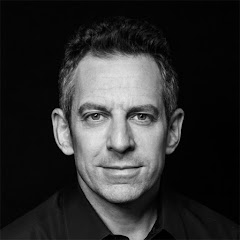 Sam Harris
Want to know something specific about what's covered?
We've already dissected every moment. Ask and we will deliver (with timestamps).
Key Moments
Poet David Whyte and Sam Harris discuss destiny, pilgrimage, and embracing life's conversations amidst unseen forces.
Key Insights
Pilgrimage, whether literal or metaphorical, fundamentally changes the traveler, making the arrival different from the departure.
Destiny is not solely dictated by external forces but significantly shaped by how individuals engage in and hold 'conversations' with their lives.
The internet and media consumption can represent a form of 'tourism' – a temporary forgetting that distracts from deeper engagement with life's unfolding.
Mistaking the 'tourist' mindset for the 'pilgrim' mindset can lead to missing opportunities and living out a life of distant longing rather than fulfillment.
The unseen forces that enable navigation, like airplane wings and air velocity, can be analogous to the invisible dynamics in life that, when understood and harnessed, allow for profound journeys.
Vulnerability, generosity, and deep attention to everyday conversations are crucial for living out one's destiny with richness and satisfaction.
THE ESSENCE OF PILGRIMAGE
The conversation opens with a discussion on pilgrimage, contrasting the tourist's superficial engagement with the pilgrim's transformative journey. David Whyte's poem, 'For the Road to Santiago,' emphasizes the idea that the essential 'self' is already equipped for the journey, suggesting new declarations of what to bring or leave behind are unnecessary. True pilgrimage involves an inner process, a desire to be changed, where the person who arrives is fundamentally different from the one who began. This mirrors the notion that a destination's significance is found not just in the place itself, but in the internal preparation and openness of the traveler.
DESTINY AS CONVERSATION
The core of the discussion delves into the concept of destiny, moving away from the idea of a fated, external force. Whyte proposes that destiny is deeply intertwined with the quality of 'conversation' an individual holds with their life. This encompasses how one engages with encounters, landscapes, and events. Two individuals facing the same circumstances can have vastly different futures based solely on their internal approach and the intentionality they bring. This perspective shifts destiny from a predetermined script to an active, responsive process shaped by one's own perspective and interaction with the world.
THE ALLURE OF TOURISM VERSUS PILGRIMAGE
The distinction between being a tourist and a pilgrim extends beyond physical travel. Whyte suggests that modern engagement with information, such as browsing the internet, can be a form of tourism – a temporary delight or forgetting that ultimately proves short-lived. This mirrors the medieval practice where pilgrimage offered an escape from rigid lives, but often devolved into mere holiday-making. The pilgrim, however, seeks a deeper encounter and transformation, acknowledging that 'no one survives a real pilgrimage if you're sincere' without being fundamentally altered by the experience.
MISSING THE TIDE AND THE POWER OF CHOICE
The dialogue explores the profound impact of choices and the potential for 'missing a tide' in life. Using the example of someone choosing not to pursue a career path due to fear of disappointment—like Whyte's own decision to abandon marine zoology—highlights how turning away from an original calling can lead to a life lived through distance and longing. This underscores the idea that while destiny may feel inevitable, the *way* it is lived out is profoundly influenced by our active participation and willingness to face potential heartbreak or challenge, rather than avoidance.
THE MYSTERY OF UNSEEN FORCES
The conversation touches upon the mysterious, often invisible forces that govern motion and existence. Using the analogy of an airplane's flight, Whyte explains how the combination of wing shape (airfoil) and velocity creates lift, allowing for sustained travel. This illustrates how seemingly simple elements, when brought together with understanding and intention, can achieve extraordinary feats. Similarly, in life, humans may struggle to perceive the invisible dynamics that hold them, preferring to focus on the superficial (like in-flight entertainment) rather than the wonder outside their window or the underlying principles of their own journey.
EMBRACING VULNERABILITY AND DEEP ATTENTION
Ultimately, living out one's destiny with satisfaction requires a brave participation in the world, a willingness to hazard oneself. This involves a 'wild generosity' with one's gifts, a deep familiarity with one's own emotional breadth, and a robust, practiced vulnerability. Whyte suggests that the 'conversations' we shape in our everyday lives play as significant a role as larger, fated powers. By paying deep attention and embracing our inherent qualities with courage, we can transform our futures and live out our lives not through distant longing, but through genuine fulfillment and presence.
Mentioned in This Episode
●Products
●Software & Apps
●Companies
●Organizations
●Books
●Concepts
●People Referenced
Navigating Life's Journeys
Practical takeaways from this episode
Do This
Avoid This
Common Questions
A superficial distinction is physical movement, but the profound difference lies in the traveler's mind. A pilgrim seeks inner change and is focused on an inner process, while a tourist is often seeking delight or a temporary forgetting, and may not arrive transformed.
Topics
Mentioned in this video
Host of the Making Sense podcast, engaging in a conversation with David Whyte. He discusses his other podcast, 'Absolutely Mental', and his app.
An explorer and filmmaker whose television appearance inspired David Whyte at age 14-15 to pursue a career in marine zoology.
A notorious occultist mentioned in relation to a tower in Kum Pennant, which was reputed to be a place where he summoned demonic entities.
Co-host of the podcast 'Absolutely Mental' with Sam Harris.
The research vessel used by Jacques Cousteau, associated with David Whyte's early ambition to study dolphins.
A poet, essayist, and speaker whose work focuses on themes of distance, arrival, destiny, and the human condition. He is a recurring guest on the podcast.
A musician whose lyric about the Mississippi Delta shining like a national guitar is referenced.
A fashionable pilgrimage destination in northern Spain, used as a metaphor for a journey to a place of ultimate meaning.
A holy city in Islam and a pilgrimage site, mentioned as an example of a place of ultimate meaning.
A city in India, considered a holy site for Hindus, mentioned as an example of a pilgrimage site.
The sea bordering Wales, where a storm was coming in from during David Whyte's visit to the farm in Kum Pennant.
A river delta region in the southern United States, mentioned for its scenic beauty as seen from an airplane window.
A city in Japan, mentioned as an example of a pilgrimage site or place of ultimate meaning.
The former home of Elvis Presley, mentioned as a pilgrimage site for fans.
A mountainous region in Wales, where David Whyte's then-girlfriend lived, and a place he visited during a significant period of his life.
A remote valley in Snowdonia, Wales, known for witchcraft, where David Whyte visited his girlfriend on a farm.
Islands off the west coast of Scotland, mentioned metaphorically as a remote place where David Whyte did not want to end up sifting plankton.
The shape of an airplane wing that, in combination with velocity, generates lift and allows for flight. It is presented as a metaphor for the convergence of necessary qualities.
An annual aerospace award in the United States. Boeing won this trophy for the 777, leading to the commission of a poem.
More from Sam Harris
View all 312 summaries 98 min
Coin Toss for the Future: A Conversation with Ryan Greenblatt UNLOCKED (Ep. 494)
 29 min
It's a Coin Toss Whether AI Takes Over
 38 min
The Second Plane, 25 Years Later
 27 min
Is the Far Left Hijacking the Democratic Party?
Ask anything from this episode.
Save it, chat with it, and connect it to Claude or ChatGPT. Get cited answers from the actual content — and build your own knowledge base of every podcast and video you care about.
Get Started Free