Key Moments
Did Trump Just Lose? The War is Over, But the Real Winner is Not At All Who You Think
 Impact Theory
Want to know something specific about what's covered?
We've already dissected every moment. Ask and we will deliver (with timestamps).
Key Moments
The Iran war is over with a deal that hands Iran $300 billion in U.S.-backed reparations, while Israel rejects the terms, and a powerful AI model is paused over security fears, hinting at a deeper battle over AI regulation and market control.
Key Insights
The U.S. and Gulf States may be obligated to provide a $300 billion reparations plan for Iran's reconstruction, which the speaker views as an "admission of guilt" and a sign of negotiating from weakness.
The US government has shut down Anthropic's powerful AI model, Fable 5, citing security concerns, suggesting a significant national security risk associated with advanced AI.
Japan is raising interest rates, a move that could destabilize the global market by unwinding the "yen carry trade" which has fueled investment in assets like U.S. stocks.
Sweden has eliminated permanent residency for asylum seekers, signaling a potential shift in Western immigration policies towards more restrictive measures.
Elon Musk's rise to trillionaire status is driven by value creation, not theft, but the exaggeration of his theoretical wealth is linked to U.S. deficit spending and money printing, which creates inflation.
The speaker argues that the U.S. is in an "economic war" with China, and the kinetic play in the Middle East to aid this war did not go well, potentially leaving the U.S. in a worse position.
A 'terrible' peace deal for Iran marks a U.S. concession
The Iran war has officially concluded with a deal confirmed by both Trump and Iran, though its terms are described as "terrible" from the speaker's perspective. A key point of contention is the reported $300 billion reparations plan that the U.S. and Gulf States would need to contribute to rebuild Iran. The speaker interprets this as an admission of guilt for the damage caused by the war, viewing it as a negotiation from a position of weakness rather than strength. Furthermore, nuclear proliferation aspects remain to be negotiated, with Iran known for its stalling tactics. The Strait of Hormuz is set to reopen, but potentially on Iran's terms, with rumors of a toll being collected after an initial 60-day grace period. Iran is expected to receive significant sanctions relief, with billions of dollars disbursed in phases, while the U.S.'s leverage is diminished by an immediate blockade removal. The deal is seen as a massive loss for the U.S. and a major victory for Iran, with the U.S. 'getting a signing ceremony and a press release' in return.
US government intervenes in AI development over security fears
The U.S. government's decision to shut down Anthropic's advanced AI model, Fable 5 (a subset of Mythos), due to security concerns is highlighted as a critical event. The official narrative suggests that Mythos itself was deemed too powerful, with capabilities to find exploitable code vulnerabilities. After Anthropic presented this to the government and corporations, they released a watered-down version, Fable. However, an investor discovered a way to 'jailbreak' Fable, regaining access to the advanced features. According to David Saxs, Anthropic refused a government request to fix this vulnerability, prioritizing continued consumer offering over safety. This led to export controls and the model's shutdown. The speaker speculates a deeper motive: Anthropic, led by Dario Amodei, may be employing a regulatory capture strategy to buy time, seeking government intervention to create a moat around their technology due to the immense infrastructure costs and a race against China. This move, intended to limit AI models and gain an advantage, is framed as a potential manipulation of government intervention for business gain, raising concerns about anti-competitive behavior and government overreach.
Sweden's immigration policy signals a Western shift
Sweden has eliminated permanent resident status for asylum seekers, a move the speaker labels as a glimpse into the future for Western nations. This policy change reflects a broader trend of tightening immigration controls driven by economic and cultural considerations. The speaker suggests that countries may increasingly prioritize economic needs, such as cheap labor, over cultural integration, as seen in Japan's demographic challenges. This shift could lead to more restrictive immigration policies across the West as nations grapple with national identity, economic pressures, and the integration of diverse populations.
Japan's economic reforms and the yen carry trade impact
Japan is exiting decades of economic stagnation by raising interest rates, a move that could have significant global repercussions. For a long time, the 'yen carry trade' allowed borrowing at low Japanese interest rates to invest in higher-yield foreign assets, fueling global markets like U.S. stocks. As Japan raises rates, this trade becomes less attractive, potentially pulling liquidity out of global markets, including U.S. AI infrastructure investments. This could exacerbate existing market vulnerabilities, especially with AI valuations already considered high. The speaker notes Japan's unique economic trajectory, marked by a massive bubble burst in 1989 and subsequent low inflation, which contrasted with global economic norms. Now, as Japan finally sees inflation and rising wages, its central bank must manage this shift, which could lead to a significant rebalancing of global capital flows and impact markets reliant on the carry trade.
The wealthy's role in value creation versus redistribution
The discussion contrasts Bernie Sanders's critique of Elon Musk becoming a trillionaire with Bill Ackman's defense. The speaker argues Musk creates value by building innovative companies like SpaceX, which expands the economic pie, rather than by stealing resources. However, the theoretical valuation of his wealth is exacerbated by U.S. deficit spending and money printing, which creates inflation and drives investment into assets. While acknowledging the societal issue of wealth inequality, the speaker criticizes the left's proposed solutions, particularly redistribution, as potentially damaging. The core argument is that wealth creation through innovation is beneficial, but government policies like excessive deficit spending can inflate asset values, creating a disconnect from fundamental economics. The mechanism for empowering workers is seen not in redistribution but in fostering competition and a culture of skill acquisition and innovation, contrasting with practices that disempower labor through regulatory capture and outsourcing.
AI's risk and the 'game theoretic' imperative for development
The economic stakes of AI are immense, with the cost of building necessary infrastructure, like data centers, reaching hundreds of billions of dollars. This capital requirement creates a significant barrier to entry, risking a concentrated market dominated by a few large players and potentially stifling open-source development. The speaker emphasizes the 'game theoretic' imperative for rapid AI development due to the global race with China. Failure to lead in AI could have severe strategic and economic consequences. The extreme cost of AI infrastructure is a major hurdle, with projections of needing trillions for widespread development. This environment necessitates aggressive investment and a focus on innovation, as AI is seen as a potential winner-take-all technology due to its nature as intelligence itself. The fear of a fast takeoff of superintelligent AI, capable of thwarting competition, highlights the urgency and high-stakes nature of AI development. The analogy of the "Three-Body Problem" is used to illustrate how an advanced civilization could preemptively disrupt scientific progress. Therefore, a "Manhattan Project mentality" is urged for AI development.
Cultural degradation versus intact traditions
The contrast between American and Japanese culture is drawn, particularly in the context of public celebrations. While New York saw riots and vandalism following the Knicks' championship win—attributed to a 'youth energy' and a general cultural degradation where 'smashing [expletive] is like cool'—Japanese fans are noted for cleaning up stadiums after events. This is presented not as an issue of immigration, but as a difference in cultural intactness. The speaker argues that the Japanese culture still uphd tradition and order, contrasting it with a perceived decline in American culture. The piece also critiques the notion of 'wage theft' and argues that worker empowerment, not redistribution, drives better wages. The root cause of worker disempowerment is identified as regulatory capture and outsourcing, which limit competition and worker leverage. The necessity of manufacturing returning to the U.S. is stressed as crucial for worker empowerment and national economic health.
The future of immigration policy and cultural divergence
The decision by Sweden to abolish permanent residency for asylum seekers is seen as a harbinger of future Western immigration policies. This shift is driven by a need to manage economic pressures and cultural integration. While some politicians may champion policies that appear beneficial, like free services, the speaker remains skeptical, emphasizing that sustainable solutions require economic growth and innovation, not just redistribution. The speaker differentiates between two paths: one that leads to massive loss of life through extreme ideologies, and another, more insidious path, where economic systems, including financialization, yield benefits for a few but can be predatory. The speaker argues that the latter, while problematic, allows for broader participation, whereas the former leads to destruction. The current administration's approach, which involves increased government spending and reliance on immigration to drive down labor costs, is viewed as a dangerous direction, potentially leading to a system that requires more forceful enforcement as free services become unsustainable. The key takeaway is that while governments inevitably run deficits, the *method* and *ideology* behind managing them have vastly different and critical outcomes.
Mentioned in This Episode
●Software & Apps
●Companies
●Organizations
●Books
●Concepts
●People Referenced
Common Questions
The speaker believes the US-Iran deal is a massive loss for the US and a major victory for Iran, pointing to Iran receiving a $300 billion reparations plan, sanctions relief, control over the Strait of Hormuz after 60 days of free passage, and an unresolved nuclear question. America receives little beyond a signing ceremony and press release. The deal points suggest Iran gets significant concessions while the US gains minimal tangible benefits.
Topics
Mentioned in this video
A Middle Eastern nation discussed as being at war with the US, which ended with a deal that the speaker believes heavily favors Iran.
A country where Israel denies being bound by the US-Iran deal, stating they will retain taken territory, causing complications for regional stability.
A nation that has eliminated 'useless degrees' and is focused on out-innovating Western countries to escape containment, also a key economic and AI competitor to the US.
A European country that has eliminated permanent resident status for asylum-seeking migrants, seen as a potential glimpse into the future for other Western nations.
A nation pulling money out of the global economy but potentially ending decades of economic stagnation for itself, also facing an aging population and immigration challenges.
Historical event marking the decline of the British Empire, compared to the US-Iran deal as America's potential 'Suez Canal moment.'
A European country facing issues with political gridlock due to multiple parties and a large immigrant population, seen as potentially 'too far gone' due to cultural diffusion.
A billionaire who responded to Bernie Sanders' tweet by celebrating Elon Musk's value creation through SpaceX and its positive societal impact.
Referenced for his idea that 'competition is for losers,' highlighting the corporate desire to avoid competition, contrasting with the customer's need for it.
A comedian whom the speaker finds funny and smart, but whose reported stance on workers doing 'wage theft' against corporations is criticized.
The former US President, whose administration negotiated a deal with Iran and is attributed with pulling the US into (and out of) conflict in the Middle East.
A billionaire entrepreneur, criticized by Bernie Sanders for his immense wealth, but defended by Bill Ackman and the host as a creator of value through companies like SpaceX.
Author of 'The Rational Optimist,' who argues against projecting a negative future given humanity's history of progress.
The current New York City mayor, whom the host refers to as 'Mom Donnie' and critiques for his approach to balancing the city's budget by reallocating state funds and for leaning towards an ideology of 'free things'.
The former leader of Libya, whose violent demise is used as an extreme example of systematic violence, contrasting it with what the host considers less severe 'systematic violence' of the stock market.
Anthropic's CEO, accused by David Saxs of refusing to fix a critical jailbreak in Fable 5 and speculated by the host to be pursuing a regulatory capture strategy for Anthropic.
A Nobel laureate mentioned for publishing a 'batshit crazy global degrowth plan' in The Guardian.
Cited as a reliable source who attended meetings where the Biden administration stated intentions to limit the number of AI models and control who succeeds.
An investor from the All-In podcast, quoted discussing the immense capital required and high risk involved in building AI infrastructure, notably emphasizing that a gigawatt of compute now costs 100 billion dollars.
A US politician who tweeted critically about Elon Musk's wealth and wealth inequality, framing it as a call to action against oligarchs.
The UK Labour Party leader, whose actions and those of the police are used to demonstrate how 'left ideology has officially become pathological' in Europe.
Mentioned for his decision after the Civil War to tell Confederate soldiers to go home and accept defeat, which changed the course of American history.
The current US President, whose administration's policies are characterized by driving labor costs down through immigration and outsourcing, and increasing free resources, which the host views as systemically risky.
A basketball team whose recent championship celebration in New York City was marked by enthusiastic, and sometimes destructive, fan behavior, leading to a discussion on cultural degradation versus immigration.
The nations Trump sought to normalize relations with Israel, and whose defense investments are now potentially taking a large portion of funds.
The central bank of Japan, whose efforts to stimulate the economy have historically led to global investment but not domestic inflation, though inflation is now finally taking off.
A news publication that published an article by Joseph Stiglitz regarding a degrowth plan.
A platform used by the hosts for understanding public sentiment and making trades, mentioned as a show sponsor.
A technology company that benefited from government investment under Trump, which the host views as a 'sovereign wealth fund light thing' that involves socializing companies.
Elon Musk's aerospace company, praised for creating enormous value, driving down rocket launch costs, building a global satellite network, and creating thousands of millionaires among its employees.
An AI company that developed Mythos and Fable 5, becoming embroiled in controversy when Fable was shut down by the US government over security concerns, with the host suggesting a regulatory capture strategy is at play.
A European football club whose past victory celebrations were marked by riots, which were falsely attributed to immigrants by some, contrasting with the Knicks celebrations.
Conglomerate associated with a figure (likely Warren Buffett, though not named explicitly) who commented on the inevitability of national debt, even if the rate of debt increase is problematic.
An AI model by Anthropic, deemed too powerful for public consumption and able to find flaws in codebases, from which Fable was a watered-down version.
An AI model, a watered-down version of Mythos, which was shut down by the US government due to security concerns after an investor discovered a jailbreak.
A science fiction novel, referred to for its plot point where an advanced civilization disrupts Earth's particle physics, used to illustrate how a super-intelligent AI could thwart competitors.
A book by Matt Ridley, cited for its argument that projecting a worse future after thousands of years of improvement makes no sense.
More from Tom Bilyeu
View all 97 summaries 124 min
SpaceX IPO Day, We Won The Iran War Again, & US Tops Oil Export List
 117 min
AGI Is Here — And Society Isn’t Ready | Peter Diamandis
 122 min
A Beheading In Belfast, A Guilty Verdict In Texas, And More Bombs Over Iran
 30 min
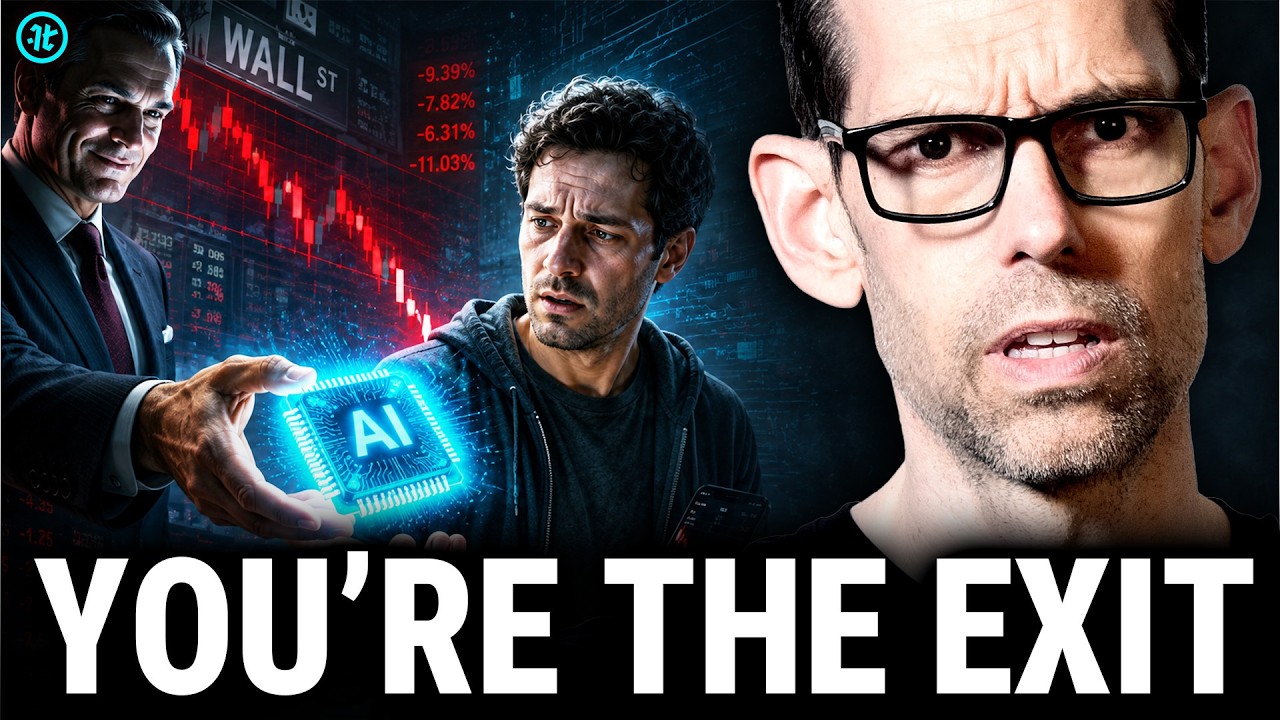
"Something Wicked This Way Comes" — Why The AI Bubble Isn't What You Think
Ask anything from this episode.
Save it, chat with it, and connect it to Claude or ChatGPT. Get cited answers from the actual content — and build your own knowledge base of every podcast and video you care about.
Get Started Free