Key Moments
Derek Sivers and Kevin Kelly — The Tim Ferriss Show
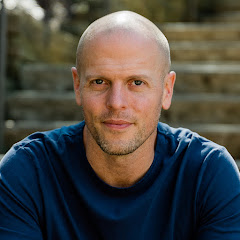 Tim Ferriss
Want to know something specific about what's covered?
We've already dissected every moment. Ask and we will deliver (with timestamps).
Key Moments
Derek Sivers & Kevin Kelly on passion, purpose, and pragmatic life design.
Key Insights
Embrace the 'hell yeah or no' philosophy to focus on truly meaningful opportunities.
Mastery precedes passion; build skills before defining your ultimate calling.
Long-term thinking, even across generations, is crucial for impactful endeavors.
Discover your unique capabilities by trying to 'give away' ideas first.
Voluntary simplicity and conscious technology adoption can lead to a more fulfilling life.
Life is a continuous process of self-discovery and self-creation, not a fixed destination.
Embracing 'Hell Yeah or No': Prioritizing Meaningful Pursuits
Derek Sivers introduces the 'hell yeah or no' principle, emphasizing that if an opportunity doesn't elicit an overwhelmingly positive response, it should be declined. This philosophy helps individuals avoid getting bogged down by less important commitments, freeing up time and energy for truly significant pursuits. By saying no to the majority of opportunities, one can fully dedicate themselves to the rare 'hell yeah' moments, leading to a more focused and impactful life. This approach ensures that time is not wasted on mediocre endeavors, allowing for deeper engagement with work and personal projects that genuinely excite the individual.
The 'Donkey's Dilemma': Long-Term Thinking and Serial Pursuits
Kevin Kelly challenges the idea of pursuing multiple interests simultaneously by likening it to the fable of Buridan's donkey, which dies between two equal options due to indecision. He advocates for a long-term, serial approach: pursue one passion for a significant period (e.g., several years) before moving to the next. This strategy acknowledges that while immediate results may not be apparent, patience and foresight allow for fulfilling multiple aspirations over a lifetime, rather than succumbing to the paralysis of trying to do everything at once. This mindset combats the pressure to achieve everything within a short timeframe, promoting a sustainable and less stressful path to diverse achievements.
Mastery as the Path to Passion and Indispensability
Drawing on Cal Newport's 'So Good They Can't Ignore You,' Kelly suggests that passion often follows mastery, not the other way around. Instead of waiting to discover a singular passion, individuals should focus on developing deep skills in a chosen area. This mastery then creates opportunities and can foster a genuine sense of passion. This contrasts with the common 'follow your bliss' advice, proposing a more pragmatic path to career fulfillment. For young people, the book 'Adventures of Johnny Bunko' is recommended as it teaches principles for becoming indispensable by cultivating valuable skills.
The Creator's Dilemma and the Power of 'Giving It Away'
Kelly describes the 'creator's dilemma,' where successful individuals or organizations often struggle to innovate because their expertise lies in optimizing existing strengths. True innovation requires venturing into less familiar, less profitable territory. He suggests a method of identifying unique capabilities by first attempting to 'give away' ideas. If an idea persists despite efforts to delegate or abandon it, it signals a potentially unique and impactful path. This process of trying to offload an idea, failing to do so, and then realizing you must pursue it yourself is a powerful tool for self-discovery and original creation.
Voluntary Simplicity and Conscious Technology Adoption
Both Sivers and Kelly touch upon the benefits of simplicity and mindful consumption. Sivers learned to find contentment with less through travel and minimalist living, realizing that extreme optimization often yields minimal gains. Kelly highlights the Amish community's approach to technology: they adopt tools collectively and intentionally, evaluating them based on whether they strengthen community and family bonds. This conscious selection contrasts with uncritical adoption and underscores the importance of having clear criteria for integrating new technologies into one's life, prioritizing human connection and well-being over mere novelty or efficiency.
Building a Self and the Long Now Perspective
The conversation emphasizes that life is a continuous process of self-creation, not just discovery. Building one's own home is presented as a powerful exercise in self-understanding and empowerment, reflecting one's true self rather than a fantasy. Furthermore, Kelly introduces the 'Long Now' perspective, advocating for long-term thinking that spans generations. This involves considering the impact of current actions not just on the immediate future but on the distant future, fostering a sense of responsibility and legacy. This broader temporal view encourages more thoughtful decision-making and a deeper understanding of one's place in the grand scheme of things.
Mentioned in This Episode
●Supplements
●Products
●Software & Apps
●Companies
●Organizations
●Books
●Drugs & Medications
●Concepts
●People Referenced
Common Questions
The 'Hell Yeah or No' principle, coined by Derek Sivers, advises saying 'yes' only to opportunities or requests that evoke an enthusiastic 'hell yeah!' response. If it's anything less, the answer should be 'no' to avoid filling one's life with mediocre commitments and to save time for truly exciting endeavors.
Topics
Mentioned in this video
One of Derek Sivers' books on philosophy and entrepreneurship.
A book by Kurt Vonnegut, recommended as a starting point for those unfamiliar with his work.
A book by Kevin Kelly listing 200 best documentaries, derived from his website truefilms.com.
One of Derek Sivers' books on philosophy and entrepreneurship.
Kevin Kelly's three-volume photo book set capturing West, Central, and East Asia, specifically focusing on Asia's transition from ancient to modern worlds.
One of Derek Sivers' books emphasizing a decision-making strategy of only saying 'yes' to things you are extremely excited about.
One of Kevin Kelly's bestselling books on technology and culture.
One of Kevin Kelly's bestselling books on technology and culture.
One of Derek Sivers' books on philosophy and entrepreneurship.
A publication where Kevin Kelly worked for a non-profit at $10 an hour, considering it a lifelong dream job.
One of Kevin Kelly's bestselling books on technology and culture, which he wrote as a theory of technology in the context of the cosmos, giving him permission to think about cosmic questions.
A book by Kevin Kelly, a catalog of possibilities and tools that he recommends for finding information on various topics, including transformative psychedelic experiences.
A short graphic novel by Daniel Pink offering career advice to young people on how to become indispensable.
A movie mentioned by Tim Ferriss for a quote by Charlie Sheen related to travel aspirations.
A lesser-known documentary about the spectacles in North Korea, offering a unique insight into the nation as a cult.
A documentary about Philippe Petit's high-wire walk between the Twin Towers, praised for being transcendent and beautiful.
A movie starring Tom Cruise that inspired Derek Sivers to address his company problems rather than run away.
A documentary recommended for its unusual portrayal of a 'villain' side in the competitive world of a video game arcade champion.
Music teacher who taught Derek Sivers in four lessons what would typically take two years at Berkeley College of Music, emphasizing 'the standard pace is for chumps'.
Author of 'Vagabonding,' whose work Tim Ferriss cites when discussing travel and minimalist living.
Actor mentioned for a quote in the movie Wall Street.
A friend of Kevin Kelly who built a magnificent house from salvage materials in Bolinas, exemplifying how building one's own home can lead to continuous alteration and self-expression.
A community whose collective technology adoption based on strengthening community and family values is studied by Kevin Kelly.
The institution Derek Sivers attended where he accelerated his studies thanks to a mentor.
A project focused on bringing extinct species back to life, associated with the Long Now Foundation.
More from Tim Ferriss
View all 700 summaries 88 min
The Legendary Hollywood Power Broker — Guy Oseary on 36 Years of Managing Madonna, 26 IPOs, and More
 77 min
The Many Benefits of Coca — The “Divine Leaf” with 8,000+ Years of Use
 100 min
Inside The AI Race: DeepMind, OpenAI, Anthropic, China, and The Race to Superintelligence
 108 min
The Path from The Soviet Union to Building Multi-Billion Dollar Companies — Max Levchin
Ask anything from this episode.
Save it, chat with it, and connect it to Claude or ChatGPT. Get cited answers from the actual content — and build your own knowledge base of every podcast and video you care about.
Get Started Free