Key Moments
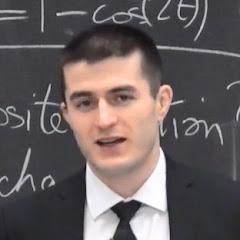
Deep Learning for Computer Vision (Andrej Karpathy, OpenAI)
 Lex Fridman
Key Moments
Andrej Karpathy explains deep learning for computer vision, focusing on CNNs, their history, architecture, and applications, from 2016.
Key Insights
Deep learning, specifically Convolutional Neural Networks (CNNs), has revolutionized computer vision by leveraging the structural properties of data like images.
The evolution of CNNs spans from early biological inspirations and models like the Neocognitron to modern backpropagation-trained networks like LeNet-5, AlexNet, VGGNet, and Residual Networks (ResNets).
Key to CNN success are convolutional layers with shared weights and local connectivity, and techniques like ReLU activations, pooling (though increasingly replaced by strided convolutions), and advanced architectures like inception modules and skip connections in ResNets.
The deep learning revolution in computer vision, starting significantly around 2012 with AlexNet, drastically improved performance on benchmark datasets like ImageNet, surpassing human accuracy in some cases.
CNNs facilitate transfer learning, where models trained on large datasets like ImageNet can be fine-tuned for various other computer vision tasks (classification, localization, segmentation, captioning, etc.) with remarkable efficiency and reduced code complexity.
Practical considerations for applying CNNs include hardware choices (GPUs, cloud), software frameworks (Keras, TensorFlow, PyTorch), architecture selection (reusing state-of-the-art models), hyperparameter tuning (focused on regularization like dropout), and distributed training strategies (data parallelism).
The development of CNNs shows convergence with neuroscience, as some internal representations in deep networks mirror patterns observed in the visual cortex.
Modern CNN architectures are highly versatile, powering applications from image search and self-driving cars to medical diagnosis, art generation, and robotics, while research continues to explore novel architectures and training methods.
FROM NEURAL NETWORKS TO CONVOLUTIONAL ARCHITECTURES
The talk begins by contrasting standard neural networks, which treat inputs as simple vectors, with the need to leverage structural information in real-world data. Spectrograms, images, and text, for instance, are multi-dimensional arrays where local patterns are significant. Convolutional Neural Networks (CNNs) are introduced as a solution to efficiently process this structured data, allowing the network to exploit local connectivity and spatial hierarchies.
HISTORICAL EVOLUTION AND KEY MILESTONES
The historical journey of CNNs is traced from early neuroscience inspirations, like Hubel and Wiesel's work on the visual cortex in the 1960s, to Fukushima's Neocognitron in the 1980s. A pivotal moment was Yan LeCun's work in the 1990s with LeNet-5, which successfully applied backpropagation to train a convolutional architecture for tasks like digit recognition. This laid the groundwork for modern CNNs, though progress was initially constrained by computational power and dataset sizes.
THE IMAGE-GOAL REVOLUTION AND PERFORMANCE GAINS
The significant shift in computer vision occurred around 2012 with AlexNet, which scaled up CNN architectures and trained them on GPUs using large datasets like ImageNet. This led to a dramatic leap in performance, surpassing traditional feature-based methods. The talk highlights how error rates on ImageNet plummeted, eventually reaching levels comparable to or even exceeding human performance, making CNNs the dominant paradigm.
ARCHITECTURAL INNOVATIONS AND DESIGN PRINCIPLES
The core component of CNNs is the convolutional layer, which uses small, learnable filters that slide across input volumes, performing dot products to detect features. This approach leverages weight sharing and local connectivity, drastically reducing parameters compared to fully connected layers. Subsequent layers often include non-linearities like ReLU (Rectified Linear Unit) and pooling layers (though increasingly replaced by strided convolutions) for downsampling and capacity control.
MODERN ARCHITECTURES AND THEIR ADVANCEMENTS
The evolution continued with architectures like VGGNet, characterized by its simplicity and use of small 3x3 filters, and GoogleNet, which introduced efficient 'inception modules' to capture features at multiple scales with fewer parameters. A major breakthrough came with Residual Networks (ResNets), employing 'skip connections' to enable training much deeper networks by allowing gradients to flow more easily, overcoming optimization challenges in very deep plain networks.
TRANSFER LEARNING AND GENERIC FEATURES
A crucial insight is that features learned by CNNs trained on large diverse datasets like ImageNet are highly transferable. These pre-trained models can be fine-tuned for new, related tasks by modifying only the final layers and retraining on a smaller dataset. This transfer learning capability has democratized deep learning, allowing users to achieve state-of-the-art results across a wide range of computer vision problems with less data and computational effort.
BROAD APPLICATIONS AND NEUROSCIENCE CONNECTIONS
CNNs are now ubiquitous, applied to image classification, object detection, segmentation, image captioning, self-driving cars, medical imaging, and even art generation (e.g., DeepDream, Neural Style Transfer). Intriguingly, research comparing CNN representations to primate visual cortex activity suggests some convergence between artificial neural networks and biological vision systems, hinting at mechanistic similarities.
PRACTICAL IMPLEMENTATION AND FUTURE DIRECTIONS
For practical applications, the advice is to leverage existing state-of-the-art architectures and pre-trained models. Key considerations include hardware (GPUs, cloud computing), software frameworks (Keras, TensorFlow, PyTorch), hyperparameter tuning (emphasizing regularization like dropout), and distributed training strategies. The field is continually advancing, exploring more efficient architectures, novel regularization techniques, and applications in areas like generative modeling and 3D vision.
Mentioned in This Episode
●Software & Apps
●Companies
●Organizations
●Concepts
●People Referenced
Deep Learning for Computer Vision Cheat Sheet
Practical takeaways from this episode
Do This
Avoid This
Common Questions
Convolutional neural networks are a class of deep learning models specifically designed for processing grid-like data such as images. They utilize convolutional layers, pooling layers, and fully connected layers to learn hierarchical features from the input data, enabling tasks like image classification, object detection, and segmentation.
Topics
Mentioned in this video
A popular open-source machine learning framework developed by Google, often used as a backend for Keras.
The winning architecture of the 2012 ImageNet challenge, which significantly advanced computer vision by successfully applying a deep convolutional neural network trained on GPUs.
A scientific computing framework with support for machine learning, known for its flexibility and lightweight nature.
A high-level API for deep learning frameworks like TensorFlow and Theano, recommended for practical applications due to its ease of use.
A computer vision program created by Google that uses a convolutional neural network to find and enhance patterns in images, leading to hallucinatory effects.
A Python library for defining, optimizing, and evaluating mathematical expressions, especially large ones, commonly used for machine learning.
An early model by Fukushima from the 1980s, inspired by Hubel and Wiesel's experiments, which featured a layer-wise architecture with alternating simple and complex cells.
The winner of the 2013 ImageNet challenge, an improvement on AlexNet with adjustments to filter sizes and density in the first convolutional layer.
A renowned Stanford course on Convolutional Neural Networks for Visual Recognition, with available lecture videos, notes, and assignments.
An early convolutional neural network developed by Yan LeCun in the 1990s, which used backpropagation for end-to-end supervised learning.
A convolutional neural network architecture from 2014 characterized by its simplicity and homogeneity, using only 3x3 convolutions and 2x2 pooling, achieving top performance on ImageNet.
The company where attendee Kyle Fry works, which uses convolutional nets for genomics.
A deep generative model from DeepMind that uses dilated convolutions for processing audio, mentioned as an example for handling large contexts.
A convolutional neural network architecture from 2014 that achieved state-of-the-art results on ImageNet with fewer parameters than VGGNet by using inception modules and removing fully connected layers.
Co-author of the influential 2012 paper that demonstrated the effectiveness of scaled-up convolutional neural networks on ImageNet.
Co-author of VGGNet, a highly influential convolutional neural network architecture from 2014.
Co-author of VGGNet, a highly influential convolutional neural network architecture from 2014.
An attendee who asked a question about using CNNs for genomics with arbitrary sequence lengths.
A pioneer in deep learning, co-author of the influential 2012 paper that demonstrated the effectiveness of scaled-up convolutional neural networks on ImageNet and developer of dropout.
Co-author of the influential 2012 paper that demonstrated the effectiveness of scaled-up convolutional neural networks on ImageNet.
Lead author of the 2015 paper introducing Residual Networks (ResNets), which won multiple challenges and significantly improved performance by enabling deeper networks.
Developed ZFNet, the 2013 ImageNet winner, and later founded Clarifai, further improving performance.
Their experiments in the 1960s studied computations in the early visual cortex of cats, which inspired subsequent neural network modeling.
A regularization technique that randomly sets a proportion of neurons to zero during training to prevent overfitting.
A technique that uses convolutional neural networks to combine the content of one image with the style of another, often seen in art generation.
Rectified Linear Unit, a common non-linearity used in neural networks that allows for faster training compared to sigmoids and Tanh.
Architectures that enable training of much deeper networks by using skip connections and adding residuals, overcoming optimization issues found in 'plain' networks.
A large-scale visual recognition challenge dataset that has been instrumental in driving progress in computer vision, particularly with the adoption of deep learning models.
A technique that allows convolutional neural networks to capture a larger context with fewer layers by introducing gaps in the filter.
More from Lex Fridman
View all 549 summaries 259 min
FFmpeg: The Incredible Technology Behind Video on the Internet | Lex Fridman Podcast #496
 124 min
Vikings, Ragnar, Berserkers, Valhalla & the Warriors of the Viking Age | Lex Fridman Podcast #495
 146 min
Jensen Huang: NVIDIA - The $4 Trillion Company & the AI Revolution | Lex Fridman Podcast #494
 311 min
Jeff Kaplan: World of Warcraft, Overwatch, Blizzard, and Future of Gaming | Lex Fridman Podcast #493
Ask anything from this episode.
Save it, chat with it, and connect it to Claude or ChatGPT. Get cited answers from the actual content — and build your own knowledge base of every podcast and video you care about.
Get Started Free