Key Moments

Want to know something specific about what's covered?
We've already dissected every moment. Ask and we will deliver (with timestamps).
Key Moments
Virtual humans are now nearly indistinguishable from real ones — but each one costs $1M to capture.
Key Insights
Dante's 'Divine Comedy' uniquely merges classical Greek philosophy with Christian faith, a feat not universally achieved in Europe at the time, particularly by figures like Thomas Aquinas who merely attempted to reconcile them without fully integrating their core imaginative principles.
The class aims to prove the universality of Dante's work, asserting that anyone, regardless of culture or age, can 'love Dante' and find inspiration, contrasting with the instructor's observation that traditional academic methods, often focused on grammar over spiritual insight, hinder this connection.
In 'Canto 11,' Dante criticizes academic studies of his time for focusing on 'syllogistic reasonings' and material/political gain rather than 'God and the truth,' highlighting how pursuit of power (like theological justification for land claims) corrupted spiritual endeavors, a problem he notes is 'no different today.'
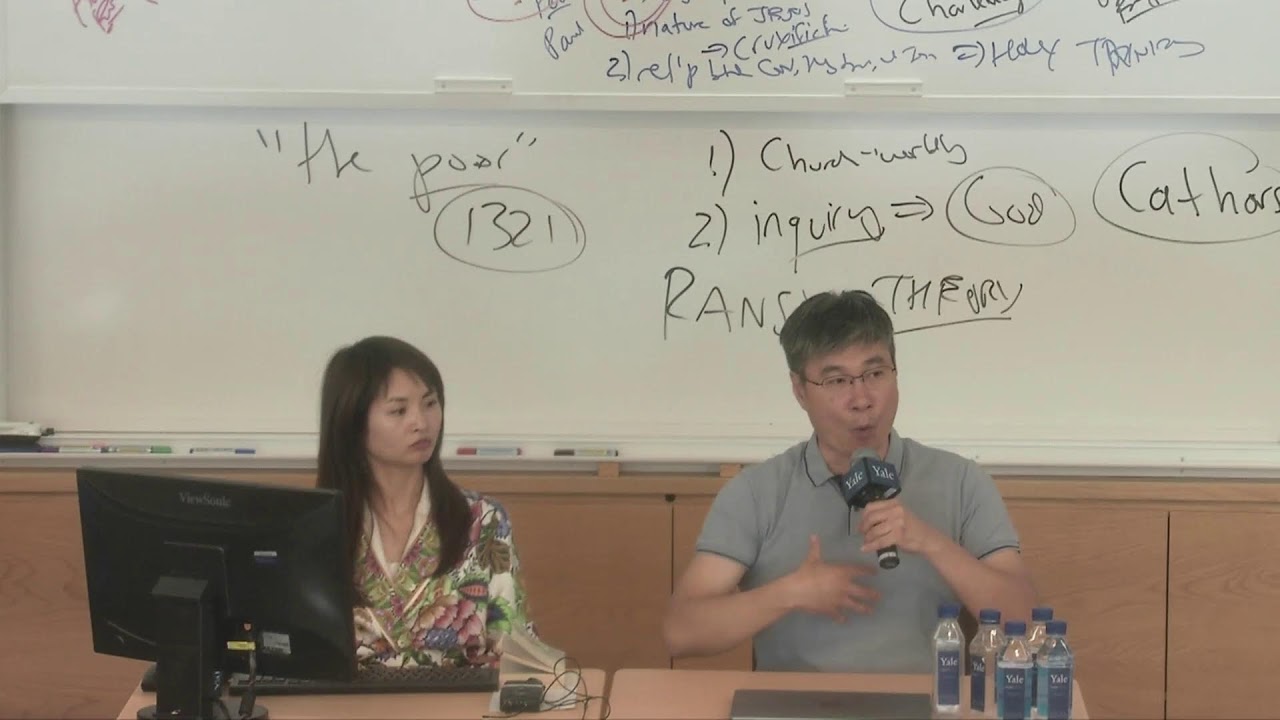
The Franciscan and Dominican orders, initially founded with noble purposes (poverty and learning, respectively), ultimately failed due to external pressures; the Franciscans succumbed to 'bribes' from rich benefactors seeking salvation, while the Dominicans became corrupt by accumulating 'too much power' as inquisitors, illustrating the dilemma of how to maintain spiritual purity against worldly co-option.
Dante's personal prophecy in 'Canto 17' predicts exile, poverty, and isolation, a stark contrast to Virgil's narrative of triumph for Aeneas; this suffering is framed as essential for Dante to achieve his purpose of writing the 'Divine Comedy,' which is meant to bring 'imagination' (and thus 'faith, hope, and love') back to a Europe plagued by fear and conflict.
True faith, according to Dante (subtly diverging from Paul's passive 'evidence of things unseen'), is an 'active act of imagining' that serves as the 'underlying substance of the universe,' a dynamic force through which humanity co-creates and influences reality, rather than merely observing a predetermined divine plan.
Dante's unique role in shaping consciousness and combating European 'backwardness'
In the year 1300, Europe was widely considered a "hole"—a barbaric, anti-intellectual place plagued by censorship and internal strife, especially when compared to the Islamic Golden Age or Pax Mongolica. Yet, within two decades, Europe began its Renaissance, an emergence that the instructor attributes directly to Dante Alighieri and his 'Divine Comedy.' Dante's work fundamentally reimagined what it means to be human by redefining three virtues: faith, hope, and love. Unlike the prevailing interpretation, which emphasized obedience to authority (as promoted by theologians like Paul and Augustine, influenced by Virgil's 'Aeneid'), Dante posited these virtues as active acts of imagination. For Dante, faith is an understanding of God as primarily love, not a vengeful entity; hope is the active creation of one's future through vows, co-creating with God; and love is the unifying force of the universe, connecting all beings. This perspective was revolutionary, challenging a millennium of a fatalistic worldview rooted in original sin and passive obedience, thereby setting the stage for human agency and the explosion of creativity that defined the Renaissance.
The pitfalls of noble intentions: Franciscans and Dominicans succumb to corruption
The class explores the historical context of two significant religious orders: the Franciscans and the Dominicans. Both were founded by visionary leaders, Saint Francis of Assisi and Saint Dominic, respectively, with noble intentions to reform the corrupt Catholic Church. The Franciscans, dedicated to profound poverty, initially brought immense hope and inspiration. However, their very holiness led to their downfall; rich individuals, seeking salvation, 'bribed' the order with 'billions and billions of dollars' in property, leading to a de facto abandonment of their vow of poverty. Similarly, the Dominicans, focused on knowledge and re-education (even combating heresies like the Cathars not through violence but through intellectual inquiry), eventually accumulated 'too much power' as the 'army of the Catholic Church,' becoming instruments of inquisition and control. This illustrates Dante's central dilemma: even the purest intentions and reform movements are vulnerable to the corrupting forces of human ego, fear, and the co-opting pressures of worldly power and wealth. Faced with his own society's pervasive treachery, Dante grapples with how humanity can achieve salvation if even its most dedicated institutions fail to uphold their spiritual integrity.
The prophecy of personal suffering as the path to universal salvation
Dante's journey through Paradise culminates in a deeply personal prophecy from his ancestor in Canto 17, which starkly contrasts with the triumphant destiny foretold in Virgil's 'Aeneid.' While Aeneas learns of Rome's glorious future, Dante is confronted with a future of 'exile, isolation, and poverty'—a life as a 'beggar,' dependent on others' mercy. This unjust suffering, engineered even by the corrupt Pope, becomes the crucible for Dante's ultimate mission. Crucially, this prophecy serves not to induce despair but to provide profound purpose. The insights gained from his journey—that individual actions matter, God is non-judgmental, and fear limits imagination—prepare him to embrace this difficult path. His suffering, akin to Christ's, is framed as a necessary, willed act to bring imagination and, by extension, 'faith, hope, and love' to a dark and violent Europe. The act of writing the 'Divine Comedy' in isolation thus becomes his 'highest will,' a transformative process that, in turn, is meant to transform its readers, cleansing them of hatred and fear, and opening their hearts to divine love and creative potential.
Imagination as the bedrock of faith, hope, and divine connection
Dante's concept of faith subtly yet profoundly redefines the prevailing theological understanding. In Canto 24, Peter tests Dante on the nature of faith, to which Dante initially recites Paul's definition: 'Faith is the substance of the things we hope for and is the evidence of things not seen.' However, Dante's subsequent elaborations introduce a radical shift. While Paul's formulation implies a passive acceptance of an existing divine plan, Dante suggests that faith is an active, animating force, intimately tied to human 'imagination.' It is not merely a belief in unseen things but the very 'substance of the universe' that we co-create through our faith. This view implies that without active human imagination and belief, the underlying 'deep things' of reality, including spirits or underlying forces, would not exist. This active faith, built on imagination, becomes the foundation for 'highest hope' and allows for reasoning to build upon it, rather than contradicting it. This makes the 'Divine Comedy' more than a theological treatise; it is an 'intense emotional experience,' an artwork designed to 'shake you emotionally,' resonate with truth and beauty, and thus enable God's transformative 'love' to enter and shift one's perception of reality.
Florence, the Renaissance, and the lasting impact of Dante's vision
The instructor posits a direct causal link between the 'Divine Comedy' and the flourishing of the Renaissance, particularly in Florence, Dante's exiled city. While acknowledging classical academic reasons for Florence's cultural boom—such as the patronage of families like the Medici, its city-state autonomy from papal authority, and its wealth from trade—the argument is that Dante’s work provided the essential imaginative and spiritual catalyst. The 'Divine Comedy,' through its profound beauty and truth, resonated deeply within the culture over approximately 100 years after Dante's death, inspiring artists like Michelangelo and Donatello. It was revered as a work of divine inspiration, making any attempt to ban or suppress it an act 'against God.' This highlights how Dante’s art, by fostering imagination and love, transformed collective consciousness, empowering a new era of human achievement and spiritual understanding, a mission the instructor believes can still spread 'hope' across the world today if Dante's work becomes a core part of global education.
Mentioned in This Episode
●Software & Apps
●Organizations
●Books
●Concepts
●People Referenced
Common Questions
Dante combined Greek myths, like that of Pallas and Athena, with Roman myths, such as Romulus and Remus. He uses these intertwined narratives to explore themes of conflict, love, and the pursuit of power, forcing readers to find connections through imagination. This technique is rooted in Proto-Indo-European mythology's archetype of killing a loved one for power.
Topics
Mentioned in this video
The author of the Divine Comedy, whose personal journey of exile, isolation, and writing is central to the class discussion. He is presented as a poet chosen by God, whose work aims to redefine humanity's virtues.
A musician whose song 'Upside Down' (from 20 years ago) is quoted for its lyrics about curiosity and change, connecting to the themes of art and imagination discussed in the class.
A powerful and wealthy family in Florence, who were patrons of the arts and contributed to the city's role in the Renaissance.
Dante's muse and guide in the Divine Comedy, conceptualized as Dante's alter ego, representing his feminine aspects and serving as a framework for his creativity.
His teachings and example of poverty are contrasted with the corruption of the Catholic Church. He is also referred to as the 'first husband' of Poverty, a metaphor adopted by Francis.
Roman Emperor, whose historical overview of Rome's imperial trajectory is referenced as aligning with the prophecy given to Aeneas.
A major theologian of the Catholic Church who systematized Paul's teachings, emphasizing original sin and human evil, which led to a fatalistic worldview challenged by Dante.
A prominent Catholic theologian, the second most famous after Augustine, who attempted to reconcile classical Greek philosophy with Christian faith. He explains the Franciscan order's virtues in Canto 11.
Used as a modern example of a 'fake trillionaire' worshipped in what the speaker calls a money-obsessed and superstitious present-day world, contrasting with medieval values.
A figure from Greek mythology, often associated with the cause of the Trojan War, mentioned in context of the destruction of Troy.
A Renaissance polymath, credited with paintings like the Mona Lisa, whose work is seen as divinely inspired, illustrating why religious authorities would hesitate to ban such art.
An ancient Greek philosopher who lived in poverty, mentioned by a student as an example of someone who didn't care about societal ostracization and found happiness in detaching from material desires.
Founder of the Dominican Order, depicted as marrying 'faith' and dedicated to learning and combating heresy. He is praised by Bonaventure in Canto 12.
Roman General and Dictator, mentioned as a key figure in the lineage leading to the Pax Romana.
Mentioned as a contemporary political figure, representing a world of conflict and war, to contextualize the speaker's belief that reading Dante can offer a path forward.
Founder of the Franciscan Order, depicted as a visionary who embraced poverty, rejected family wealth, and found happiness and spiritual enlightenment through this vow, becoming an exemplar of faith, hope, and love.
The first Roman Emperor, whose rise signifies the 'end of history' and the beginning of the Pax Romana.
Author of 'His Dark Materials,' a series mentioned by a student as a work of art that transformed their worldview on death and personal responsibility.
Dante's epic poem which is the central text of the class. It is discussed as a transformative work that reimagined humanity by emphasizing faith, hope, and love, and is presented as the 'big bang' of Western civilization.
A novel series that a student praised for transforming their perspective on life, death, and forgiveness, demonstrating the power of art to resonate emotionally and intellectually.
Augustine's work, cited by a student to elaborate on the concepts of original sin and corrupted human nature, which were prevalent theological views in Dante's era.
An ancient Greek epic poem, mentioned by a student as another work where the hero often faces exile, suggesting a literary archetype.
A book in the New Testament, quoted by Dante to define faith ('the substance of things we hope for and the evidence of things not seen') during his test in heaven, highlighting its importance in Christian theology.
The third part of the Divine Comedy, where Dante receives the final prophecy before meeting God and undergoes tests of faith, hope, and love.
The first part of the Divine Comedy, where Dante places himself alongside great Latin epic poets. It is a journey into hell, crucial for Dante to cleanse himself of hatred and vengeance.
Virgil's epic poem, summarized as the 'bible of the Roman Empire,' outlining Aeneas's mission to found Rome and portraying a prophecy of triumph and glory.
The second part of the Divine Comedy, part of Dante's journey of self-cleansing and preparation to meet God.
Twin founders of Rome from Roman mythology, whose story of fraternal conflict is used to draw parallels with Pallas and Athena and discuss themes of power and love.
Discussed as the basis for European culture, featuring a common archetype of killing a loved one (often a twin) to gain power, which Dante references.
A philosophical movement emphasizing reason and individualism, presented as a historical consequence of the Renaissance, which itself was influenced by Dante.
A period of relative peace and stability across the Mongol Empire, also referenced to highlight Europe's comparatively bleak state in 1300.
A heretical Gnostic sect in southern France, whose beliefs in direct connection to God and the unimportance of the material world mirrored Dante's ideas. The Dominican Order was created to re-educate and suppress them.
A figure from Greek mythology, son of Theseus, who was unjustly exiled, used as a parallel for Dante's own unjust exile from Florence.
An ancient Mesoamerican civilization, mentioned to contrast its achievements with the perceived underdevelopment of medieval Europe.
Referenced in the context of the Trojan War and the destruction of Troy, which forms the background for Aeneas's journey.
The belief system of the Cathars, characterized by a direct connection to God and a lesser emphasis on the material world, aligning with some of Dante's philosophical ideas.
A period of relative peace and stability in the Roman Empire, foreseen as the 'end of history' and heaven on earth in Aeneas's prophecy.
Mentioned as an institution that aims for deep critical analysis in its seminars, similar to the interaction the speaker desires in the current class.
An order founded by Francis of Assisi, devoted to poverty and spirituality. They became corrupt after his death due to people bribing them with property to gain salvation, leading to wealth accumulation.
Discussed as a corrupt institution in Dante's time, promoting obedience and fear, which Dante's work aimed to reform and challenge by emphasizing love and imagination.
An order founded by Dominic, dedicated to learning, education, and enforcing Christian orthodoxy. Initially righteous, they became corrupt due to accumulating too much power, used as inquisitors.
Referred to as a comparison for the Dominicans, indicating a dedicated, learned religious order.
A song by Jack Johnson, quoted to illustrate themes of curiosity, change, and the power of art to inspire thought.
A strategy game mentioned by a student to illustrate how theology could be used for ulterior motives like justifying territorial claims, paralleling Dante's criticism of academic studies.
Leonardo da Vinci's famous painting, used as an example of art that is so beautiful and truthful that it is perceived as divinely inspired, protecting it from censorship.
A city in ancient Greece, destroyed during the Trojan War, which Aeneas loved and had to leave, paralleling Dante's love for Florence and his exile.
Dante's hometown, from which he was exiled in 1302, leading to his poverty and isolation. The city's flourishing during the Renaissance is attributed to Dante's influence.
Another Italian city-state, similar to Venice, used for comparison to highlight Florence's unique cultural flourishing during the Renaissance.
An Italian city-state often compared with Florence in discussions of the Renaissance, questioning why Florence, in particular, flourished due to Dante's influence.
The greatest empire in the world, which Aeneas is destined to found, and the subject of triumphant prophecy in the Aeneid, contrasting with Dante's personal prophecy.
A city where Aeneas is shipwrecked and falls in love with Queen Dido, before being ordered by the gods to continue to Italy.
More from Predictive History
View all 160 summaries
Ask anything from this episode.
Save it, chat with it, and connect it to Claude or ChatGPT. Get cited answers from the actual content — and build your own knowledge base of every podcast and video you care about.
Get Started Free