Key Moments
Dan Loeb: The Lost Art of Short Selling, and Why Stock Picking is Back
 All-In Podcast
Want to know something specific about what's covered?
We've already dissected every moment. Ask and we will deliver (with timestamps).
Key Moments
Short selling, once complex and profitable, is now crucial as market complexity demands extreme stock-picking selectivity, even in bonds.
Key Insights
Dan Loeb started his public persona on early internet chat boards, engaging in 'trolling' for fun before managing institutional money.
Third Point's strategy shifted from complex event-driven investing to a focus on business quality, innovation, and themes like AI.
The lost art of short selling is presented as essential again, with Loeb noting significant opportunities, particularly in the homebuilder sector.
Assessing management quality and a company's 'moat' or defensibility is now subjective and qualitative, developed through pattern recognition over decades.
Loeb was instrumental in advocating for the pardon of Ross Ulbricht, who received a double life sentence plus 40 years for running Silk Road.
Criminal justice reform, for Loeb, begins with education reform, focusing on equipping vulnerable children with tools to succeed.
From internet troll to 'activist investor'
Dan Loeb began his public persona on the nascent internet, participating in early chat boards like Silicon Investor long before Reddit. He describes this era as the 'wild west,' where he engaged in what he terms 'trolling' for amusement and to taunt management teams of what he saw as fraudulent companies. This was a stark contrast to his later role as CEO and CIO of Third Point, a multi-billion dollar hedge fund. This early experience, however, provided a foundation for uncovering mispriced or fraudulent companies, a skill that would prove valuable later in his career. He humorously self-identifies as the 'original troll,' emphasizing the fun and humor inherent in market investing, especially on the short side.
Learning the ropes: from Bear Sterns to distressed debt
Loeb's investor journey began formally in high school at a Bear Sterns branch and continued through college. His significant learning occurred at Warburg Pincus, where he gained experience in private equity and venture capital. A pivotal period was his time at Jefferies on the distressed debt desk. He describes this as 'drinking out of a fire hose,' immersing himself in complex securities and high-volume trading. This experience, often referred to as the '10,000 hours' or '10,000 reps,' was crucial. He emphasizes that learning isn't strictly hierarchical; he absorbed knowledge from colleagues, peers, and even clients like Eric Mindic. He studied their thought processes, particularly in event-driven investing, accumulating a vast database of knowledge and developing his own operating system by integrating the best insights from various professionals.
The evolution of Third Point's investment strategy
Third Point initially focused on 'event-driven investing,' characterized by complex transactions like takeovers, spin-offs, risk arbitrage, and bankruptcies. This strategy capitalized on market dislocations and opacity, often involving management incentives and depressed projections for companies. However, as technology became a more dominant force and market dynamics shifted, the firm evolved its focus. The current strategy places a greater emphasis on business quality, innovation, disruption, and thematic understanding of consumer trends, financial services, and the macroeconomic backdrop. AI is highlighted as a culmination of these technological innovations. This shift signifies a move from profiting from complex deal mechanics to identifying durable, high-quality businesses capable of long-term success.
The critical art of short selling
Loeb asserts that the 'lost art of short selling has come back and it's absolutely critical.' He argues that in the current market environment, selectivity is paramount, labeling it a 'bond and credit pickers market' as much as a stock pickers market. Opportunities on the short side are abundant for the first time in a while. He shuns a solely valuation-based approach to shorting, citing instances where heavily shorted companies gain traction through platforms like Reddit or become 'safe shorts' due to market sentiment. Loeb provides a specific example of a strong short view on homebuilders, driven by structural impairments beyond just rising interest rates. These impairments included massive land commitments disguised as options and an inventory/pricing hangover from the post-COVID era, where unsustainable prices met rising building costs and an unfavorable financing environment.
Quality, moats, and the subjective assessment of management
The modern investment philosophy at Third Point heavily emphasizes 'moats' or defensibility and the quality and durability of revenue. Loeb acknowledges that projecting companies out 10-20 years is challenging, noting that even historically strong companies like IBM, AOL, and Yahoo faced obsolescence. The focus has shifted to finding management teams with a proven ability to stay ahead of trends and demonstrate adaptability. Assessing this quality is not purely quantifiable; it remains a subjective, qualitative process developed through pattern recognition over decades of experience. While not creating a formal rubric, Loeb relies on a deep, almost intuitive understanding of leadership, cultivated through extensive observation and interaction.
Diversified platforms: expanding beyond hedge funds
Third Point has expanded significantly beyond its core hedge fund operations. It now incorporates a venture capital arm, initially formed by investing in savvy engineers and companies like Radio Communications (sold to Texas Instruments). The firm has launched dedicated venture funds. Furthermore, Third Point has built out its credit business, including structured credit, high-yield, a CLO business, and a private credit arm focusing on direct lending and workouts. A notable expansion is their insurance company, which captures the investment-grade segment of their activities, utilizing structured vehicles, whole loans, and private/public investment grade assets. This diversification creates multiple avenues for capturing value and managing capital across different market segments.
Human connection in an AI-driven world
Despite the increasing role of AI and agents, Loeb believes the human element in investing will endure. He emphasizes that the social component—knowing people, capturing opportunities through networks, and collaborating—will never disappear. While theoretical agents might emerge in venture capital, the need for human interaction remains. People desire to know who is making or losing money, and AI cannot replicate the nuanced assessment of character and trustworthiness that occurs through direct human interaction, such as looking someone in the eye. This highlights the enduring value of relationships and qualitative judgment in investment decision-making.
Advocating for criminal justice reform, starting with education
Dan Loeb's passion for criminal justice reform stems from a broader concern for income inequality and opportunity, which he traces back to education reform. He chaired Success Academies, a charter school network, arguing that equipping vulnerable children with intellectual tools is key to overcoming poverty. He believes the systemic issues lie in broken structures, prioritizing adult interests over accountability and talent cultivation within unions. Regarding criminal justice, he distinguishes between wrongly convicted individuals, those showing contrition, and those with disproportionate sentences. He became involved in the case of Ross Ulbricht, sentenced to double life plus 40 years for running Silk Road. Despite Ulbricht’s acknowledgment of illegal activities, Loeb felt the sentence was disproportionate. He, with others like Charlie Kirk, advocated for a presidential pardon, which was ultimately granted by President Trump, allowing Ulbricht to reintegrate into society and start a family. Loeb continues to support individual cases through organizations like Olive, seeing it as a personally fulfilling aspect of philanthropy alongside broader causes like fighting anti-Semitism.
Mentioned in This Episode
●Software & Apps
●Companies
●Organizations
●People Referenced
Dan Loeb's Investment and Activism Principles
Practical takeaways from this episode
Do This
Avoid This
Common Questions
Dan Loeb believes the 'lost art' of short selling has made a comeback and is absolutely critical. It involves uncovering fraudulent companies and engaging with management teams, often with a humorous approach.
Topics
Mentioned in this video
CEO and CIO of Third Point, activist investor known for short selling and evolving his investment philosophy.
Former youngest partner at Goldman Sachs who ran the ARB desk and influenced Dan Loeb's thinking on event-driven investing.
An investor whose thought process Dan Loeb observed and learned from during his career.
A legendary stock trader whose quote 'there's nothing new under the sun' Dan Loeb frequently references.
Dan Loeb's partner at Third Point, with whom he reconnected at their 20-year reunion and who helped start their venture business.
Founder of Radio Communications, a company that made ABG compatible chips for Wi-Fi base stations, which Third Point invested in.
Mentioned for his concept of 'time bounded value' of companies and reminding about the brittleness of revenue.
Took the lead in advocating for Ross Ulbricht's pardon, bringing his case to the President.
The US President who was lobbied for Ross Ulbricht's pardon and ultimately commuted his sentence.
Mentioned as an example of wealth accumulation, contrasting with the need to equip children with tools to succeed.
Mentioned as someone who is present, representing a perspective that can hopefully agree on issues like education reform.
An individual who received an 18-year sentence for dealing in gray market diapers and formula.
Mentioned alongside John Federman as someone present who can hopefully agree on issues like education reform.
Mentioned for his decision not to sell his Facebook stock, which would have made him incredibly wealthy.
Mentioned as someone with a similar philanthropic framework to Dan Loeb's focus on income inequality.
A figure in the crypto community who was friends with Rivetz and involved in alerting Dan Loeb to Ross Ulbricht's case.
Attorney for Ross Ulbricht and currently White House Counsel, who had represented Ulbricht for a decade.
Founder of Silk Road, received a life sentence plus 40 years, and eventually received a commutation and pardon.
Activist investment firm founded by Dan Loeb, managing significant assets across hedge fund, private credit, and insurance.
Company that Dan Loeb targeted with activism, known for turning up the heat.
Social media platform where Dan Loeb is active and has found his voice.
Internet portal and search engine that hosted early chat boards for idea exchange.
A company from the 90s run by a repeat fraudster that Dan Loeb uncovered and exposed.
Financial services firm where Dan Loeb had a high school job, posting books and making cold calls.
Financial services firm where Dan Loeb worked in high school under Allan Crown.
Early employer of Dan Loeb where he learned to value enterprises and explored private equity and venture capital.
Investment bank where Dan Loeb worked on the distressed debt desk, gaining significant experience.
Financial institution where Eric Mindich was the youngest partner, influencing Dan Loeb's investment approach.
A company founded by Dave Fischer that made chips for Wi-Fi base stations and was sold to Texas Instruments.
Company that acquired Radio Communications.
A sophisticated financial firm that is now very tech-savvy.
A past example of a company with a perceived moat that may have been overestimated.
A past example of a company with a perceived moat that may have been overestimated.
A homebuilder that others in the industry were pretending to be, by being asset-light.
A company discussed in terms of its large market cap and potential undervaluation, despite its size.
A company in which Saxs was a private investor and sold stock early, regretting missing significant gains.
A company in which Saxs led the B round of funding and learned not to join boards to maintain liquidity.
A company where Saxs was an early investor, sold stock prematurely, and missed significant upside.
Mentioned as a 'safe short' in the past, alongside Amazon and NVIDIA.
A company whose stock Saxs owned and sold some, but held onto others, referencing its volatile IPO and subsequent growth.
The former name of Meta, discussed in the context of its IPO valuation and Chamath's decision not to sell.
Mentioned as a 'safe short' in the past, alongside Google and NVIDIA.
A quantum computing company in the speaker's portfolio that received government funding and engaged in a public-private partnership.
Online forum where users discuss stocks, predating its current iteration which Dan Loeb engaged with.
An early internet chat board where people would congregate and exchange ideas anonymously.
One of the first crypto-based exchanges, founded by Ross Ulbricht, where illegal activities including drug dealing occurred.
Venture capital firm that might have AI agents in the future, but humans will always be present.
An organization that Dan Loeb works with on individual cases for criminal justice reform.
A charter school network in New York where Dan Loeb was involved as a board member and chairman, focusing on education reform.
More from All-In Podcast
View all 415 summaries 33 min
Thomas Laffont: The $4T AI IPO Wave Is Coming… and We’ve Never Seen Anything Like It
 30 min
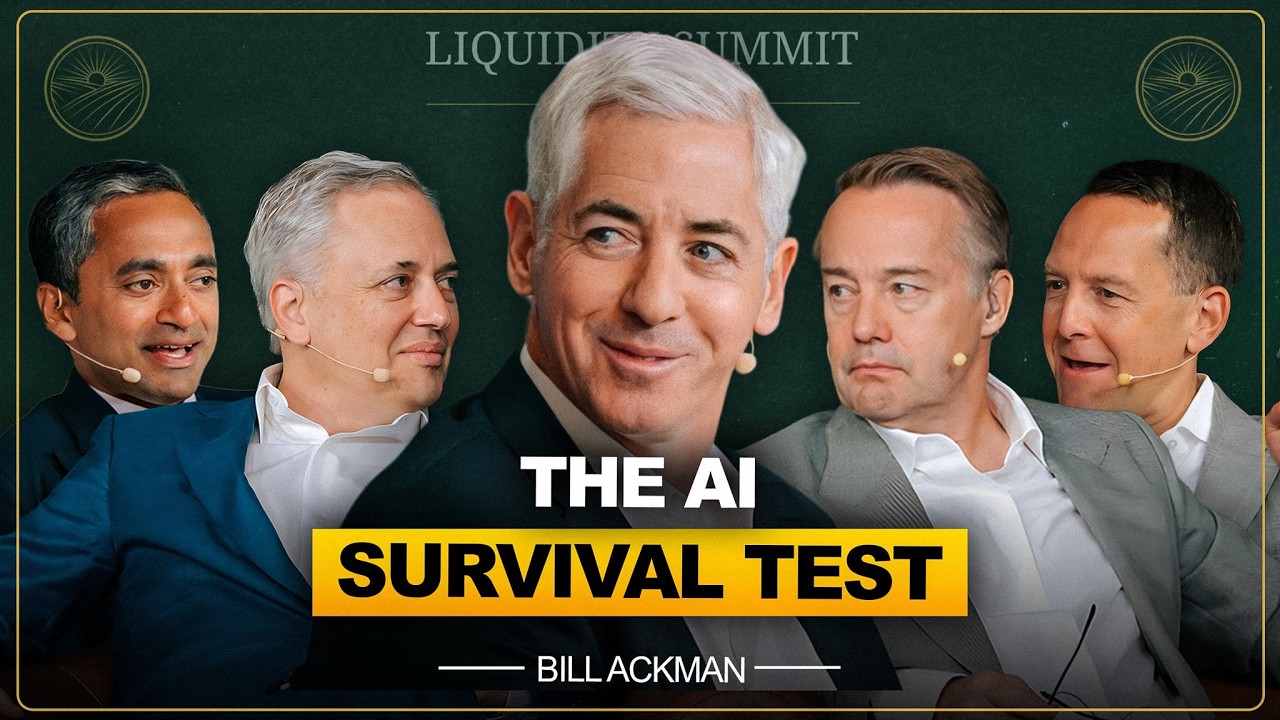
Bill Ackman: Investment Strategy, What the Market is Missing, How AI Breaks Businesses
 33 min
OpenAI CFO Sarah Friar on IPO, AI Rivalries, New Device, and Spending $100B+ on Compute
 95 min
Anthropic's Digital God, Pope vs AI, Job Loss Narrative Flips, Open Source Crackdown Coming?
Ask anything from this episode.
Save it, chat with it, and connect it to Claude or ChatGPT. Get cited answers from the actual content — and build your own knowledge base of every podcast and video you care about.
Get Started Free