Key Moments
Corporate Cowardice: A Conversation with Antonio García-Martínez (Episode #251)
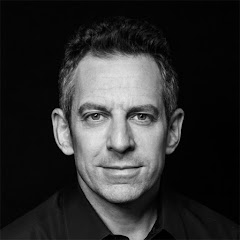 Sam Harris
Want to know something specific about what's covered?
We've already dissected every moment. Ask and we will deliver (with timestamps).
Key Moments
Antonio García-Martínez fired by Apple due to his controversial 2016 book, 'Chaos Monkeys.'
Key Insights
Antonio García-Martínez was fired by Apple just three weeks after being hired, following employee complaints about his 2016 book, 'Chaos Monkeys.'
Apple's hiring process seemingly vetted Martínez, including checking his references, and was aware of his book, yet proceeded with the hire.
'Chaos Monkeys' was widely reviewed and praised by liberal media outlets in 2016, making the subsequent outrage from Apple employees seem ironic and politically motivated.
Martínez argues his book, written in a 'gonzo journalism' style and employing a persona, should not be conflated with his personal beliefs or used to judge his professional conduct.
The incident highlights concerns about 'cancel culture' and 'identitarian moral panic' stifling free expression and leading to a climate of intolerance in tech and culture.
There's a perceived hypocrisy in public discourse, with certain individuals facing severe consequences for their past writings while others with more egregious content (e.g., Dr. Dre's lyrics) remain employed without similar repercussions.
BACKGROUND AND LITERARY CAREER
Antonio García-Martínez's career path is marked by a transition from physics to finance, working as a quant at Goldman Sachs during the 2008 financial crisis. He later moved into tech, co-founding a startup that was acquired by Twitter, and then joining Facebook's early advertising team. After leaving Facebook, he became an author, publishing his memoir 'Chaos Monkeys' in 2016. This book offered an unvarnished, often critical, insider's view of Silicon Valley culture, written in a distinct, persona-driven style.
THE AUTUMN OF LIBERAL ACCEPTANCE AND RISE OF CENSORSHIP
The book 'Chaos Monkeys,' published in 2016, received widespread critical acclaim from major liberal media outlets, including The New York Times and NPR. Despite its candid and controversial tone, it was considered a valuable account of the tech industry. However, the cultural landscape shifted dramatically in the intervening years, leading to an environment where past expressions, particularly those deemed politically incorrect, could resurface and lead to severe professional consequences.
RE-ENTRY INTO TECH AND THE APPLE HIRING PROCESS
After a period of depression stemming from his writing career, García-Martínez sought to return to the tech industry. He secured a position at Apple, a process that involved extensive interviews and reference checks. Crucially, Apple's recruiters and hiring managers were aware of his book, 'Chaos Monkeys,' and had access to his public professional profile, including his LinkedIn. His references, some of whom were former Facebook colleagues he wrote about, vouched for him.
THE UNRAVELING: THE PETITION AND FIRING
Within three weeks of starting his new role at Apple, a petition circulated among employees alleging that García-Martínez's book contained 'hateful behavior' and created an unsafe work environment. The petition garnered approximately 2,000 signatures. Shortly after, Apple terminated his employment, issuing a public statement that seemed to confirm the allegations of 'behavior' rather than address the context of a previously published book acquired by the company.
THE BOOK'S CONTENT AND THE MISINTERPRETATION OF PERSONA
García-Martínez contends that the passages from his book used against him were taken out of context and that his writing employed a persona and literary style, akin to 'gonzo journalism' popularized by writers like Tom Wolfe and Hunter S. Thompson. He argues that his book is not a statement of personal beliefs but a descriptive and narrative account of his experiences, often self-deprecating. The specific passage that drew ire involved generalizations about women in the Bay Area, written in a deliberately provocative and 'racy' style to enhance the narrative.
CRITIQUE OF IDENTITARIAN MORAL PANIC AND CORPORATE CAPITULATION
The incident is presented as a clear example of the 'identitarian moral panic' engulfing the left, where activism and a fear of backlash lead to swift corporate capitulation. García-Martínez highlights the irony that a book once lauded by liberal media is now the basis for his dismissal. He points to perceived hypocrisy, such as Dr. Dre's continued employment at Apple despite more overtly offensive lyrics and credible allegations of violence, suggesting a selective application of standards that stifles free expression and intellectual discourse.
THE BROADER IMPLICATIONS FOR FREE EXPRESSION
The case of Antonio García-Martínez raises significant concerns about the future of free expression and artistic integrity in corporate and cultural spheres. The climate of intolerance and the pressure to conform to strict moral purity standards can deter individuals from engaging in candid or edgy expression, whether in memoir, journalism, or art. This chilling effect, García-Martínez argues, is detrimental to intellectual life and creative fields, potentially leading to a future where only the most anodyne content is deemed acceptable.
Mentioned in This Episode
●Software & Apps
●Companies
●Organizations
●Books
●People Referenced
Common Questions
Chaos Monkeys is Antonio Garcia Martinez's book detailing his experiences in Silicon Valley, from Wall Street to early days at Facebook and its IPO. He wrote it to provide an unvarnished view of tech culture, feeling his story was emblematic of a certain time and period.
Topics
Mentioned in this video
Author of 'Liar's Poker', whose work inspired Antonio Garcia Martinez to pursue a career in finance.
Author associated with the Merry Pranksters and 'The Electric Kool-Aid Acid Test'.
Host of the Making Sense Podcast and interviewer.
Comedian and podcaster with whom Sam Harris has a new podcast.
The guest on the podcast, a former tech employee and author.
Former Google engineer whose memo sparked a debate about gender and tech.
Author whose style Antonio Garcia Martinez was compared to, specifically 'The Electric Kool-Aid Acid Test'.
Literary figure whose quote about art and politics is referenced.
A tech incubator accelerator Antonio Garcia Martinez joined after dropping out of his PhD.
Company that acquired Antonio Garcia Martinez's first startup and a platform he used during his writing career.
A major tech company where Antonio Garcia Martinez previously worked on the ads team.
A tech company that hired and subsequently fired Antonio Garcia Martinez.
Investment bank where Antonio Garcia Martinez worked as a quant after leaving physics.
Broadcast network where Antonio Garcia Martinez was interviewed about his book.
Antonio Garcia Martinez's best-selling book detailing his experiences in Silicon Valley.
A book by Tom Wolfe discussed as an example of literary nonfiction with a distinct persona.
A book by Michael Lewis that influenced Antonio Garcia Martinez's career path.
More from Sam Harris
View all 300 summaries 34 min
Is Psychedelic Therapy Ready for FDA Approval?
 26 min
You Lose Interest the Moment You Realize It's AI
 28 min
Michael Pollan on Consciousness, Psychedelics, and the Limits of Neuroscience
 22 min
Why the Stock Market Has Become a Casino
Ask anything from this episode.
Save it, chat with it, and connect it to Claude or ChatGPT. Get cited answers from the actual content — and build your own knowledge base of every podcast and video you care about.
Get Started Free