Key Moments
Constructing Minds: A Conversation with Lisa Feldman Barrett (Episode #247)
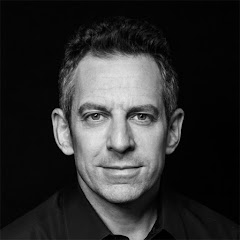 Sam Harris
Want to know something specific about what's covered?
We've already dissected every moment. Ask and we will deliver (with timestamps).
Key Moments
The brain is a predictive organ that regulates the body, not a battleground of primal instincts and rationality.
Key Insights
The brain's primary function is regulating the body's internal systems, not just thinking or feeling.
The triune brain model is a myth; brain evolution is a gradual process, not a layering of distinct 'lizard,' 'mammal,' and 'human' parts.
The brain is a predictive machine, constantly generating a 'controlled hallucination' of reality based on past experiences and sensory input.
Perception and action are deeply intertwined, with sensory processing often serving motor actions.
The brain functions as a dynamic network, not a collection of distinct modular organs responsible for specific functions.
Embodied cognition suggests that our experiences are always relative to our specific bodies and contexts.
THE BRAIN'S PRIMARY ROLE: BODY REGULATION
Contrary to popular belief, the brain's most crucial function isn't thinking, seeing, or feeling, but rather regulating the body's internal systems. This includes vital functions like the heart, lungs, immune system, and endocrine system. While we experience conscious thoughts and emotions, these are secondary to the brain's fundamental role in maintaining homeostasis. This perspective emphasizes the interconnectedness of the brain with the rest of the body, suggesting that all mental activities serve this larger purpose of bodily regulation.
DEBUNKING THE TRIUNE BRAIN MYTH
The long-held theory of the triune brain, which posits distinct evolutionary layers of reptile, mammal, and primate brains, is scientifically inaccurate. This model, suggesting a constant battle between primal instincts and rational thought, lacks evidence. Neuroscientific and genetic research reveals that brain evolution is a more continuous process, with similarities across species in developmental plans and neuron types. The apparent differences in brain structure are more a matter of scale and duration of developmental stages, rather than the addition of entirely new, distinct brain 'parts.'
THE BRAIN AS A PREDICTIVE ENGINE
Our brains do not passively receive information from the world; instead, they actively construct our experience. Operating within the skull, the brain constantly predicts upcoming sensory input based on past experiences. This creates a 'controlled hallucination,' a reality that is similar to a dream but constrained by real-time sensory data. This predictive processing is metabolically efficient and allows for rapid responses, like hitting a baseball, which would be impossible with a purely reactive system.
NETWORKS OVER MODULES: BRAIN ORGANIZATION
The brain should not be viewed as a collection of discrete modules, each responsible for a specific function, like a set of Lego bricks. Instead, it functions as a complex, dynamic network where neurons interact and cooperate. Functional neuroimaging, while useful, can sometimes create a misleading impression of modularity. Emerging research emphasizes understanding neurons within their relational context, recognizing that brain activity is distributed across vast, interconnected networks, with certain 'hub' regions coordinating activity across the entire system.
ACTION AND PREDICTION: THE MOTOR BASIS OF MIND
Motor action is fundamental to brain function and evolution. Sensory processing, rather than being an end in itself, largely serves the purpose of guiding motor behavior. The brain constantly anticipates and prepares for actions, with sensory experiences being interpreted in the context of these anticipatory processes. This predictive motor modeling explains how we navigate the world and interact with objects, with surprises arising when these predictions are violated.
EMBODIED PERSPECTIVE: REALITY IS RELATIONAL
Our experience of the world is inherently subjective and relational, shaped by the unique physical and historical context of our bodies. There is no purely objective viewpoint; instead, scientific understanding emerges from the consensus of diverse subjective experiences. This embodied perspective means that everything we perceive is from a particular vantage point, influenced by factors like our sensory apparatus and internal bodily states. This realization offers potential for psychological freedom and relief from suffering by understanding the constructed nature of our reality.
Mentioned in This Episode
●Organizations
●Books
●Concepts
●People Referenced
Common Questions
Contrary to common belief, the brain's primary job is not thinking or feeling, but regulating the body's internal systems like the heart, lungs, and immune system. Higher cognitive functions serve this fundamental regulatory role.
Topics
Mentioned in this video
Host of the Making Sense podcast, announcing a new standalone episode and discussing the podcast's subscription model and philanthropic efforts.
Co-author of a paper on 'rich club' hubs in the brain's connectome.
A historian of science whose views on objectivity as a consensus among subjective observers are mentioned.
Author of 'Helgoland', a book on quantum mechanics that also touches on the brain's predictive nature.
A philosopher who wrote about predictive coding/processing, described as writing intuitively and beautifully about the brain as a predictive organ.
Founder of Giving What We Can.
A neurobiologist whose observations on brain reorganization as brains grow larger are cited by Lisa Feldman Barrett.
An advisor from Longview Philanthropy who is providing advice to the Waking Up Foundation.
A philosopher with whom Sam Harris has discussed doing good, influential in the formation of the Waking Up Foundation and the Giving What We Can pledge.
A highly cited scientist in psychology and neuroscience, professor at Northeastern University, author of 'Seven and a Half Lessons About the Brain', who discusses brain evolution, networks, predictive processing, and emotion.
A theory or framework suggesting the brain operates by constantly predicting future sensory input based on past experience.
Advances in this field pose existential risks, potentially leading to engineered pandemics.
A framework that informs Lisa Feldman Barrett's systems-level approach to understanding brain function.
An influential but inaccurate model of brain evolution, often referred to as the 'lizard brain', 'limbic system', and 'cerebral cortex' as distinct layers with separate functions.
Large neurons found in some large-brained animals, debated whether they are a distinct class or simply large pyramidal cells, potentially involved in abstraction.
A philosophical thought experiment used to illustrate the idea that our sensory input is indirect and the brain actively constructs reality.
A new, nearly four-hour standalone podcast episode being released by Sam Harris, executive produced by Rob Reed, focusing on existential risks from synthetic biology and pandemic preparedness.
Rob Reed's podcast where he previously interviewed Sam Harris.
A film referenced to describe the brain's constructive and potentially illusory experience of reality.
A foundation formed by Sam Harris to do good, with a portion of corporate profits and his own income going towards it. It acts as a pass-through to other organizations, with upcoming grants focused on pandemic preparedness.
An organization that advises individuals and foundations on deploying funds to solve long-term problems, providing free advice.
University where Lisa Feldman Barrett is a professor.
An organization receiving a grant from the Waking Up Foundation, focused on accelerating the development of vaccine technology and funding new platforms for rapid response to pathogens.
An organization Lisa Feldman Barrett is a member of.
An organization focused on the pledge to give a minimum of 10% of lifetime earnings to effective charities, which saw increased participation after being discussed on the podcast.
An organization receiving a grant from the Waking Up Foundation, focused on improving infectious disease data understanding and engaging policymakers.
A charity research organization whose mentions on the podcast resulted in significant donations.
Hospital where Lisa Feldman Barrett has an appointment.
An organization Lisa Feldman Barrett is a member of.
Medical school where Lisa Feldman Barrett has an appointment.
More from Sam Harris
View all 302 summaries 27 min
Is America Heading for a Debt Crisis? An Economist Explains
 27 min
Is America Heading for a Debt Crisis? An Economist Explains
 34 min
Is Psychedelic Therapy Ready for FDA Approval?
 26 min
You Lose Interest the Moment You Realize It's AI
Ask anything from this episode.
Save it, chat with it, and connect it to Claude or ChatGPT. Get cited answers from the actual content — and build your own knowledge base of every podcast and video you care about.
Get Started Free