Key Moments
Consciousness and Self (Rebroadcast): A Conversation with Anil Seth (Episode #264)
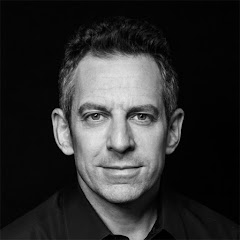 Sam Harris
Want to know something specific about what's covered?
We've already dissected every moment. Ask and we will deliver (with timestamps).
Key Moments
Neuroscientist Anil Seth discusses consciousness, perception as controlled hallucination, and the self.
Key Insights
Consciousness is defined as the presence of subjective experience, with a distinction between the 'easy' and 'hard' problems.
Perception can be understood as a 'controlled hallucination,' a predictive process by the brain.
The 'self' is not a single entity but a construct, a perceived narrative the brain generates about the body.
Consciousness exists on a spectrum, with distinct aspects: level, content, and the experience of self.
Consciousness likely extends beyond humans to other mammals, birds, and possibly even invertebrates like octopuses.
The scientific study of consciousness benefits from separating its distinct aspects to map them to neural mechanisms.
BACKGROUND AND DEFINING CONSCIOUSNESS
Neuroscientist Anil Seth shares his interdisciplinary background, moving from physics to psychology and computer science, before focusing on the neuroscience of consciousness. He highlights the challenge of defining consciousness, suggesting a working definition as the presence of subjective experience. While acknowledging the circularity in terms like 'sentience' or 'awareness,' he emphasizes that scientific understanding will evolve definitions. Seth posits that consciousness is the most crucial phenomenon, underpinning all values, happiness, and suffering, making its study paramount.
THE CHALLENGE OF THE HARD PROBLEM
The discussion delves into David Chalmers' 'hard problem' of consciousness: why and how physical processes give rise to subjective experience, distinguishing it from the 'easy problems' of explaining brain functions. Seth expresses skepticism about conceivability arguments like philosophical zombies, suggesting that a deeper understanding of neural mechanisms makes such thought experiments less compelling. He argues that the hard problem persists because explanations for consciousness lack the intuitive closure found in other scientific domains, often appearing as mere correlations rather than illuminating transitions.
PERCEPTION AS CONTROLLED HALLUCINATION
Seth introduces the compelling idea of perception as a 'controlled hallucination.' Far from passively receiving sensory data, the brain actively generates predictions about the world based on prior experiences and expectations. Sensory input then serves to 'control' or constrain these predictions, making them more accurate. This predictive processing model explains why our perceptions can be influenced by top-down factors and why the brain might prioritize generating coherent experiences over perfectly representing external reality.
THE CONSTRUCT OF THE SELF
Moving from perception to the self, Seth reframes the 'self' not as a fixed entity but as a continuously generated prediction or a 'dictatorship of the body.' Our sense of self arises from the brain's inferences about the body's state and its interaction with the environment. He emphasizes that this self is not an illusion but a valid and functional construct. Consciousness, in this view, involves the brain making predictions not just about the external world, but crucially, about itself and its body, creating a perceived unified self.
PHYLOGENY AND THE SPECTRUM OF CONSCIOUSNESS
The conversation explores the evolutionary origins of consciousness, questioning when it might have emerged in non-human species. Seth asserts that consciousness in other mammals is almost certain, given significant neuroanatomical and behavioral similarities. He extends this possibility to birds and even invertebrates like octopuses, emphasizing the vast potential for diverse forms of consciousness beyond human experience. He advocates for a precautionary principle, suggesting we should lean towards attributing consciousness to creatures that exhibit complex behaviors suggestive of sentience.
DISTINGUISHING LEVELS, CONTENT, AND SELF
Seth elaborates on his framework for understanding consciousness by distinguishing its different aspects: level, content, and self. 'Conscious level' refers to the degree of awareness, from deep sleep or anesthesia to full wakefulness, which can dissociate from physiological arousal (e.g., dreaming). 'Content' pertains to what is experienced—perceptions, thoughts, emotions. The 'experience of self' relates to the sense of being a unified, continuous agent. These distinctions are heuristically useful for scientific investigation, allowing researchers to map specific phenomenal properties to underlying neural mechanisms.
NEURAL CORRELATES AND EXPLANATORY GAPS
The discussion touches upon key theories like Integrated Information Theory (IIT) and predictive processing. While acknowledging their contributions in mapping neural correlates, Seth and Harris still wrestle with the explanatory gap—why these mechanisms give rise to subjective experience at all. Seth suggests that scientific progress will come from isolating phenomenal properties and finding their mechanistic bases, rather than directly solving the 'hard problem.' He believes that future conceptual frameworks will bridge mechanism and phenomenology, making consciousness less of a brute, arbitrary fact.
Mentioned in This Episode
●Software & Apps
●Organizations
●Books
●Drugs & Medications
●Studies Cited
●Concepts
●People Referenced
Common Questions
Anil Seth defines consciousness as the presence of any kind of subjective experience. While a simple definition, he acknowledges the challenge of a precise technical definition and emphasizes that definitions evolve with scientific understanding. He agrees with Thomas Nagel's idea that it is 'like something' to be a conscious system.
Topics
Mentioned in this video
A neuroscientist with whom Anil Seth worked in San Diego, known for his work on consciousness and dynamic core theory.
A cosmologist and author who endorsed Anil Seth's new book 'Being You'.
Sam Harris's wife, who endorsed Anil Seth's new book 'Being You'.
Philosopher known for his essay 'What Is It Like to Be a Bat?', which proposes a widely cited definition of consciousness as the subjective experience of being a system.
A neuroscientist and philosopher known for his work on neurophenomenology and embodied cognition, who experienced anesthesia awareness during a liver transplant.
A psychologist and philosopher who endorsed Anil Seth's new book 'Being You'.
Developer of the Integrated Information Theory (IIT) of consciousness, whose early work on dynamic core theory influenced Anil Seth.
Philosopher who coined the term 'the hard problem of consciousness', distinguishing it from the 'easy problems' of explaining cognitive functions.
Director of the film 'Ex Machina', who endorsed Anil Seth's new book 'Being You'.
A molecular biologist and co-discoverer of DNA structure, who was also at the Salk Institute when Anil Seth was in San Diego.
A neuroscientist and author who endorsed Anil Seth's new book 'Being You'.
A neuroscientist and professor of cognitive and computational neuroscience at the University of Sussex, focusing on consciousness.
Philosopher whose mind-body dualism is a historical precursor to discussions of the hard problem of consciousness.
A prominent theory of consciousness that quantifies consciousness based on the complexity of information integration within a system.
A historical philosophical view that living organisms possess a non-physical animating principle (élan vital) that distinguishes them from inanimate matter.
Hypothetical beings that are physically and behaviorally identical to conscious humans but lack subjective experience, used in arguments about the hard problem of consciousness.
An invertebrate studied for its intelligence and unique nervous system, serving as an example of convergent evolution and a potentially very different form of consciousness.
A theoretical framework in neuroscience and cognitive science suggesting that the brain constantly generates predictions about sensory input and updates them based on prediction errors.
A rare and frightening phenomenon where a patient remains conscious during surgery despite being administered anesthesia, often due to muscle paralytics preventing them from signaling distress.
Anil Seth's new book exploring consciousness, which was being written when he last spoke with Sam Harris.
Thomas Nagel's influential essay proposing that consciousness is defined by the subjective experience of being a system, which is crucial for understanding consciousness but difficult to operationalize.
A research institute in San Diego where Francis Crick worked, located near the Neuroscience Institute where Anil Seth was based.
Anil Seth's current academic affiliation where he runs a lab focused on consciousness science.
The university where Anil Seth studied as an undergraduate in the early 1990s.
A research center at the University of Sussex co-directed by Anil Seth, dedicated to studying the brain and biological basis of consciousness.
More from Sam Harris
View all 300 summaries 34 min
Is Psychedelic Therapy Ready for FDA Approval?
 26 min
You Lose Interest the Moment You Realize It's AI
 28 min
Michael Pollan on Consciousness, Psychedelics, and the Limits of Neuroscience
 22 min
Why the Stock Market Has Become a Casino
Ask anything from this episode.
Save it, chat with it, and connect it to Claude or ChatGPT. Get cited answers from the actual content — and build your own knowledge base of every podcast and video you care about.
Get Started Free