Key Moments
Christof Koch: Consciousness | Lex Fridman Podcast #2
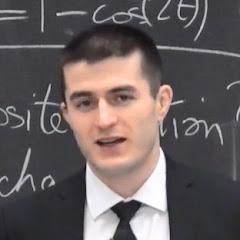 Lex Fridman
Key Moments
Christof Koch discusses consciousness, distinguishing it from intelligence, its potential across biology, and the challenges in identifying it in artificial systems.
Key Insights
Consciousness is defined as subjective experience or 'what it's like' to be something, existing across biology, not just in humans.
Intelligence and consciousness are distinct concepts; machines can be intelligent without necessarily being conscious.
Measuring consciousness is challenging, especially in artificial entities, requiring a robust theory beyond intuition or the Turing Test.
Panpsychism suggests consciousness, in some form, might be a fundamental property of matter, with integrated information theory offering a potential framework.
Literature offers valuable insights into human experience and consciousness that purely technical study may miss.
The claustrum is a potential neurological structure crucial for integrating information and generating conscious experience.
THE VASTNESS OF CONSCIOUSNESS
Christof Koch posits that intelligent life likely exists beyond Earth, emphasizing that consciousness is not exclusive to humans. He argues that if other intelligent life evolved naturally, they too would possess subjective experiences, akin to pain, pleasure, and sensory perception, albeit potentially different in manifestation. This suggests consciousness may be a widespread phenomenon across biology, extending beyond our immediate understanding or ability to communicate.
INTELLIGENCE VERSUS CONSCIOUSNESS
A key distinction is drawn between intelligence and consciousness. While machines may achieve sophisticated levels of functional intelligence, passing tests like the Turing Test, this does not equate to subjective experience. Historical associations between complexity and consciousness in biological systems are challenged by the prospect of engineered intelligence. Consciousness is about 'being,' whereas intelligence is about 'doing' – adapting, learning, and problem-solving.
IDENTIFYING CONSCIOUSNESS: CHALLENGES AND THEORIES
Identifying consciousness, especially in non-biological entities, presents a significant challenge. While tests like the 'zap and zip' can assess consciousness in biological brains, they are not directly applicable to machines. The need for a robust scientific theory of consciousness, rather than relying solely on intuition or behavioral tests like the Turing Test, is highlighted. Integrated Information Theory (IIT) is presented as a promising framework for quantitatively measuring consciousness based on a system's capacity for integrated information.
PANPSYCHISM AND THE FUNDAMENTAL NATURE OF CONSCIOUSNESS
The concept of panpsychism, the idea that consciousness is a fundamental property of matter, is explored. This view suggests that even simple entities might possessrudimentary forms of experience. Physics, while effective at describing relationships between objects, may not capture the intrinsic nature of reality. Consciousness, in this context, could be viewed as the 'inside' perspective of physical processes, implying that all systems, from single-celled organisms to complex brains, might have some degree of subjective feeling.
CONSCIOUSNESS AND BIOLOGICAL SYSTEMS
The discussion touches upon different states of consciousness, including those experienced during sleep (dreams), in conditions like the locked-in syndrome or vegetative states, and during profound experiences of sensory deprivation or flow states ('the zone'). These examples illustrate dissociation between function and experience, suggesting that consciousness can exist even when complex cognitive functions are impaired or absent, and that pure experience can be deeply satisfying.
THE ROLE OF THE UNCONSCIOUS AND LITERATURE
The unconscious mind, as explored by thinkers like Nietzsche and Freud, is presented as a powerful, less accessible domain influencing our behavior and emotions. While the unconscious can store deep-seated experiences and drive reactions, its accessibility poses challenges for self-analysis. Literature is valued as a crucial tool for understanding the vast spectrum of human experiences, offering insights into different perspectives and the nuances of subjective reality that may not be apparent in strictly scientific or technical endeavors.
ARTIFICIAL GENERAL INTELLIGENCE AND ETHICAL CONSIDERATIONS
The pursuit of Artificial General Intelligence (AGI) raises significant ethical questions. It is argued that empathy, a facet of consciousness, might be crucial for developing beneficial and aligned AI. Without empathy, a highly intelligent AI might pose existential risks. The distinction between simulating consciousness and actually creating it is critical, with potential synthetic consciousness requiring hardware that mimics biological brains rather than purely digital simulations.
THE CLAUS TRUM AND INTEGRATION
The claustrum, a thin structure beneath the cortex, is highlighted as a potential key component for consciousness. Its widespread connections to all cortical regions suggest a role in integrating diverse neural information into a unified conscious experience, akin to a conductor orchestrating a symphony. Ongoing research aims to experimentally test the claustrum's function in mice, investigating its role in binding together different cognitive processes into a coherent whole.
RELIGION, SPIRITUALITY, AND CONSCIOUS EXPERIENCE
Koch reflects on his spiritual journey from Roman Catholicism toward a more Buddhist-influenced perspective, emphasizing the minimization of suffering. He notes that conscious experience predates our scientific understanding of the universe and is the most direct reality we encounter. Techniques like mindfulness, common in Buddhism, aim to access deeper aspects of reality or consciousness, though Koch frames this more as an 'inside view' of physical processes rather than something necessarily more fundamental.
BROADENING THE SCOPE OF CONSCIOUSNESS
The exploration extends to considering consciousness in non-human entities, including insects like bees, and even hypothetical alien intelligences. The complexity of bee behavior, such as decision-making during swarming, suggests they may possess experiences. Similarly, scientific fiction offers thought experiments about radically different forms of consciousness, such as intelligent clouds or machine organisms with vast temporal scales, reminding us that our understanding is limited by our current human-centric perspective.
Mentioned in This Episode
●Software & Apps
●Organizations
●Books
●Studies Cited
●Concepts
●People Referenced
Common Questions
Consciousness is defined as subjective experience or phenomenal feeling. It's the 'what it feels like' aspect of being, encompassing everything from mundane sensations like sitting in a chair to profound mystical moments.
Topics
Mentioned in this video
The spiritual leader of Tibetan Buddhism, with whom Christof Koch has had discussions emphasizing the minimization of suffering.
A woman who was in a persistent vegetative state, used as an example of a patient with potential consciousness but no apparent behavior.
A Polish science fiction writer, author of 'Solaris' and 'The Invincible'.
A molecular biologist, co-discoverer of DNA structure, and later worked on consciousness, coining the term 'zombie agents'.
A philosopher known for his essay 'What Is It Like to Be a Bat?', which is referenced regarding subjective experience.
A researcher mentioned for his work related to AI and cognitive science, advocating for incorporating studies of the human brain and psychology into AI development.
A philosopher who famously discussed the mind-body problem and the concept of a soul distinct from the physical body.
A neuroscientist and president/chief scientific officer of the Allen Institute for Brain Science, known for his work on consciousness.
A philosopher who advocated for a view similar to panpsychism, suggesting physics describes relationships but not intrinsic nature.
An astronomer and science fiction author, writer of 'The Black Cloud'.
A neurologist and the founder of psychoanalysis, credited with exploring the unconscious mind.
A philosopher known for his work on existential risk, mentioned in the context of AI safety and empathy.
California Institute of Technology, where Christof Koch was a professor.
An institute where Christof Koch serves as president and chief scientific officer, dedicated to brain science research.
Massachusetts Institute of Technology, mentioned in the context of a course on Artificial General Intelligence.
Apple's virtual assistant, mentioned as an example of AI that will soon pass the Turing test.
A neuroscience procedure using TMS and EEG to measure the complexity of brain responses, used to distinguish conscious from unconscious states.
A virtual assistant, mentioned as an example of AI that will soon pass the Turing test.
Google's virtual assistant, mentioned as an example of AI that will soon pass the Turing test.
An AI system that won Jeopardy, used as an example to differentiate intelligence from consciousness.
A more recent book by Christof Koch exploring consciousness.
A science fiction novel by Stanisław Lem, adapted into a film.
A science fiction novel by Fred Hoyle about an intelligent cloud entity.
A science fiction novel by Stanisław Lem about machine evolution.
One of the books authored by Christof Koch.
A memoir written by Jean-Dominique Bauby, who was diagnosed with locked-in syndrome, used as an example of consciousness with severe physical limitations.
More from Lex Fridman
View all 549 summaries 259 min
FFmpeg: The Incredible Technology Behind Video on the Internet | Lex Fridman Podcast #496
 124 min
Vikings, Ragnar, Berserkers, Valhalla & the Warriors of the Viking Age | Lex Fridman Podcast #495
 146 min
Jensen Huang: NVIDIA - The $4 Trillion Company & the AI Revolution | Lex Fridman Podcast #494
 311 min
Jeff Kaplan: World of Warcraft, Overwatch, Blizzard, and Future of Gaming | Lex Fridman Podcast #493
Ask anything from this episode.
Save it, chat with it, and connect it to Claude or ChatGPT. Get cited answers from the actual content — and build your own knowledge base of every podcast and video you care about.
Get Started Free