Key Moments
Cellular Automata and Rule 30 (Stephen Wolfram) | AI Podcast Clips
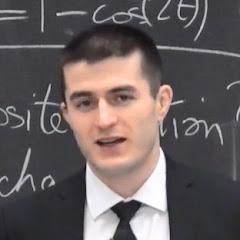 Lex Fridman
Want to know something specific about what's covered?
We've already dissected every moment. Ask and we will deliver (with timestamps).
Key Moments
Stephen Wolfram explains cellular automata, Rule 30, and their implications for computation and complexity.
Key Insights
Cellular automata are simple computational systems that can generate complex patterns.
Rule 30 is a prime example of a simple rule leading to chaotic and unpredictable behavior.
These systems demonstrate that complexity can arise from simple underlying rules.
Cellular automata have potential applications in various fields, including art, science, and technology.
The study of cellular automata offers insights into the fundamental nature of computation and the universe.
Wolfram's work emphasizes the power of exploration and the discovery of unexpected phenomena.
THE FUNDAMENTAL NATURE OF CELLULAR AUTOMATA
Cellular automata are computational systems composed of a grid of cells, each in a finite number of states. These states change over time based on a fixed set of rules, often determined by the states of neighboring cells. This simple, discrete model allows for the emergence of incredibly complex and unpredictable patterns from very basic initial conditions. Stephen Wolfram highlights that these systems are not just simulations but fundamental models that can capture essential aspects of natural processes and computation.
RULE 30 AS A PARADIGM OF COMPLEXITY
The discussion frequently returns to Rule 30, a one-dimensional cellular automaton. Despite its simple definition – a set of local rules governing cell state transitions – Rule 30 produces a visually complex and seemingly random pattern. This chaos arises from the deterministic nature of the rules, meaning the future state is entirely determined by the current state, yet the emergent behavior appears unpredictable. This paradox underscores Wolfram's central idea about the source of complexity in the universe.
COMPLEXITY FROM SIMPLICITY: THE UNIVERSAL PRINCIPLE
A core theme is the discovery that highly complex behavior can emerge from minimal underlying rules. Wolfram's research suggests that many natural phenomena, from weather patterns to biological growth, might be explainable by such simple, yet powerful, computational rules. This concept challenges traditional views that complexity must stem from intricate and elaborate mechanisms, proposing instead that underlying simplicity can be the source of the universe's richness and diversity.
THE COMPUTATIONAL UNIVERSE AND ITS IMPLICATIONS
Wolfram posits that the universe itself can be viewed as a form of computation. Cellular automata serve as an accessible model for understanding this idea. The ability of these systems to perform computations, even complex ones like generating the pattern of Rule 30, suggests that they are universal Turing complete or close to it. This has profound implications for understanding the limits of computation and the nature of intelligence.
EXPLORATION AND THE Wolfram LANGUAGE
The creation of the Wolfram Language was driven by the need for a tool to systematically explore these computational systems. The language's multi-paradigm approach, including symbolic computation and vast built-in knowledge, allows for rapid prototyping and visualization of cellular automata and other complex systems. Early exploration revealed the significant patterns, like Rule 30, that might otherwise have remained undiscovered due to the prohibitive manual effort required.
BROADER APPLICATIONS AND FUTURE POTENTIAL
Beyond theoretical computer science, cellular automata and related models find applications across various disciplines. They can be used for generating art, simulating physical processes, modeling biological systems, and even in cryptography for generating random numbers. The exploration of these simple-to-complex systems continues to reveal new possibilities, pushing the boundaries of scientific understanding and technological innovation.
Mentioned in This Episode
●Software & Apps
●Books
●Concepts
●People Referenced
Common Questions
Cellular automata are models composed of a grid of cells that change states based on simple rules applied to neighboring cells. Rule 30 is a specific type of elementary cellular automaton known for generating complex, unpredictable patterns from initial simple conditions.
Topics
Mentioned in this video
Stephen Wolfram's hypothesis that all systems that are sufficiently complex and computationally capable behave according to the same fundamental computational rules, suggesting that simple and complex systems can be computationally equivalent.
A specific elementary cellular automaton that generates complex, seemingly random patterns from simple initial conditions and rules.
A model consisting of a grid of cells, each in a finite number of states, which can change based on a set of rules applied to neighboring cells.
The idea that a system is capable of simulating any other computable system, meaning it can perform any computation that can be performed by any other computing system.
More from Lex Fridman
View all 550 summaries 174 min
Biggest Mysteries in Physics: Antimatter, Dark Energy & ToE - Don Lincoln | Lex Fridman Podcast #497
 259 min
FFmpeg: The Incredible Technology Behind Video on the Internet | Lex Fridman Podcast #496
 124 min
Vikings, Ragnar, Berserkers, Valhalla & the Warriors of the Viking Age | Lex Fridman Podcast #495
 146 min
Jensen Huang: NVIDIA - The $4 Trillion Company & the AI Revolution | Lex Fridman Podcast #494
Ask anything from this episode.
Save it, chat with it, and connect it to Claude or ChatGPT. Get cited answers from the actual content — and build your own knowledge base of every podcast and video you care about.
Get Started Free