Key Moments
Adam Savage on Great Tools, Great Projects, and Great Lessons | The Tim Ferriss Show
 Tim Ferriss
Want to know something specific about what's covered?
We've already dissected every moment. Ask and we will deliver (with timestamps).
Key Moments
Adam Savage on embracing diverse skills, the iterative nature of making, and the joy of personal projects.
Key Insights
Embrace a "maker" mindset by creating anything from nothing, whether physical or conceptual.
Failure is not an endpoint but a crucial part of the scientific and creative process (iteration).
Skills developed in seemingly unrelated fields, like theater, can be powerful "force multipliers" in other areas.
Personal projects, even if "weird," are vital for self-fulfillment and can inspire others.
The process of making, especially with one's hands, offers unique perspectives and understanding.
Sharing vulnerabilities and the messy, non-linear path of success is crucial for genuine connection.
THE 'NO-FACE' COSTUME: A GATEWAY TO COSPLAY AND THEATRE
Adam Savage's passion for creation and transformation began with a "No-Face" costume from Spirited Away. This relatively inexpensive project had a profound impact, highlighting cosplay as a form of theatre where performers and audience are unified. This experience ignited a lifelong fascination with the transformative power of costumes and the joy of sharing that experience with like-minded individuals. It marked a pivotal moment in understanding how creative pursuits, even seemingly simple ones, can foster a deep sense of connection and shared narrative.
FROM ACTOR TO MAKER: FORGING A CAREER PATH
Initially pursuing acting, Savage realized his desire was not a deep-seated passion for the craft itself, but rather a performance of desire. This led him to pivot towards graphic design and animation, and ultimately, to the special effects industry. He discovered that film and television special effects provided a singular direction for his diverse interests and creative problem-solving abilities, satisfying the artistic needs he previously explored in his own art. This convergence allowed him to build a fulfilling career without feeling he lost artistic purity.
THE POWER OF GENERALISM AND THE SAN FRANCISCO SHIFT
Moving from Manhattan to San Francisco was a turning point in Savage's understanding of specialization. While Manhattan thrives on singular ambition, San Francisco offered a more forgiving environment to explore various interests and build confidence. He realized that being "unspecialized" wasn't a liability but an opportunity to gather diverse skills. San Francisco allowed him to experiment, gain feedback, and slowly build an ethos for his life and work, eventually recognizing how his varied experiences converged in the film industry.
FAILURE IS ALWAYS AN OPTION: EMBRACING THE ITERATIVE PROCESS
The iconic phrase "failure is always an option" originated as a joke on the set of Mythbusters but evolved into a profound philosophical insight. Savage emphasizes that in scientific exploration and creative processes, what is often labeled "failure" is actually iteration and learning. A scientist doesn't see an unexpected result as failure but as an opportunity for new understanding. This perspective is crucial for embracing the messy, iterative nature of making, where chasing wrong branches is necessary to find the right one.
THE 'WATCHER' AND THE ART OF SELF-AWARENESS
A key to Savage's approach is the ability to "watch the watcher" – a meta-level of self-awareness. This habit, potentially influenced by thinkers like Carlos Castaneda and Ram Dass, allows him to step outside of heated emotional situations and critically assess his own behavior. By imagining observing himself as a character in a screenplay, he can understand how his actions might be perceived and adjust his approach. This conscious effort to view situations from different vantage points is vital for effective communication and problem-solving.
MAKING AS CREATION: THE ARCHITECTURAL MODEL AND EGGS
Savage defines "making" as creating something from nothing, whether physical or conceptual. For physical making, he suggests an architectural model of one's living space as an accessible starting project. This exercise involves simple materials like cardboard and hot glue, fostering an understanding of scale and spatial relationships. He also discusses the surprising complexity of cooking eggs, viewing it as a maker project that teaches fundamental culinary principles. The slow-cooked scramble, in particular, highlights the importance of temperature control, patience, and personal refinement of a technique.
THE HUMAN ELEMENT: VULNERABILITY AND ACCEPTING IMPERFECTION
Savage stresses the importance of sharing vulnerabilities and the non-linear nature of success. He admits to persistent self-judgment and the struggle of accepting his own flaws, a common human experience. He advocates for honesty about imperfections, as true connection stems from sharing our authentic, flawed selves. This perspective is crucial in an era of curated online highlight reels, where people can feel uniquely flawed and isolated. Sharing these struggles helps normalize the human condition and encourages others to pursue their own passions without fear.
EVERY TOOL IS A HAMMER: THE BOOK AND ITS PHILOSOPHY
Savage's book, "Every Tool Is a Hammer," explores the philosophy behind making, going beyond specific techniques. The title itself, and a key chapter, "Use More Cooling Fluid," underscores the idea that taking the necessary time to do something right, addressing your work thoughtfully, and understanding the physics and philosophy behind tools and materials is paramount. While initially envisioned as instructional, the book evolved to include autobiographical anecdotes, discussions on collaboration, and broader life philosophies, resonating with the message of embracing one's passions and the creative process.
Mentioned in This Episode
●Products
●Software & Apps
●Companies
●Organizations
●Books
●People Referenced
Adam Savage's Making & Mindset Principles
Practical takeaways from this episode
Do This
Avoid This
Common Questions
Adam Savage views cosplay as a form of theater where the audience and performers are one, playing on a shared love for a narrative. It's about transformation and enjoying that process with others who share similar passions.
Topics
Mentioned in this video
Founder of Wired, who encouraged Adam Savage to workshop his Maltese Falcon talk.
Mentioned as an example of someone forthright and honest about difficulties and depression.
Artist featured in a BBC documentary 'The Art of Seeing,' known for using scale models to plan gallery exhibitions.
Mentioned in the context of ambition in Manhattan, where a friend would say not to keep him waiting.
Singer known for a duet with Jane Seabury titled 'Calling All Angels'.
The host of the podcast, discussing various topics with Adam Savage.
Thinker who 'radicalized' Adam Savage in his late teens, discussed for his critique of the New York Times and support of the status quo.
A singer who inspired Adam Savage to restart his EG talk, known for a duet with KD Lang.
An amazing spaceship maker in Los Angeles whose quality of work intimidated Adam Savage during a build.
A collaborator on Adam Savage's new show, described as 'annoyingly productive.'
Author whose 'weird and complicated semi-misogynist' canon Adam Savage read in his late teens.
An actor in the film Excalibur.
An actor who played Arthur in the film Excalibur.
Mentioned in the context of universal suffering, noting that 'nobody suffers like the poor.'
Friend and collaborator of Adam Savage, associated with Weta Workshop.
An actor in the film Excalibur.
Pixar director who shared insights on storytelling, including the theme discovery process for 'Monsters Inc.'
Author whose works Adam Savage read in his late teens, related to his early development of meta-awareness.
Creator of Spirited Away, described as one of the world's great treasures as a storyteller.
An actor in the film Excalibur.
Musician for whom Adam Savage played a "second lead" in a music video.
Ran a shop at Colossal Pictures and hired Adam Savage, a key figure in Savage's transition to special effects.
Author of 'Born Standing Up,' a book Savage recommended.
Mentioned as an example of someone whose skill in public speaking amplifies other abilities.
Creator of TED and the Entertainment Gathering (EG).
Author of 'Liar's Club,' whose interview provided the phrase 'take no cure for your dignity.'
Author who advised Mary Karr on writing her memoir, suggesting 'take no cure for your dignity.'
The guest on the podcast, discussing his career, projects, book, and philosophy.
Author who showed Adam Savage that rigor, affection, and love could coexist.
Physicist mentioned as an example of a brilliant polymath exploring multiple disciplines at the top of their field.
Spiritual teacher discussed for his ideas on self-awareness and meta-cognition.
Playwright cited for the idea that a 'gasp' from the audience is a higher achievement than a standing ovation.
Chef whose YouTube video on slow-cook scrambled eggs inspired Adam Savage's own egg-cooking method.
Master chef whose techniques for cooking eggs and general manual skill are highly admired.
Chef known for her cooking techniques, including finishing scrambled eggs.
Friend and collaborator of Adam Savage, associated with Weta Workshop, gifted Savage a Boromir sword.
Weta's sword master who built all the swords for Lord of the Rings.
A show where Adam Savage originated the phrase 'failure is always an option' as a joke.
A character from Spirited Away, whose costume Adam Savage created and wore to Comic Con.
A film directed by Andrew Stanton.
An animated film by Hayao Miyazaki mentioned as a favorite, featuring a character named No-Face.
A 1982 film that inspired Adam Savage's high school suit of armor, featuring beautiful armor and actors like Liam Neeson.
A subject of a presentation Adam Savage gave at the Entertainment Gathering (EG).
A publication founded by Kevin Kelly.
A film directed by Andrew Stanton.
A Pixar film whose central theme ('scream is the currency') was discovered late in the production process.
A character/vehicle from the Studio Ghibli film 'My Neighbor Totoro,' featured at the Studio Ghibli Museum.
Adam Savage's new show on the Science Channel, featuring collaborations and builds like a meteorite sword and 3D printed Iron Man armor.
A BBC documentary featuring artist David Hockney and his process of using scale models for exhibition planning.
New York University, where Adam Savage studied acting for six months.
A theater where Adam Savage worked.
A juggling troupe that heckled Adam Savage at the EG event.
A theater where Adam Savage worked before moving into film.
An institution where Savage collaborated to create a 3D printed titanium Iron Man suit.
Adam Savage's apparel company that makes bags from used sailcloth.
A company where Adam Savage gave a short talk called 'quickies' that evolved into his Maltese Falcon presentation.
The publisher of Adam Savage's book, 'Every Tool is a Hammer.'
A brand for which Adam Savage got his first commercial acting job as Mr. Whipple's stock boy.
A company where Jamie Hyneman ran a shop and hired Adam Savage.
A company where Adam Savage worked in the model shop for five years, feeling like he was in 'Valhalla' but still experiencing self-doubt.
The network airing Adam Savage's new show, 'Savage Builds.'
A workshop associated with Peter Jackson and Richard Taylor, known for creating props and effects for films like Lord of the Rings.
More from Tim Ferriss
View all 698 summaries 100 min
Inside The AI Race: DeepMind, OpenAI, Anthropic, China, and The Race to Superintelligence
 108 min
The Path from The Soviet Union to Building Multi-Billion Dollar Companies — Max Levchin
 127 min
Reimagining Biotech with Jake Becraft of Strand Therapeutics — Tim’s Founder Kitchen
 132 min
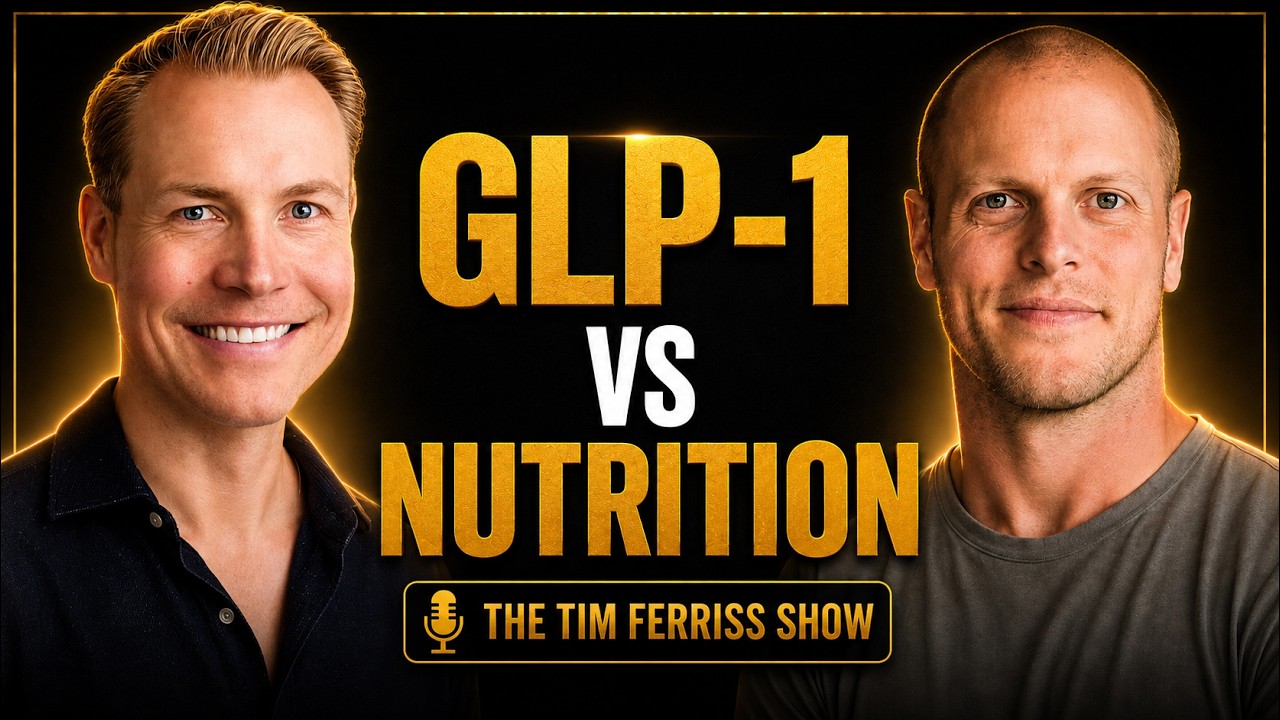
Reversing Type 2 Diabetes and Rowing 2,750 Miles — Sami Inkinen of Virta Health
Ask anything from this episode.
Save it, chat with it, and connect it to Claude or ChatGPT. Get cited answers from the actual content — and build your own knowledge base of every podcast and video you care about.
Get Started Free