Key Moments
A rational conversation on where AI is actually going | Benedict Evans
 Lenny's Podcast
Want to know something specific about what's covered?
We've already dissected every moment. Ask and we will deliver (with timestamps).
Key Moments
AI is as transformative as the internet or mobile, but its real impact on jobs and industries is far more complex than simple automation, resembling the early days of the web.
Key Insights
AI is as big a deal as the internet or mobile, not necessarily bigger, with adoption and maturity of its capabilities still widely distributed, comparable to 1997 internet adoption.
The surge in investment in professional services (consulting, FDEs) by AI labs is surprising, indicating that implementing AI solutions is complex and requires specialized human expertise, not just raw AI capabilities.
The hard part of many jobs is not the discrete task but the broader context, strategy, and customer interaction, similar to how spreadsheets automated accounting tasks but didn't eliminate accountants; AI might automate tasks but not fundamentally redefine the value of many professions.
Despite predictions of job losses, historical trends like the rise of accounting or software development show that technological advancements often lead to job creation and increased employment, though with significant frictional pain and dislocation.
The value accrual in the AI ecosystem is likely to shift towards the application layer (apps, wrappers) rather than the foundational model providers, akin to how companies built on top of AWS or Windows, rather than the infrastructure providers themselves, will capture more value.
Anti-AI sentiment is a complex mix of genuine concerns (e.g., energy consumption, job displacement for specific roles) and often exaggerated or misinformed reactions, similar to early panics about databases or social media, with a lack of robust data on AI's actual impact.
AI's transformative potential is comparable to the internet and mobile, but adoption is uneven
Benedict Evans posits that Artificial Intelligence is as significant a technological shift as the internet or mobile phones, but not necessarily more. He likens the current state of AI adoption to 1997 for the internet: exciting, with much potential, but with many functionalities not yet fully realized or widely adopted. While some tech early adopters are deeply integrated with AI, the majority of the general population uses it sporadically. This wide distribution in adoption and maturity means the true, broad impact is still unfolding and is not yet fully priced in by the market or public consciousness. The analogy highlights that while the potential is immense, the path to widespread, seamless integration is gradual and filled with uncertainty, much like the early days of web browsers and online services.
The surprising demand for professional services in an AI-driven world
A striking observation is the significant investment by leading AI labs like OpenAI and Anthropic in professional services, consulting firms, and 'forward-deployed engineers.' This trend counters the notion that AI will simply automate away these roles. Instead, it suggests that integrating AI effectively into complex business operations is a substantial undertaking. Companies don't have dedicated teams to overhaul internal workflows, restructure operations, or implement new technologies rapidly. Hiring consultants or specialized engineers becomes necessary to bridge this gap. The value proposition isn't just about generating AI outputs, but about deciphering strategic needs, understanding organizational politics, redesigning processes, and managing change – tasks that require deep human expertise and on-the-ground implementation skills. This highlights that while AI can automate tasks, the strategic and operational challenges of its deployment require human intervention and specialized support.
Redefining 'jobs' versus 'tasks' in the age of automation
Evans argues that the impact of AI on jobs is more nuanced than simple task automation suggests. He uses the analogy of elevator attendants whose job morphed into pressing a button once automated elevators became standard. More broadly, he points to professions like accounting, where spreadsheets automated specific calculations but didn't eliminate accountants; instead, their roles evolved to handle more complex analysis and strategic advice. Similarly, software development has seen massive productivity gains through IDEs and libraries, yet the demand for developers has not disappeared. The key insight is to distinguish between discrete tasks and the overarching job or profession. While AI might automate certain tasks, the 'hard part' of many jobs often involves strategic thinking, customer interaction, complex problem-solving, and contextual understanding – aspects that are not easily automated. The continued growth in employment for accountants despite technological advancements underscores this point: automation often redefines, rather than eliminates, roles by freeing up human capacity for higher-value activities.
Historical perspective suggests AI will create new jobs, not just destroy old ones
Drawing on historical parallels, Evans contends that new technologies, including AI, typically automate existing jobs but also unlock the creation of entirely new ones that are currently unimaginable. This has been the pattern since the Industrial Revolution, where peasant labor shifted to new industrial jobs, and later, where telegraph operators and typesetters were displaced by new digital roles. While there is always significant frictional pain and dislocation during these transitions, the overall outcome has been increased prosperity and new forms of employment. The speed of AI adoption may be faster due to existing digital infrastructure (internet, smartphones), but the fundamental dynamic of job displacement followed by job creation is expected to hold. The 'doomer' narrative, which predicts mass unemployment, often fails to account for this historical pattern and the complex, iterative process by which economies adapt and generate new value and professions.
Value capture likely to shift to the application layer, not foundational models
Evans suggests that the long-term value and pricing power in the AI ecosystem may not reside with the creators of foundational models (like OpenAI or Anthropic), but further up the stack with companies building applications and services on top of these models. He draws an analogy to the early internet and mobile eras: companies like Microsoft and Apple, which built platforms and applications, captured significant value, while infrastructure providers (like phone companies) often became low-margin commodity utilities. He argues that foundational models, much like basic cloud infrastructure (AWS), may become commoditized commodities with limited pricing power due to competition and a lack of strong network effects. The real innovation and value creation will likely come from developers building specialized applications that leverage these models in novel ways, similar to how many successful companies were built on top of iOS or Windows, rather than directly by the OS providers themselves. This means the 'apps' built by third parties will be where much of the economic opportunity lies.
The complex and often murky landscape of anti-AI sentiment
The growing anti-AI sentiment is a 'big fuzzy mess' encompassing various concerns. Some are tangible, like the energy and water consumption of data centers, though Evans notes that precise data often contradicts widespread fears. More significant are concerns about job displacement, for which there is no clear consensus in current economic data, leading to a 'fuzzy mess' of econometric arguments. Additionally, there are niche concerns from artists and writers whose specific roles feel threatened, and broader cultural anxieties around 'AI slop' and the quality of AI-generated content. Evans compares this backlash to the reactions seen with social media, where some criticisms were valid (e.g., privacy concerns), while others were based on misinformation or exaggerated fears. He notes a distinct lack of transparency from AI labs regarding usage data, making it difficult to fully assess the real-world impact. This makes it challenging to separate reasoned concerns from hype or mischaracterization, leading to a polarized public discourse.
Embracing uncertainty and adaptability is key to future success
Given the 'radical uncertainty' surrounding AI's future impact, Evans' primary recommendation for individuals is to avoid apathy or outright rejection. He advocates for actively engaging with AI, understanding its capabilities, and exploring how it can be used to enhance one's skills and adapt to changing professional landscapes. Those facing job market entry or career transitions should lean into learning about AI tools and applications relevant to their fields, rather than dismissing them. He emphasizes that while specific professions and job structures will undoubtedly change, history shows that adaptation and understanding new technologies are crucial for long-term success. The core advice is not to predict the future precisely, but to build the skills and mindset to navigate its inevitable transformations proactively.
AI is a tool that may disappear into the background, transforming industries in unexpected ways
Evans finds it challenging to pinpoint a single, universally groundbreaking AI use case in his own work, partly because the applications he'd automate are often complex information retrieval tasks that current AI struggles with. However, he uses AI for practical purposes like proofreading and image generation for redecorating. He notes that AI often works best for tasks that computers historically struggled with, rather than automating 'computer-like' tasks. He draws an analogy to spreadsheets or early internet tools: initially, they were used to do existing tasks more efficiently, but eventually, they enabled entirely new ways of working and new business models (e.g., Spotify not being an 'online music store' but a new kind of music consumption platform). The future might involve AI embedding itself so deeply into tools and workflows that it becomes invisible, much like how voice transcription (which likely uses AI) is now a seamless part of his communication. This suggests that AI's most profound impact may not be through explicit AI tools, but through its integration into existing technologies, fundamentally changing how they operate and what they enable.
Mentioned in This Episode
●Software & Apps
●Companies
●Organizations
●Books
●People Referenced
Common Questions
Benedict Evans believes AI is as big a deal as the internet or mobile, comparing the current state of AI to the internet in 1997 – exciting but with much still to be developed and understood.
Topics
Mentioned in this video
A prominent AI laboratory mentioned in the context of increasing headcount and its role alongside other major AI labs.
A sponsor of the podcast, providing a developer platform for enterprise features like single sign-on and SCIM for B2B SaaS companies.
Mentioned as a major AI lab alongside OpenAI, with questions raised about its competitive position and its investment in professional services.
Mentioned in the context of its operating system providing much of the code for iPhone apps, and its potential future role with AI on devices.
A consulting firm, mentioned as an example of professional services that companies hire to help with strategic projects and adopting new technologies.
A company mentioned as a user of WorkOS for enterprise features.
A company mentioned as a user of WorkOS for enterprise features.
Mentioned for a 1950s advertisement of an electronic calculator, used as an analogy for the impact of early computing and how technology is presented over time.
A sponsor of the podcast, automating compliance and risk management for companies using frameworks like SOC 2 and ISO 27001.
A telecommunications company whose 'Shark fin' flip phone from the late 1990s is mentioned as an example of hardware design differentiation.
Mentioned as a widely adopted AI tool that companies might integrate, with skepticism towards rapid, widespread firing of staff after adoption.
A social media platform mentioned as a place where people express strong negative opinions about AI.
An early spreadsheet program, used as an analogy for how new technology can be mind-blowing for specific professions like accounting.
A B2B SaaS company mentioned as a user of WorkOS for enterprise features.
A code editor company mentioned as a user of WorkOS and Vanta for enterprise readiness and compliance.
A company mentioned as a user of WorkOS for enterprise features.
Used as an analogy for how operating systems can create network effects and leverage, discussed in comparison to cloud platforms like AWS regarding AI's future.
Amazon Web Services, used as an analogy for cloud platforms that don't necessarily create strong network effects for the underlying infrastructure compared to operating systems like Windows.
Google's AI model, mentioned in the context of distribution strategies on Android and its potential integration into Apple's AI initiatives.
Meta's AI model, mentioned as part of the competitive landscape in AI models, with Meta distributing it across its services.
A Japanese mobile internet platform, with an iMode phone from 2001 mentioned for its color screen and camera, highlighting early mobile innovation.
An AI scientist quoted on the definition of AI as 'whatever machines can't do yet,' highlighting the shifting perception of technology.
CEO of OpenAI, quoted on selling AI intelligence like electricity or water, which Evans uses to discuss utility industry margins and pricing power.
Former CEO of Google, mentioned in the context of receiving boos during a commencement speech when mentioning AI, illustrating anti-AI sentiment.
A comedian whose joke about AI wanting to be creative instead of doing hard tasks is referenced.
A comedian whose quote about driving speeds is used as an analogy for parenting perspectives.
Cited for a quote about reasoning someone out of an idea they won't reasonably do, applied to people's adamant beliefs about technology.
Author of a book on the economic history of Chicago, which Benedict Evans finds relevant to technology due to its discussion of logistics and network dynamics.
The guest on the podcast, an independent tech analyst and former partner at A16Z, who discusses the impact and future of AI.
A classic film watched recently by Benedict Evans, described as brilliant and interesting, even if initially intimidating.
The podcast where this conversation is taking place, hosting Benedict Evans.
Mentioned for subscribers receiving access to AI products, and Benedict Evans is invited to contribute his insights there.
More from Lenny's Podcast
View all 34 summaries 95 min
The AI paradox: More automation, more humans, more work | Dan Shipper
 100 min
Why we’re at the beginning of the AI hardware boom | Caitlin Kalinowski (ex–OpenAI, Meta, Apple)
 100 min
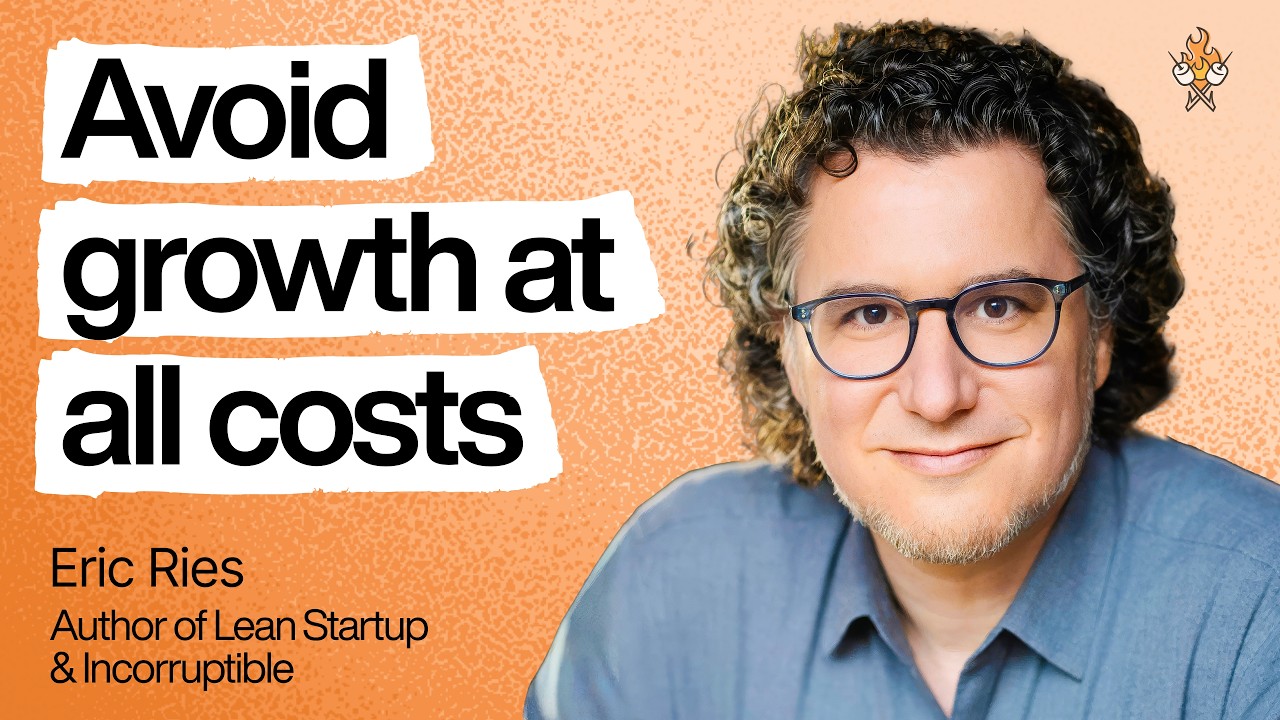
How Anthropic, Costco, and Patagonia all build incorruptible companies | Eric Ries
 88 min
AI era skills: Why cultivating agency matters more than job titles | Max Schoening (Notion)
Ask anything from this episode.
Save it, chat with it, and connect it to Claude or ChatGPT. Get cited answers from the actual content — and build your own knowledge base of every podcast and video you care about.
Get Started Free