Key Moments
A Few Thoughts For A New Year (Episode #229)
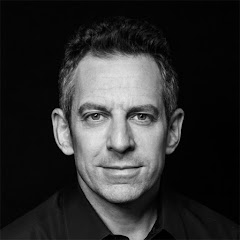 Sam Harris
Want to know something specific about what's covered?
We've already dissected every moment. Ask and we will deliver (with timestamps).
Key Moments
Sam Harris discusses 2020's failures, tribalism, and misinformation, hoping for competence and compassion in 2021.
Key Insights
2020 exposed societal failures in unity, trust, and handling crises, exacerbated by misinformation.
Hyper-partisanship and 'cults of thought' (e.g., Trumpism, wokeness) have fragmented society.
Technology, particularly social media, amplifies misinformation and tribalism, making people unreachable.
There's a critical need for intellectual honesty, competence, and compassion to rebuild society.
Wealth inequality is a significant issue, requiring ethical consideration alongside economic incentives.
Balancing individual tax optimization with societal needs and effective governance is crucial.
THE CHALLENGE OF A NEW YEAR AND A DIFFICULT PAST
As 2020 concludes, Sam Harris reflects on the arbitrary nature of calendar resets while acknowledging their psychological utility. The past year brought immense private suffering and a public failure to cohere around shared goals. This estrangement, fueled by hostility and pervasive misinformation, has created a deeply unnerving social landscape, suggesting a societal breakdown far beyond simple hyper-partisanship.
THE RISE OF MISINFORMATION AND CULT-LIKE THINKING
Harris identifies the interaction between technology, especially social media, and politics as a primary driver of societal fragmentation. He observes a significant portion of the population being swayed by misinformation and conspiracy theories, leading to the formation of 'competing cults,' such as Trumpism and aspects of wokeness. These movements are characterized by their reliance on propaganda, rendering rational discourse nearly impossible and fostering an environment akin to an 'island of liars'.
INSTITUTIONAL FAILURE AND EROSION OF TRUST
The podcast highlights a concerning breakdown in social trust and confidence in institutions, stemming from a mix of genuine failures and political contamination. While medical research achieved astonishing speed with vaccine development, public health institutions like the CDC and prestigious journals have, according to Harris, damaged their reputations through political dogmatism. This, coupled with a flawed vaccine distribution strategy, illustrates a concerning disconnect between scientific capability and effective societal management.
THE MADNESS OF POLITICAL EXTREMES AND AUDIENCE CAPTURE
Harris argues that both the political left and right have, in many ways, 'gone mad,' with their respective extremes tainting the mainstream. He cautions against succumbing to cult-like thinking, whether it involves believing in widespread election fraud or extreme interpretations of social justice issues. Furthermore, he addresses the phenomenon of 'audience capture' among media creators, where the desire for validation leads to pandering, a trap he consciously tries to avoid.
WEALTH INEQUALITY AND THE NEED FOR COMPASSION
Diving into wealth inequality, Harris stresses its ethical and practical implications, arguing that even self-interested individuals should recognize the benefits of a more equitable society. He critiques simplistic anti-wealth rhetoric while emphasizing the ethical imperative for the wealthy to contribute significantly through taxes and charitable giving. The example of Mark Zuckerberg's donation and the San Francisco supervisors' reaction illustrates the complex dynamics and growing animosity surrounding wealth distribution.
PATHS TO A BETTER FUTURE: COMPETENCE AND COMPASSION
Looking ahead, Harris expresses hope for a future driven by competence and compassion, emphasizing the need to build a culture conducive to sanity and long-term survival. He advocates for incentivizing productive work, funding science, and fostering a society where prosperity is inclusive. This requires moving beyond zero-sum thinking and developing new social norms that promote better human behavior, ultimately aiming for a future where we are better problem-solvers and more connected beings.
ETHICAL TAXATION AND SOCIETAL RESPONSIBILITY
The discussion touches upon the rational inclination of wealthy individuals to minimize taxes, as seen in the exodus from California. However, Harris argues that government mismanagement should not be an excuse for avoiding taxes but a call for better governance. He believes that while paying as little as legally possible is understandable, higher taxes are necessary for societal needs. This underscores the dual responsibility of the wealthy to pay their fair share and use their resources for the greater good.
CULTIVATING A HEALTHIER ECOLOGY OF IDEAS
Harris concludes by acknowledging the current unhealthy 'ecology of ideas,' likening it to a 'superfund site of bad memes.' He intends to use his platform to foster constructive conversations, exploring ideas with real-world consequences for public policy and personal lives. He reiterates the importance of subscribing and supporting the podcast, emphasizing a commitment to making content accessible to all, regardless of financial means, and promoting applied philosophy through platforms like the Waking Up app.
Mentioned in This Episode
●Software & Apps
●Companies
●Organizations
●Books
●Concepts
●People Referenced
Examples of Public Trust Breakdown
Data extracted from this episode
| Institution/Entity | Action/Outcome | Speaker's Assessment |
|---|---|---|
| US Political Leadership (Left & Right) | Failure to manage pandemic | Catastrophic failure |
| CDC | Contamination by political dogmatism | Worked to destroy reputation |
| New England Journal of Medicine | Contamination by political dogmatism | Worked to destroy reputation |
| Vaccine Distribution | Botched rollout, slow pace | Incredible failure, thousands dying |
| Frontline Healthcare Workers | Refusing vaccine doses (50%) | Demonstrates vaccine hesitancy despite risk |
Cult-like Beliefs Identified by Sam Harris
Data extracted from this episode
| Belief System | Core Tenets Discussed | Speaker's Label |
|---|---|---|
| Claims of 2020 Election Fraud | Trump won, widespread fraud, officials complicit | Cult |
| Beliefs on Racism, Sexism, Bigotry | Primary explanations for inequality, systemic exclusion of minorities/women | Cult |
| COVID-19 Pandemic Denial | Hoax, lockdowns to destroy economy/defeat Trump, mask mandates for control | Cult |
Comparing Sacrifice Proportions (Zuckerberg Donation Example)
Data extracted from this episode
| Individual's Net Worth | Donation Amount | Equivalent Sacrifice for Average Person | Sacrifice Level |
|---|---|---|---|
| $75 Billion | $75 Million | $75,000 (for someone with $75,000) | Relatively small for ultra-wealthy |
| $75 Million | $75,000 | $750 (for someone with $75,000) | Significant sacrifice |
| $75,000 | $75 | $7.50 (for someone with $75,000) | Modest sacrifice |
Common Questions
Sam Harris uses the calendar change of the new year as a device to clear his head and attempt to get his priorities straight, reflecting on the past year and looking forward.
Topics
Mentioned in this video
Referred to as a prestigious medical journal that has 'worked extraordinarily hard in the last year to destroy its reputation.'
The speaker refers to looking at the Forbes list to check Mark Zuckerberg's net worth.
Mentioned as a prestigious medical institution that has worked to destroy its reputation during the last year.
Received a $75 million donation from Mark Zuckerberg and Priscilla Chan, which was then condemned by the city's Board of Supervisors.
Author of a track on Stoicism within the Waking Up app.
The speaker and host of the podcast, discussing his hopes for the new year, societal issues, and his podcast's mission.
Mentioned as a political figure whose rhetoric contributes to the demonization of wealth.
His large donation to San Francisco General Hospital and subsequent condemnation by the city's Board of Supervisors is used as an example of the wealth inequality problem. His net worth and donation proportions are discussed.
Mentioned as a highly successful movie star whose lifetime earnings are compared to the daily earnings of the wealthiest individuals.
Mentioned as a highly successful movie star whose lifetime earnings are compared to the daily earnings of the wealthiest individuals.
Mentioned as a highly successful movie star whose lifetime earnings are compared to the daily earnings of the wealthiest individuals.
Credited with coining the phrase 'audience capture'.
Mentioned in the context of Trumpism and the 2020 election fraud claims. The speaker states he would never be a fan.
Mentioned alongside Mark Zuckerberg for their donation to San Francisco General Hospital.
Used as an example of a wealthy city with high homelessness and crime rates, and where rich people are leaving due to mismanagement and tax policies.
Mentioned as a state drawing an exodus from the tech community due to no income tax.
Mentioned as a state drawing an exodus from the tech community due to no income tax.
More from Sam Harris
View all 306 summaries 92 min
Is AI Already Conscious? (FULL EPISODE)
 25 min
Why Sam Harris Is Still Angry at Ezra Klein
 30 min
Can AI Cure Loneliness?
 25 min
Why Is Everyone So Unhappy?
Ask anything from this episode.
Save it, chat with it, and connect it to Claude or ChatGPT. Get cited answers from the actual content — and build your own knowledge base of every podcast and video you care about.
Get Started Free