Key Moments
A Conversation with Siddhartha Mukherjee (Episode #214)
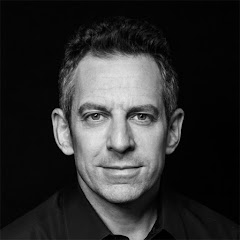 Sam Harris
Want to know something specific about what's covered?
We've already dissected every moment. Ask and we will deliver (with timestamps).
Key Moments
Experts discuss COVID-19 pandemic failures: asymptomatic spread, testing delays, mask confusion, and political interference.
Key Insights
COVID-19's pandemic potential stems from its novelty, high infectiousness, and insidious asymptomatic spread, making containment difficult.
Early global ineptitude, particularly China's initial blocking of information and censorship, hindered timely response.
The US faced significant failures, including a critical 40-day delay in FDA-approved testing due to CDC test malfunctions and bureaucratic hurdles.
Travel restrictions were implemented too late and were initially misdirected, allowing European spread into the US before widespread testing was available.
Conflicting and delayed public health messaging, especially regarding masks, eroded public trust and created confusion.
The federal system's disjointed approach and inconsistent state-level responses, often resulting in 'quasi-lockdowns,' were less effective than coordinated, stringent measures.
VIRAL CHARACTERISTICS FUELING THE PANDEMIC
Siddhartha Mukherjee explains that SARS-CoV-2 possesses a trifecta of properties making it uniquely suited for a global pandemic. Firstly, it's a novel virus to which humans have no pre-existing immunity. Secondly, it exhibits a high R-naught value, indicating significant transmissibility. Most critically, its capacity for asymptomatic spread, where individuals can transmit the virus without showing symptoms, makes traditional symptom-based containment strategies ineffective and necessitates robust testing to identify carriers.
EARLY GLOBAL INEPTITUDES AND ORIGIN UNCERTAINTIES
The pandemic's failures began in Wuhan, China, with initial attempts by doctors to raise alarms being suppressed. The censorship of the doctor who sounded the initial warning, and his subsequent death from the virus, highlights early systemic issues. While the exact origin remains under investigation, and speculation includes lab leaks versus natural zoonotic spillover, Mukherjee stresses the importance of a thorough investigation for preventing future pandemics rather than immediate therapeutic or diagnostic interventions.
CRITICAL TESTING DELAYS IN THE UNITED STATES
A major US failure was the 40-day delay in having an FDA-approved test for the virus. The CDC's initial test design malfunctioned, and bureaucratic processes for emergency use authorization (EUA) for academic and private labs were slow. This lack of widespread testing during the virus's initial US spread meant asymptomatic carriers went undetected, facilitating exponential community transmission and preventing effective contact tracing and isolation efforts.
INEFFECTIVE TRAVEL RESTRICTIONS AND BORDER CONTROL
The US initially focused travel bans on China, failing to recognize the rapid spread occurring in Europe. Many individuals traveling from Europe, which had become a significant hotspot, entered the US without adequate quarantine or testing. This influx, particularly into New York City, seeded new outbreaks. The timing of the European travel ban, coupled with the lack of testing and quarantine protocols, allowed the virus to spread unchecked during a critical period.
COMMUNICATION BREAKDOWNS AND MASK CONTROVERSY
Public health communication regarding crucial measures like mask-wearing was inconsistent and contradictory. Initially, masks were discouraged due to concerns about PPE shortages for healthcare workers. This created confusion and distrust, as the public questioned why masks were deemed ineffective for them but necessary for medical professionals. This messaging failure, compounded by politically influenced statements, undermined public health guidance during a critical phase.
FEDERALISM, QUASI-LOCKDOWNS, AND STATE-LEVEL DISPARITIES
The US federal system, with significant autonomy for state governors, led to a fragmented response. While some states implemented lockdowns, many relied on 'quasi-lockdowns' that harmed businesses without effectively halting viral spread. The lack of stringent, consistent enforcement, unlike the more militarized responses seen in Italy and Spain, allowed for continued transmission. New York's eventual strict lockdown and phased reopening, contrasted with less compliant states, demonstrates the impact of decisive, phased public health interventions.
THE RISE OF CONSPIRACY THINKING AND DATA DISTORTION
Mukherjee addresses the baseless conspiracy theories surrounding COVID-19 mortality statistics, including claims of hospitals inflating death counts for financial incentives. He refutes this by pointing to the consistent global case fatality rate hovering around 0.7-0.8%. Mathematical reasoning suggests such widespread, coordinated deception on a global scale is improbable, and that reported deaths, while sometimes involving patients with co-morbidities, reflect a real and significant mortality impact.
VULNERABLE POPULATIONS AND NURSING HOME OUTBREAKS
A significant failure involved the discharge of patients from hospitals back into nursing homes, facilities often lacking adequate PPE and infection control measures. These settings became 'petri dishes,' rapidly spreading the virus among elderly and vulnerable residents, often through healthcare workers. This cycle, where individuals not sick enough for hospital admission were sent to nursing homes without proper precautions, exacerbated the pandemic's impact on a high-risk demographic.
SUPPLY CHAIN WEAKNESSES AND RESILIENCE GAPS
The pandemic exposed critical weaknesses in the US supply chain for essential medical supplies, including N95 masks and testing reagents. Dependence on foreign manufacturing, particularly China, meant that disruptions could halt testing and production. The discussion highlights that while the US may be 'supercharged' in efficiency, it lacks resilience. Building resilience requires stockpiles and diversified local manufacturing, rather than sole reliance on cost-effective, but vulnerable, global supply chains.
POLITICAL CONTAMINATION OF PUBLIC HEALTH INFORMATION
The conversation underscores the detrimental effect of political interference on public health communication. Medical experts, including those at the CDC and task force leaders, were constrained in their messaging to avoid contradicting or embarrassing political figures. This created an environment where scientific integrity was compromised, leading to inconsistent and often ineffectual public health directives, and ultimately eroding public trust in institutions.
Mentioned in This Episode
●Products
●Software & Apps
●Organizations
●Books
●Drugs & Medications
●Concepts
●People Referenced
Common Questions
The virus is entirely new to humans, leading to immunological naivete. It has a high capacity for spread (high R naught) and, critically, asymptomatic individuals can carry and transmit the virus without showing symptoms.
Topics
Mentioned in this video
Used as an example of a virus capable of asymptomatic transmission, similar to SARS-CoV-2.
The disease caused by the SARS-CoV-2 virus, discussed extensively regarding its biology, spread, and the global response.
The virus responsible for the COVID-19 pandemic, discussed for its characteristics that make it pandemic-causing, such as its novelty, high spread capacity (R naught), and asymptomatic transmission.
The US Food and Drug Administration, criticized for its slow processes and bureaucracy in approving diagnostic tests during the early pandemic, hindering rapid response.
Mentioned as a site where academic investigators, like Alex Greninger, developed early COVID-19 tests.
Mentioned as an example of an academic laboratory that could have assisted with testing if pre-authorized.
The US agency responsible for public health, critically discussed for its initial failures in developing and distributing COVID-19 tests, and its shifting messaging on masks.
Discussed as a major epicenter in the US, particularly affected by early introductions from Europe and initial failures in testing and containment.
The city in China where the COVID-19 pandemic is believed to have originated, with discussions about early mismanagement and censorship.
Mentioned as a state that responded relatively quickly to the pandemic, implementing lockdowns.
Cited as an example of a country that effectively managed the pandemic through rapid and widespread testing and contact tracing.
Mentioned as a country severely impacted by COVID-19, with its situation serving as a warning to the US, and its travel also seeding infections in New York.
Head of the White House Coronavirus Task Force, discussed as a public medical voice whose integrity appeared diminished by proximity to President Trump.
An oncologist and writer, interviewed about the COVID-19 pandemic.
Mentioned as a prominent individual who spread skepticism about COVID-19 fatality statistics on social media.
An academic investigator at the University of Washington who developed an early COVID-19 test, highlighting the delays caused by FDA/CDC licensing.
Former head of the CDC, discussed as one of the public medical voices struggling to communicate effectively while navigating political pressures.
Director of the National Institute of Allergy and Infectious Diseases, discussed as a key public medical voice who navigated a difficult task with considerable integrity.
A manufacturer of N95 masks whose business struggled due to foreign competition and cost-cutting measures, illustrating US dependency on foreign supply chains.
More from Sam Harris
View all 306 summaries 92 min
Is AI Already Conscious? (FULL EPISODE)
 25 min
Why Sam Harris Is Still Angry at Ezra Klein
 30 min
Can AI Cure Loneliness?
 25 min
Why Is Everyone So Unhappy?
Ask anything from this episode.
Save it, chat with it, and connect it to Claude or ChatGPT. Get cited answers from the actual content — and build your own knowledge base of every podcast and video you care about.
Get Started Free