Key Moments
A Conversation with Paul Bloom (Episode #198)
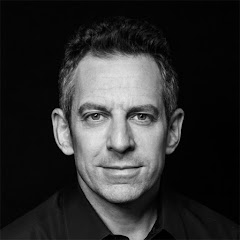 Sam Harris
Key Moments
Podcast discusses COVID-19, economic vs. public health trade-offs, education, and its psychological impacts.
Key Insights
Putting a price on human life is a constant, albeit implicit, necessity in societal decisions, starkly apparent in global wealth disparities.
The 'cure is worse than the disease' argument is fallacious, as it compares lockdown costs to a pre-lockdown world, not to the unmitigated economic/health costs of inaction.
The pandemic response has highlighted a 'turnkey totalitarianism' capability, offering lessons for future existential risks, though social distancing hinders traditional disaster-response cohesion.
The shift to online education may democratize access but risks diminished motivation due to the loss of in-person social cues and the ritual of attendance.
The pandemic's psychological impact may be significant, potentially resetting risk perception and societal habits, though resilience and shared experience could offer some protective mechanisms.
Despite a shared global experience, the pandemic's impact varies dramatically based on individual circumstances, wealth, and living conditions, impacting careers and relationships differently.
THE IMPLICIT PRICE OF HUMAN LIFE
The discussion begins by addressing a common misconception: that one cannot put a price on human life. The speakers argue this is demonstrably false, as societies constantly make implicit or explicit decisions that value lives differently based on economic constraints. This is evident in safety regulations, healthcare spending, and critically, in the vast disparity between the resources allocated to saving lives in wealthy versus developing nations, where trade-offs are starkly more severe.
FRAMING EFFECTS AND ECONOMIC FALLACIES
A significant fallacy identified is the argument that the pandemic's cure (lockdowns) is worse than the disease. This perspective often compares the economic and social costs of lockdowns to an idealized pre-pandemic world, rather than to the catastrophic economic and health consequences of allowing the virus to spread unchecked. The real comparison, they argue, is between different forms of human flourishing, not simply money versus lives, or lockdown versus normalcy.
THE 'TURNKEY TOTALITARIANISM' AND SOCIETAL RESILIENCE
The conversation touches upon the concept of 'turnkey totalitarianism,' the ability to rapidly implement restrictive societal measures when necessary, learned from this pandemic. This experience serves as a 'dress rehearsal' for potentially more severe future threats. However, a unique cruelty of this pandemic is that the very act of social distancing, which protects individuals, paradoxically hinders the traditional communal efforts that foster resilience and psychological well-being in the wake of disasters.
THE TRANSFORMATION OF EDUCATION AND WORK
The pandemic has accelerated the shift towards online education, presenting both opportunities for broader access and challenges in maintaining student motivation and engagement. While remote learning offers egalitarian benefits, the loss of in-person interaction and ritual may impact learning outcomes. Similarly, the economic fallout has severely impacted career trajectories, particularly for recent graduates, with long-term implications for various sectors, especially small businesses unable to weather prolonged closures.
PSYCHOLOGICAL IMPACTS AND PERCEPTION SHIFTS
Long-term psychological effects are anticipated, with potential increases in anxiety and trauma. While human resilience is noted, the pandemic's unique characteristic of enforcing isolation limits the communal coping mechanisms typically observed after collective disasters. There's also the possibility of a permanent 'reset' in the perception of contagion risk, leading to lasting changes in social behaviors like handshaking and a heightened awareness of public health, though the extent of this shift remains uncertain.
THE COMPLEXITY OF A SHARED GLOBAL EXPERIENCE
While the pandemic is a globally shared experience, its impact and the resulting isolation are experienced very differently. This ranges from relative comfort and quality time for some to immense hardship, loss of livelihood, and lack of basic resources for others, particularly in developing nations. The isolation amplifies suffering, preventing the communal bonding that typically helps societies recover from crises, leaving individuals to grapple with the consequences largely alone, despite the shared nature of the threat.
Mentioned in This Episode
●Software & Apps
●Organizations
●Books
●Concepts
●People Referenced
Common Questions
The discussion highlights that societies implicitly and explicitly put a price on human life through cost-benefit analyses in safety regulations, healthcare, and resource allocation. This becomes particularly stark when comparing wealthy and developing nations, where available wealth drastically alters life-saving resource expenditure.
Topics
Mentioned in this video
Mentioned for his statement that one cannot put a price on human life, which the speaker argues is factually incorrect in many societal contexts.
Mentioned in the context of potential political divisions and their impact on the election, specifically regarding their willingness to vote for Biden.
Mentioned as an example of a notable figure whose talk at Yale would draw a crowd, highlighting the value of in-person events.
Cited for stating that 60,000 American deaths from COVID-19 is not a terrible outcome, which the speaker refutes by pointing out this number is lower precisely because of lockdown measures.
Host of the Making Sense podcast, engaging in a conversation with Paul Bloom about the pandemic and its multifaceted implications.
Author whose book 'A Paradise Built in Hell' discusses how collective disasters can bring people together, a phenomenon contrasted with the isolating nature of the COVID-19 pandemic.
Mentioned humorously in relation to the idea of digital health status avatars for dating.
A philosopher whose concept of 'turnkey totalitarianism' is discussed in the context of society's ability to rapidly implement strict measures in response to existential risks like pandemics.
Mentioned for coining the term 'taboo trade-offs,' referring to the difficult societal choices involving weighing risks and benefits, particularly in contexts like speed limits.
Mentioned for downplaying COVID-19 deaths by comparing them to the flu, a rhetorical framing that the speaker finds outrageous.
Guest on the podcast, a psychologist and cognitive scientist discussing the current situation, ethical dilemmas, societal impacts, and future considerations related to the pandemic.
A physicist whose writings on children's resilience during the Blitz in London are referenced to illustrate the potential positive long-term outlook for children affected by the COVID-19 pandemic.
Mentioned for a headline about half the world being under lockdown, serving as a point of discussion for shared global experiences.
Mentioned as an example of a developing country where the cost-benefit analysis of saving lives differs significantly from wealthy nations due to resource scarcity.
Mentioned in the context of potential changes to airport security procedures (like allowing liquids) post-pandemic, serving as an example of potential shifts in norms.
A concept by Nick Bostrom describing the rapid implementation of total societal control for survival during existential crises, discussed as a potential outcome or lesson from pandemics.
The overarching goal of human activity, presented as the true trade-off in pandemic responses, encompassing both economic well-being and individual happiness.
The ethical framework of evaluating actions based on their outcomes, discussed in relation to evaluating past events like Chernobyl and the pandemic.
The city where the children were exposed to the Blitz, used as a historical example to discuss childhood resilience during crises.
Used to contextualize the severity of the COVID-19 pandemic's impact on the United States.
The country is discussed extensively regarding its economic trade-offs, death tolls, political response to the pandemic, and the differing experiences of its population.
The location where one of the speakers is based, where controversies surrounding summer cottages and the presence of homeless individuals during lockdown are discussed.
Used as an analogy for living in an area prone to natural disasters (tornadoes) and the inevitability of facing similar threats, like future pandemics.
Mentioned in the context of potential implementation of digital health passports or immunity verification on smartphones during the pandemic.
Referenced as an example of an online platform that provides lecture components for courses, highlighting the shift to online education.
Mentioned as a source of subscriber-only content, including conversations hosted by Sam Harris.
The video conferencing platform is mentioned as a tool used for conducting online class sections and discussions.
The platform where listeners can subscribe for full episodes of the podcast and other exclusive content.
More from Sam Harris
View all 298 summaries 28 min
Michael Pollan on Consciousness, Psychedelics, and the Limits of Neuroscience
 22 min
Why the Stock Market Has Become a Casino
 61 min
UNRAVELING THE DREAM (A New Documentary Executive Produced by Sam Harris)
 20 min
Francis Fukuyama: The End of History Was Never What You Think
Ask anything from this episode.
Save it, chat with it, and connect it to Claude or ChatGPT. Get cited answers from the actual content — and build your own knowledge base of every podcast and video you care about.
Get Started Free