Key Moments
A Conversation with Paul Bloom (Episode #185)
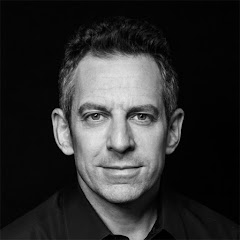 Sam Harris
Want to know something specific about what's covered?
We've already dissected every moment. Ask and we will deliver (with timestamps).
Key Moments
Sam Harris and Paul Bloom discuss Trump, inequality, fame, and psychological biases impacting progress.
Key Insights
The media's race to publish tragic news, like Kobe Bryant's death, is driven by an ad-based clickbait model, disregarding a dignified delivery to grieving families.
Donald Trump's unique communication style, characterized by incoherence and repetition, makes him an effective, albeit perplexing, orator, deeply impacting both supporters and critics.
Many people concerned about 'inequality' are actually worried about poverty or perceived unfairness, rather than the mere existence of wealth disparities.
Psychological biases, like the tendency to notice negative events and overlook progress, can hinder our perception of societal advancement.
Fame can be a corrosive force, leading individuals to compromise their principles and engage in hypocritical behavior to maintain proximity to power.
The nature of Trump's 'bullshit' communication, indifferent to truth, is more perplexing and impactful than outright lying, creating an outsized reaction.
ETHICAL DILEMMAS IN MODERN MEDIA
The conversation begins by addressing the problematic speed at which news of tragedies, such as Kobe Bryant's death, is disseminated. Sam Harris points out that websites like TMZ often announce deaths before families are notified. He attributes this to the advertising-driven, clickbait model of digital media, which incentivizes a race to publish over dignified reporting. Paul Bloom agrees, emphasizing the importance of delivering such news in a controlled and sober manner, contrasting it with the undignified experience of learning about it through social media hashtags. This reflects a broader ethical decay in news cycles driven by the pursuit of clicks and attention.
THE UNORTHODOX IMPACT OF DONALD TRUMP
The discussion delves into the political phenomenon of Donald Trump and the 'Trump Derangement Syndrome.' Both Harris and Bloom observe that traditional political strategies fail to impact or discredit Trump. Bloom suggests Trump's effectiveness stems from his being a 'super-stimulus,' evoking exaggerated reactions due to his perceived smallness as a person rather than genuine evil. Harris elaborates on Trump's communication style, likening it to a bullshitter who is indifferent to truth, creating a mood rather than coherent arguments.
TRUMP'S ORATORICAL STYLE AND PSYCHOLOGICAL EFFECT
Tyler Cowen's observation that Trump is an extraordinary orator is debated. While acknowledging Trump's skill in captivating an audience, both hosts question the underlying method. Harris suggests Trump's incoherence and repetition are not calculated but rather a symptom of his inability to articulate complex thoughts, with his audience being indifferent to contradictions. Bloom compares Trump's style to Jordan Peterson's, noting a similar tendency to be carried away by the sound of one's own voice, but with Trump's speech being particularly devoid of substantive content.
INEQUALITY AND THE MISUNDERSTANDING OF ITS CONCERNS
Shifting to societal issues, the conversation explores wealth inequality. Paul Bloom argues that public concern about inequality is often muddled. He posits that people are typically more worried about poverty or perceived unfairness in distribution, rather than the mere existence of disparities. Using an example of Jeff Bezos's wealth, Bloom contends that if everyone were well-off, extreme wealth differences would matter less to most people, highlighting a societal preference for unequal distributions when they are perceived as earned or based on merit.
PSYCHOLOGICAL BARRIERS TO PERCEIVING PROGRESS
The discussion touches upon psychological impediments that prevent people from noticing societal progress. Bloom suggests that humans have a natural tendency to be more attuned to threats and negative events than to positive advancements. This cognitive bias means that even when the world is objectively improving in many measurable ways, our perception can lag behind reality, leading to a sense of stagnation or decline. This is particularly relevant in political discourse where negative framing often garners more attention.
THE CORROSIVE NATURE OF FAME AND POWER
The conversation briefly considers the impact of fame and proximity to power. It's observed that individuals, even those with established principles, can be compromised by their pursuit of influence or by associating with figures like Trump. Examples like Mitt Romney's past actions and Ted Cruz's interactions with Trump are cited, illustrating the potential for humiliation and the sacrificing of integrity. This highlights how the desire for political power or recognition can lead to behaviors that diminish one's reputation and principles.
THE CASE OF MITT ROMNEY AND MORAL SACRIFICE
Mitt Romney's vote to convict President Trump during the impeachment trial is examined as an act of significant political and personal sacrifice. Both Harris and Bloom express admiration for Romney's stance, acknowledging his past criticisms and controversies. They note the vilification and potential threats Romney faces from Trump's base, underscoring the real personal cost of defying the political tribe. This act is seen as a rare moment where an individual prioritized principle over political expediency, even if it comes with severe repercussions.
THE PERPLEXING EFFECTIVENESS OF TRUMP'S RHETORIC
The hosts grapple with the perplexing effectiveness of Trump's simplistic and repetitive rhetoric. Bloom points out that even a fourth-grader doesn't repeat themselves as much as Trump, yet his messaging resonates. This leads back to the idea of 'Trump Derangement Syndrome,' where the sheer focus on criticizing him consumes significant conversational bandwidth. The repetitive nature of Trump's speeches and his alleged lack of deeper thought processes are highlighted, contrasting with more articulate speakers, yet his message sticks.
BULLSHITTING VERSUS LYING: A KEY DISTINCTION
Harry Frankfurt's distinction between lying and bullshitting is revisited to explain Trump's communication style. A liar knows the truth and deliberately misrepresents it. A bullshitter, however, is indifferent to the truth and focuses on creating a desired effect or mood. This lack of concern for factual accuracy allows Trump to speak freely, making him appear unconventional and, to his supporters, authentic. This indifference to truth is seen as a core element of his political success and his ability to avoid accountability for contradictions.
THE MYSTERY OF TRUMP'S APPEAL AND AUDIENCE PSYCHOLOGY
A central mystery discussed is why tens of millions of people remain loyal to Trump despite his contradictions and what many perceive as his mendacity. Harris expresses a lack of an adequate theory of mind for this demographic, struggling to comprehend their indifference to factual inconsistencies. He suggests that Trump's ability to construct memorable phrases like 'fake news' or 'drain the swamp' resonates deeply, creating a shared understanding and identity among his supporters, which transcends logical coherence or factual accuracy.
Mentioned in This Episode
●Companies
●People Referenced
Common Questions
There are ethical concerns when outlets like TMZ report deaths before families are notified, driven by the advertising model and the race for clicks in digital media. This prioritizes speed over sober, controlled communication during a personal tragedy.
Topics
Mentioned in this video
Host of the Making Sense podcast, discussing various topics including media ethics, politics, and inequality.
The actor behind Pee-wee Herman, discussed in the context of having a continued successful career, selling out large auditoriums.
Praised for breaking from his party to vote to impeach Trump, seen as an exception to the tarnishing effect Trump has on those around him.
Mentioned as a conservative writer who resisted Trump and paid a professional price for it.
Cited for his analysis of great orators of the last decade, listing Trump first, Obama third, and Greta Thunberg second.
Philosopher whose concept of 'bullshitters' (those indifferent to truth) is applied to analyze Donald Trump's communication style.
Guest on the Making Sense podcast, a psychologist discussing topics from media ethics to political figures and economic inequality.
Mentioned as having a career comeback or potential for redemption, with his upcoming appearance in New Haven.
Discussed extensively regarding his unhinged behavior, political strategy, impact on critics and supporters, oratorical style, and shamelessness.
Used as a point of comparison to Donald Trump, suggesting Trump is psychologically more despicable due to his lack of substance and perceived moral opposition.
Mentioned as a potential successor to Trump who would raise concerns about theocracy.
Cited by Tyler Cowen as a powerful and serious young orator, ranked second among the best of the last decade.
His death is used as a case study for the ethical implications of rapid, unverified news dissemination by outlets like TMZ.
Mentioned for tearing up the State of the Union address, seen by the speaker as a diminishing act, albeit celebrated by some critics of Trump.
Mentioned as a conservative writer who resisted Trump and paid a professional price for it.
Mentioned as an example of someone who experienced personal humiliation by Trump and then championed him.
Mentioned by Tyler Cowen as a great orator of the last decade, ranked third.
His 'Meditations' are mentioned as a hypothetical example of profound content Trump might discuss in private, contrasting with his public persona.
Mentioned as a potential Democratic nominee, whose candidacy is linked to concerns about wealth inequality.
Mentioned as a speaker with a meandering, free-associative style that can be engaging but lacks rigorous reality testing, similar to Trump but more articulate.
Mentioned as a potential Democratic nominee, whose candidacy is linked to concerns about wealth inequality.
His immense wealth is used as an example when discussing wealth inequality, contrasting with an average person's possessions.
More from Sam Harris
View all 307 summaries 48 min
When Should You Trust Your Intuition?
 92 min
Is AI Already Conscious? (FULL EPISODE)
 25 min
Why Sam Harris Is Still Angry at Ezra Klein
 30 min
Can AI Cure Loneliness?
Ask anything from this episode.
Save it, chat with it, and connect it to Claude or ChatGPT. Get cited answers from the actual content — and build your own knowledge base of every podcast and video you care about.
Get Started Free