Key Moments
A Conversation with David Frum (Episode #206)
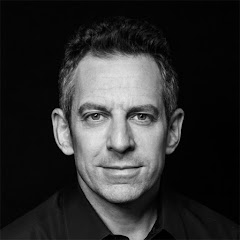 Sam Harris
Key Moments
David Frum and Sam Harris discuss the "Trumpocalypse" and the threats to democratic institutions.
Key Insights
Trump's political movement is described as an 'affinity fraud,' preying on the trust of like-minded conservatives.
A significant decline in trust for traditional institutions (media, government, science) fuels support for Trump.
The secularization of American society and the loss of religious affiliation are impacting political alignments.
Current political divisions are rooted in outdated grievances from decades past, hindering progress.
Republican strategies increasingly focus on gaming the system and suppressing votes rather than broad appeal.
Norms, rather than laws, are often the guardrails of democratic functioning, and Trump has exposed their fragility.
THE CONCEPT OF TRUMPISM AS AFFINITY FRAUD
David Frum introduces his book "Trumpocalypse," framing Trumpism as an 'affinity fraud.' He likens it to white-collar criminals preying on those with whom they share commonalities, such as Bernie Madoff targeting the Jewish community. Frum argues that Trump similarly exploits the trust of conservative Americans, not through traditional party loyalty, but by aligning with their grievances and vulnerabilities. This strategy leverages an 'outsider' appeal, contrasting with the historical predictability of the Republican Party, and is crucial for understanding his base's unwavering support.
ECHOES OF THE PAST AND THE SECULARIZATION OF POLITICS
Both Harris and Frum discuss how outdated grievances from the Cold War, the 1960s, and the Vietnam War continue to influence contemporary politics, hindering progress. Frum highlights the significant secularization of American society, particularly among younger generations, who no longer identify with traditional religious institutions. This shift has led to a redefinition of cultural identities, where religious affiliation is increasingly conflated with regionalism, anti-elitism, or opposition to progressive social changes.
INSTITUTIONAL DISTRUST AND THE ROLE OF MEDIA
A pervasive distrust of established institutions—the media, government agencies, and scientific bodies—is identified as a key driver of political disaffection. Harris invokes the 'man in the white lab coat' trope to illustrate how trust in experts has eroded over decades, amplified by perceived policy failures. Frum stresses that while this distrust may be honestly earned, Trump has shrewdly exploited it. The conversation delves into the evolving media landscape, noting that much information is now consumed via platforms like Facebook and YouTube, which have become new, often unvetted, media intermediaries.
GAMING THE SYSTEM AND VOTER SUPPRESSION TACTICS
The discussion pivots to how the Republican Party, particularly under Trump's influence, has shifted from seeking popular consensus to 'gaming the system.' Frum details how ideological commitments have led to attempts to make the electoral competition more closed, citing aggressive gerrymandering and efforts to suppress voting rights. He notes that states with fewer voters now wield disproportionate power in certain legislative bodies, a situation exacerbated by the Supreme Court's withdrawal from policing state-level voting actions, creating significant electoral injustices.
THE FRAGILITY OF NORMS AND THE CHALLENGE TO DEMOCRACY
Harris and Frum emphasize that the functioning of government often relies more on unwritten political norms than on explicit laws. Trump's presidency, they argue, has exposed this fragility by demonstrating how a lack of scruples can undermine foundational democratic guardrails. The conversation highlights how decisions in areas like law enforcement prosecution have become overtly politicized in the US, unlike in other democracies. This pressure-testing of the system, though unsettling, may necessitate a renewal of institutions, akin to post-Watergate reforms.
REIMAGINING POLITICS FOR A CHANGING WORLD
Frum advocates for a politics that reflects contemporary realities rather than clinging to outdated ideological categories. He suggests that solutions to current problems, like climate change or universal healthcare, may require blending ideas traditionally seen as left-wing and right-wing. The goal is to create a political system more responsive to the nation's evolving economic and social landscape, eventually benefiting even the Republican Party by moving away from its reliance on appealing to disaffected segments of the country.
Mentioned in This Episode
●Software & Apps
●Companies
●Organizations
●Books
●People Referenced
Common Questions
David Frum's new book, 'Trumpocalypse,' analyzes the end of the Trump era and what comes after. It explores the nature of Trumpism, the reasons for his support, and the potential dangers to democratic institutions.
Topics
Mentioned in this video
Author and political commentator, author of 'Trumpocalypse', discussing his views on Donald Trump and the current political landscape.
Used as an example of a 'normal Republican' whose criticisms of Trump would not be viewed as partisan bias.
Host of the Making Sense podcast, interviewing David Frum about his book and political analysis.
Mentioned as the candidate Frum knocked doors for in 1980 and as a historical figure who balanced ideology with broader appeal.
Used as an example of a 'normal Republican' whose criticisms of Trump would not be viewed as partisan bias.
Mentioned in the context of the 'Christian Right' and their support for Trump, suggesting a shift from religious to cultural identity.
The central figure of the discussion, analyzed as a phenomenon that has tested democratic norms and institutions, and whose political movement ('Trumpism') is described as an 'affinity fraud'.
Mentioned as an example of the type of person Bernie Madoff stole from, highlighting the 'affinity fraud' concept.
Quoted for her 2008 acceptance speech line about raising good people in small towns, used to illustrate political rhetoric.
Cited as an example of a politician still referencing events from half a century ago, showing how past issues are carried forward and can hinder modern political discourse.
Cited as an example of a non-moderate Republican who, like George McGovern, was 'clobbered' when parties were less ideological.
His vote percentage (46%) is compared to Donald Trump's during the discussion of electoral performance.
Mentioned for serving in his White House.
Cited as an example of a non-moderate Republican, like Barry Goldwater, who experienced electoral defeat due to party ideological shifts.
His vote percentage is contrasted with Donald Trump's, highlighting Trump's lower performance compared to previous Republican candidates.
Used as an example of a fraudster who preyed on his own community (fellow Jews) to implement his Ponzi scheme, illustrating the concept of 'affinity fraud'.
Mentioned in a hypothetical conversation with Mitch McConnell regarding voter suppression tactics.
Mentioned as an example of a commentator whose perspective on the 'darkness' of political actions might be considered by some.
Mentioned as the first US presidential candidate David Frum publicly supported in 1976.
Mentioned for his comments on driving states into bankruptcy and as an example of leveraging political power derived from constitutional compromises.
His vote percentage is contrasted with Donald Trump's, highlighting that Trump received less support than Kerry in a past election.
Mentioned as a platform providing content that feeds into Americans' information streams.
Used as an analogy for questionable business models, specifically concerning the impossibility of guaranteeing the quality and safety of a product served at massive scale.
Mentioned as a social media platform that has struggled to monetize content compared to Facebook.
Identified as a major source of information for Americans, alongside Facebook.
Identified as the primary source of information for many Americans, despite not creating content, and criticized for its role in spreading potentially untrustworthy information.
Used as an example in the context of privacy concerns and encryption, specifically regarding the iPhone and potential government access to data.
Cited as a traditional media institution increasingly losing its ability to evaluate content, and providing content to social media streams.
Cited as a distinct category of media in discussions about media trust and coverage of political figures.
Cited as a traditional media institution that is part of the discourse around media trust.
Mentioned in the context of potentially seeking warrants to unlock iPhones, raising questions about privacy versus law enforcement needs.
More from Sam Harris
View all 298 summaries 28 min
Michael Pollan on Consciousness, Psychedelics, and the Limits of Neuroscience
 22 min
Why the Stock Market Has Become a Casino
 61 min
UNRAVELING THE DREAM (A New Documentary Executive Produced by Sam Harris)
 20 min
Francis Fukuyama: The End of History Was Never What You Think
Ask anything from this episode.
Save it, chat with it, and connect it to Claude or ChatGPT. Get cited answers from the actual content — and build your own knowledge base of every podcast and video you care about.
Get Started Free