Key Moments
A Conversation with Caitlin Flanagan (Episode #203)
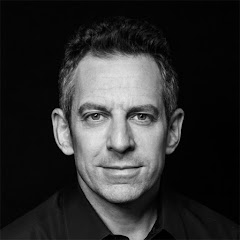 Sam Harris
Key Moments
Caitlin Flanagan discusses cancer recurrence, public reception of her writing, and an offensive tweet.
Key Insights
Flanagan's essay on her cancer recurrence, though difficult to write, brought relief from hiding her illness.
Stage four cancer signifies metastasis beyond the primary site, a serious diagnosis with evolved treatment options.
Modern cancer treatment has advanced significantly, offering hope even for metastatic cases, though not always a cure.
The concept of cancer carries immense psychological weight, perceived as a 'deathly situation' more than other illnesses.
Flanagan stresses that a 'good attitude' is not scientifically proven to impact cancer outcomes; treatment efficacy is key.
Social media can amplify negativity, as seen with a doctor's ill-timed and inappropriate tweet regarding Flanagan's health and writing.
NAVIGATING CANCER AND PUBLIC RESPONSE
Caitlin Flanagan discusses her cancer recurrence, initially finding the public outpouring of support embarrassing. However, she found relief in openly sharing her health struggles, ending the need to hide her illness. Flanagan details her initial breast cancer diagnosis at 40 with young children, the aggressive nature of the disease, and the debilitating chemotherapy and radiation treatments that followed. Despite achieving remission for five years, she experienced a devastating recurrence in her liver, chest wall, and lungs, which she described as a 'deathly situation'.
THE EVOLUTION OF CANCER TREATMENT
Flanagan further explains the concept of stage four cancer, which means the disease has metastasized. She highlights the significant advancements in treatment, particularly for her specific type of breast cancer, with drugs like Herceptin and others developed at institutions like UCLA. Her experience with a new treatment protocol led to a durable remission for eleven years, offering a stark contrast to the prognosis of the past. She notes that while a cure isn't guaranteed, scientific progress has dramatically improved outcomes for metastatic patients.
THE PSYCHOLOGICAL WEIGHT OF A CANCER DIAGNOSIS
The conversation delves into the unique dread associated with a cancer diagnosis compared to other serious illnesses. Unlike conditions like heart disease, cancer often implies aggressive treatments like chemotherapy and radiation, creating a sense of 'going to war' with the disease. Flanagan emphasizes that while a positive attitude is often encouraged, scientific studies do not support it as a direct factor in recovery. She asserts that adherence to treatment and its efficacy are the primary determinants of outcomes, regardless of one's emotional state.
METRICS OF LIFE AND THE PANDEMIC'S INTERFERENCE
Flanagan shares how she measured her life and recovery by her children's milestones, from preschool to college graduations. The COVID-19 pandemic has disrupted these anticipated events, adding another layer of uncertainty to an already precarious existence. She also touches upon the challenges of undergoing cancer treatment during the pandemic, including the logistical hurdles of scans and infusions, and the heightened concern about exposure to the virus in healthcare settings.
THE INFAMOUS TWEET AND SOCIAL MEDIA CRITIQUE
A significant portion of the discussion revolves around an inappropriate tweet from a doctor and New York Times writer, Amita Kalan, in response to Flanagan's cancer article. The tweet, which has since been deleted, suggested Flanagan use her remaining years to become less racist and anti-feminist. Flanagan recounts the shock and pain caused by this comment, especially given the sender's profession. The incident highlights how social media can become a platform for baseless accusations and the problematic nature of 'wokeness' when it leads to callousness.
APOLOGY, FORGIVENESS, AND SOCIAL DYNAMICS
The conversation explores the 'physics of apology' and the nature of forgiveness. Flanagan forgives the Tweeter completely, not out of obligation but to release herself from anger and to move forward. She distinguishes between forgiving an unrepentant individual and the possibility of genuine reconciliation if an apology is sincere and demonstrates change. This interaction underscores the complexities of public discourse, the ease with which privileged individuals can dismiss others' struggles, and the need for empathy, particularly in challenging times.
PRIVILEGE AND AWARENESS IN PUBLIC DISCOURSE
Flanagan and Harris briefly touch upon the concept of privilege, noting the irony of the Tweeter's focus on privilege while potentially benefiting from her own physical attractiveness. They also discuss the chilling effect online harassment can have on women in public life, making them hesitant to engage on platforms like Twitter. Flanagan advises younger women to ignore such vitriol, viewing it as meaningless noise, a piece of advice she strives to apply to her own experiences, even when the criticism comes from unexpected sources.
Mentioned in This Episode
●Organizations
●Drugs & Medications
●People Referenced
Common Questions
Caitlin Flanagan has stage four metastatic breast cancer that has spread to her spine. This is a recurrence after an earlier bout and remission.
Topics
Mentioned in this video
Researcher at UCLA whose work on herceptin and breast cancer is mentioned.
Comedian whose routine about people tweeting assuming their comments won't be seen is referenced.
Subject of a previous positive article by Flanagan, which may have led to misinterpretations.
Referenced as a distant historical figure to illustrate anonymity in online interactions.
Guest on the Makin Sense podcast, discussing her health, writing, and experiences.
Host of the Makin Sense podcast, discussing various topics with Caitlin Flanagan.
More from Sam Harris
View all 298 summaries 28 min
Michael Pollan on Consciousness, Psychedelics, and the Limits of Neuroscience
 22 min
Why the Stock Market Has Become a Casino
 61 min
UNRAVELING THE DREAM (A New Documentary Executive Produced by Sam Harris)
 20 min
Francis Fukuyama: The End of History Was Never What You Think
Ask anything from this episode.
Save it, chat with it, and connect it to Claude or ChatGPT. Get cited answers from the actual content — and build your own knowledge base of every podcast and video you care about.
Get Started Free