Key Moments
Why Sam Harris Is Still Angry at Ezra Klein
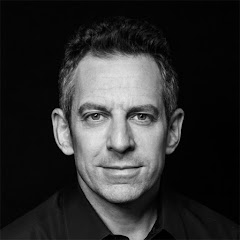 Sam Harris
Want to know something specific about what's covered?
We've already dissected every moment. Ask and we will deliver (with timestamps).
Key Moments
Sam Harris regrets his past conflict with Ezra Klein about platforming Charles Murray, which he now sees as a precursor to current political polarization. Kathryn Paige Harden shows empathy, admitting her past critiques of him were too harsh and didn't account for his actual anger.
Key Insights
Sam Harris feels his past disagreement with Ezra Klein about platforming Charles Murray was a mistake that contributed to the current polarized political landscape and the rise of the far-right.
Kathryn Paige Harden acknowledges that her and her colleagues' 2017 Vox piece criticizing Sam Harris's decision to platform Charles Murray was more critical of Harris's character and work than she remembers.
Harden explains that behavioral genetics remains controversial due to historical abuses like eugenics and the fact that it challenges our self-perception as autonomous agents.
Public opinion polls show that most people already believe genes influence behavior, personality, and mental illness, contradicting the idea that behavioral genetics is inherently counter-intuitive.
Harden states her intentions in criticizing Murray were scientific, but admits that the resulting discourse, amplified by media like Ezra Klein's, spiraled into personal attacks on Harris.
Harris criticizes academics like Stephen Jay Gould and Richard Lewontin for blurring science and progressive political agendas, linking this to how Harden's work has been misrepresented.
Lingering anger over the Ezra Klein controversy
Sam Harris expresses persistent anger towards Ezra Klein regarding a past conflict stemming from Harris's decision to interview Charles Murray on his podcast. Harris emphasizes that his primary concern was the scientific merits of Murray's work, not a desire to engage in a debate about "wokeness and media ethics." He recounts being publicly criticized, labeled a "racialist pseudoscientist," and even maligned by Klein, who allegedly counted the "black and brown faces" of Harris's interviewees. This led to a public email exchange, a podcast appearance by Klein, and recommendations for Harris to read Ibram X. Kendi. Harris feels that Klein, who he views as a "woke enforcer" and "leftist knucklehead," has since shifted his positions without acknowledging his past actions, contributing to a broader "reckoning" he believes is necessary. Harris links this unresolved conflict and the subsequent rise of "wokeness" to the current political climate, including the election of President Trump and the energization of the right wing as a backlash.
Kathryn Paige Harden's evolving perspective
Kathryn Paige Harden reflects on her and her colleagues' 2017 Vox piece criticizing Sam Harris's platforming of Charles Murray. Initially, Harden believed her concerns were primarily scientific objections to Murray's views. However, upon rereading their piece, she acknowledges that it was more directly critical of Harris himself, addressing the "normative wrong" of platforming such a figure. She admits her memory of the piece was inaccurate and that she was "unpleasantly surprised" by its personal critique of Harris. Harden explains that this was her first public, non-academic writing and that she has since learned that authorial intentions matter less than the actual text produced. She regrets that her scientific criticism of Murray escalated into personal attacks on Harris's character and work, stating, "That was never my intention." She also expresses gaining empathy for Harris's experience, having now been on the receiving end of similar public scrutiny for her own work.
The science of behavioral genetics and public perception
Behavioral genetics, the study of how inherited genes influence behavior, is explained by Kathryn Paige Harden as a field that is simultaneously pervasive and controversial. Contrary to common assumptions, public opinion polls reveal that most people already believe genes play a significant role in characteristics beyond physical traits, such as personality, academic performance, and mental illness. For instance, a study cited shows that the average American estimates genes to influence these areas, with parents of multiple children being particularly attuned to such differences. This suggests that the core idea of genetic influence on behavior is not an alien concept to the public. However, within academia and public discourse, the field remains contentious, partly due to its historical association with eugenics and the rise of the far-right appealing to purported innate biological differences.
Historical baggage and the challenge to agency
Harden elaborates on the deep-seated controversies surrounding behavioral genetics, attributing them to two primary factors. Firstly, the historical legacy of eugenics in the United States, which led to abuses like forced sterilizations, creates a justified suspicion of any science linking inheritance to behavior. Secondly, and perhaps more fundamentally, behavioral genetics challenges our deeply ingrained perception of ourselves as autonomous agents with control over our choices and destiny. By scientifically studying the influences of inherited molecules on behavior, the field intersects with our experience of being the subjects of our own lives. This inherent tension between our subjective experience of agency and the objective scientific findings about biological influences makes behavioral genetics a perpetually sensitive and controversial area of study, even in the absence of historical or political baggage.
Blurring the lines between science and politics
Sam Harris critiques certain academic approaches, particularly mentioning figures like Stephen Jay Gould and Richard Lewontin, whom he perceives as blurring the boundary between science and progressive politics. He argues that these scientists, operating in fields like paleontology and behavioral genetics, sometimes treated the disregard of this boundary as a scientific virtue. Harris suggests that they advocated for progressive agendas under the guise of scientific ideas, exemplified by Gould's book "The Mismeasure of Man," which Harris views as not credible regarding intelligence literature. He posits that certain topics, like IQ and racial differences in IQ, are so polarizing that they tempt scientists to "not play fair" with opponents and to attribute bad motives, a phenomenon he claims to see happening to Harden.
The scientist's intent versus public reception
Harden reflects on the nature of public intellectual work, noting that once a piece is published, authorial intentions, while important to the author, often become secondary to the actual content and its reception. She acknowledges that she might have been too focused on scientific objections to Charles Murray rather than fully appreciating the implications of platforming him. She emphasizes that her intent was not to cause personal harm to Sam Harris, though she understands that the criticism echoed through popular culture in negative and caricatured ways. Her experience of being on the receiving end of similar public criticism for her own work has given her greater empathy for Harris's situation, an empathy she admits she may not have fully conveyed in their previous conversation.
Navigating the science of vice and blame
Harris introduces Harden's latest book, "Original Sin: On the Genetics of Vice, the Problem of Blame, and the Future of Forgiveness." He highlights its relevance and polarizing nature, touching on topics like violence, impulse control, differential life success, addiction, and homelessness. Harris notes the controversial nature of discussing human differences that have significant societal implications. He also raises the issue of reproductive technologies like IVF and selective embryo implantation, questioning whether society can truly escape the ethical dilemmas posed by scientific advancements that may guide human development, particularly in the context of ongoing debates in places like Alabama and Texas regarding reproductive rights.
Mentioned in This Episode
●Organizations
●Books
●People Referenced
Common Questions
Sam Harris is still angry at Ezra Klein due to unresolved issues from a past controversy where Klein published criticism of Harris's podcast with Charles Murray. Harris feels Klein, along with his colleagues, unfairly attacked him and contributed to his public criticism, while Klein has since shifted his views without acknowledging his past role as a 'woke enforcer'.
Topics
Mentioned in this video
Author whose book on race and IQ sparked controversy, leading to him being physically assaulted on a college campus. His work and the discourse around it are central to the discussion about free speech and ethical platforming.
Host of a podcast with whom Sam Harris had a public disagreement related to wokeness and media ethics, stemming from Harris's podcast featuring Charles Murray. Klein was criticized for his role in the controversy and for moving with the Overton window without acknowledging past actions.
The guest on the podcast, discussing her past interactions with Sam Harris, her own experiences with public criticism, and her work in behavioral genetics. She revisits a controversy from six years prior and her own role in it, expressing increased empathy.
Colleague of Paige Harden who, along with Richard Nisbet, contributed criticism to Vox regarding Sam Harris's podcast with Charles Murray. They are characterized as potentially blurring the lines between science and politics.
Author whose work Ezra Klein recommended to Sam Harris to address perceived racism. Kendi is described by Harris as a 'race hustler' and 'academic impostor'.
Writer who profiled Paige Harden for The New Yorker and reached out to Sam Harris for comment regarding the controversy, prompting Harris to reflect on his lingering anger.
Though not explicitly named, the text refers to 'Steven J. Gould' and 'Richard Lewontin' as proponents who, like Pinker, may blur the lines between politics and science by advocating for progressive agendas within scientific discourse. The speaker mentions Gould's book 'The Mismeasure of Man'.
A media outlet where criticism from Eric Turkheimer and Richard Nisbet regarding Sam Harris's podcast with Charles Murray was published, and where Ezra Klein later published his own op-eds amplifying the discussion.
An organization that placed Sam Harris on its 'hate watch' page, which Paige Harden appeared oblivious to during their initial podcast conversation six years prior.
Magazine that published a profile on Paige Harden by Gideon Lewis-Krauss, which prompted Harris to reflect on his unresolved anger about the past controversy.
Paige Harden's previous book, which faced criticism described as having a moral charge and making allegations about dangerous and irresponsible ideas, echoing past criticisms of her work.
Paige Harden's newest book, discussed as focusing on the genetics of vice, the problem of blame, and the future of forgiveness. It tackles sensitive topics related to human difference, violence, and impulse control.
A book by Steven J. Gould, mentioned as an example of a work that might not be credible on the intelligence literature and demonstrates a tendency to blend progressive agendas with scientific advocacy, potentially ignoring the boundary between politics and science.
More from Sam Harris
View all 307 summaries 48 min
When Should You Trust Your Intuition?
 92 min
Is AI Already Conscious? (FULL EPISODE)
 30 min
Can AI Cure Loneliness?
 25 min
Why Is Everyone So Unhappy?
Ask anything from this episode.
Save it, chat with it, and connect it to Claude or ChatGPT. Get cited answers from the actual content — and build your own knowledge base of every podcast and video you care about.
Get Started Free