Key Moments
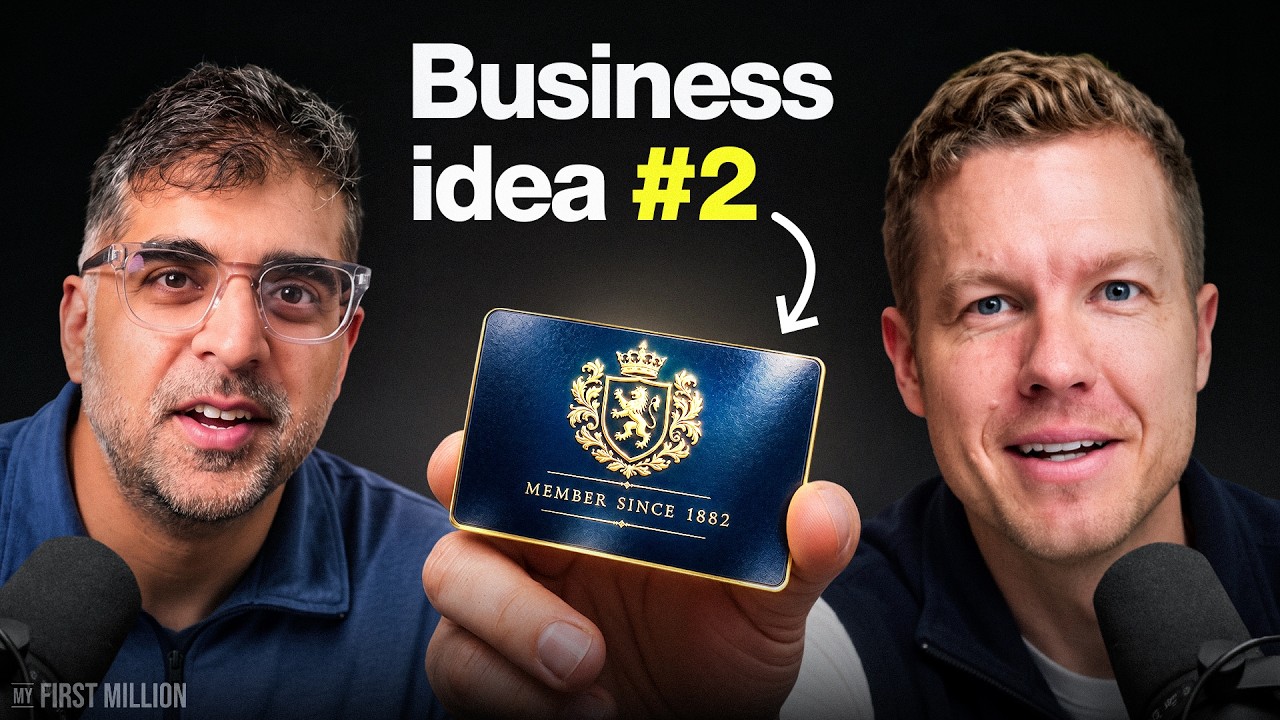
we went down the diamond rabbit hole (and it’s unhinged)
 My First Million
Key Moments
De Beers masterfully marketed diamonds as a symbol of eternal love, transforming a near-worthless commodity into a multi-billion dollar industry through psychological manipulation and controlled scarcity, despite lab-grown alternatives being virtually indistinguishable and far cheaper.
Key Insights
Diamond prices have collapsed, falling 70% from their peak and about 50% since the pandemic, with lab-grown diamonds costing as little as $148 per carat.
Before De Beers' marketing efforts, less than 10% of people bought diamond engagement rings; now it's a near-universal expectation in the Western world.
De Beers' marketing genius lay in associating diamonds with emotion (love, eternity) rather than utility, and linking them to specific life events like engagements.
The 4Cs (cut, color, clarity, carat) were invented by De Beers to create a language that differentiated diamonds and justified price points, akin to how wine is marketed.
Lab-grown diamonds now constitute over 60% of the market and are indistinguishable from natural diamonds, yet retail prices for natural diamonds have only decreased by 15-20% from wholesale drops.
Concepts like Bitcoin's 'diamond hands' and 'HODL' mirror diamond marketing by encouraging scarcity and emotional attachment, preventing selling and removing supply from the market.
The dramatic devaluation of natural diamonds
The diamond market is experiencing a significant price collapse, with natural diamond prices plummeting 70% from their peak and around 50% since the pandemic. This decline is starkly contrasted by the affordability of lab-grown diamonds. What was once an astronomical cost for a natural stone has been dwarfed by modern alternatives. For instance, a two-carat lab-grown diamond, which might have been envisioned costing upwards of $20,000 based on past pricing, can now be purchased for as little as $148, the cost of a nice dinner. This drastic price difference highlights the engineered value of natural diamonds and the growing accessibility of their synthetic counterparts, fundamentally altering the perceived worth of diamonds.
De Beers' strategic manipulation of scarcity and desire
The history of diamonds reveals a deliberate strategy by De Beers to control supply and inflate prices. Initially rare and exclusive to royalty, diamonds became abundant after discoveries in South Africa in the late 19th century. To counteract this influx and maintain high prices, Cecil Rhodes and others consolidated mining operations, forming De Beers. They then proceeded to control approximately 90% of the world's diamond supply, strictly rationing what entered the market. This artificial scarcity was the foundation upon which their subsequent marketing genius was built. The company understood that true value wasn't inherent in the stone itself, but in the collective perception and emotional significance attached to it.
The psychological blueprint for diamond demand
De Beers' most profound marketing achievement was repositioning diamonds from symbols of wealth and status to emblems of eternal love and commitment. During the Great Depression, when consumer spending was dire, they hired the agency NW Ayer to fundamentally change how people thought about diamonds. Instead of competing with necessities like rent and food, diamonds needed to be associated with emotions. This led to the iconic slogan 'A Diamond is Forever.' They embedded this idea through various channels: educating young girls in schools about diamonds, influencing Hollywood scripts to feature diamond proposals, and even creating a public relations machine that fed stories of celebrity engagement rings to newspapers. The goal was to make diamond purchasing an unquestioned, emotional act tied to the ultimate commitment of marriage, thereby creating a perpetual demand.
Inventing the 4Cs and the language of value
To further solidify the perceived value and differentiate diamonds, De Beers, along with the Gemological Institute of America (GIA), developed the '4Cs' (cut, color, clarity, carat). These criteria provided a standardized, albeit complex, framework for grading diamonds. This created an insider language, similar to wine connoisseurship, that allowed for significant price variations based on minute differences often imperceptible to the naked eye. By establishing these standards, De Beers could justify higher prices for 'superior' stones and create a perceived need for consumers to buy larger or higher-graded diamonds, fueling the desire for 'bigger' and 'better' stones.
The rise of lab-grown diamonds and De Beers' counter-strategy
The advent of lab-grown diamonds presented a direct challenge. These stones are chemically identical, physically indistinguishable to the naked eye, and significantly cheaper. Initially, De Beers tried to discredit them as 'fake' or 'artificial.' However, as lab-grown diamonds captured over 60% of the market, De Beers shifted tactics. They launched their own line of lab-grown diamonds and deliberately undercut their prices. This strategy aimed to widen the gap between natural and lab-grown, framing their own natural diamonds as the 'real' and 'authentic' choice, while positioning lab-grown as a cheap, less desirable commodity. This reflects a classic marketing tactic of controlling the narrative and segmenting the market to maintain perceived value for their core product.
The enduring power of emotional marketing and scarcity
The success of De Beers' diamond marketing strategy is a testament to the power of emotional appeals and manufactured scarcity. By linking diamonds to enduring love and commitment, they created a cultural norm where a diamond ring became an almost mandatory element of engagement. This has led to a situation where even though the wholesale prices of natural diamonds have dropped considerably, retail prices have only seen a modest decrease, as jewelers maintain higher margins. The comparison to Bitcoin's 'diamond hands' and 'HODL' concepts illustrates how similar psychological tactics—creating emotional attachment, discouraging selling, and fostering a sense of belonging to an exclusive group—can be employed to manage supply and perception in other markets. The core lesson remains: changing perceptions and creating emotional resonance can be far more powerful than the intrinsic value of a product.
Contextualizing modern fortune: a perspective on luck
Reflecting on the diamond industry's marketing success leads to broader questions about value and perception. Sites like anyhum.com illustrate just how fortunate individuals are to be born in the current era, with access to modern medicine, relatively stable societies, and a vast array of choices. By simulating random lives throughout history, these tools highlight the immense luck involved in being born in a time and place where opportunities for health, longevity, and personal fulfillment are vastly greater than for the vast majority of humans who have ever lived. This perspective underscores that many of the 'values' we assign to goods, like diamonds, are socially constructed, and our current circumstances are a product of historical progress and sometimes, sheer chance.
Mentioned in This Episode
●Software & Apps
●Companies
●Organizations
●Books
●Concepts
●People Referenced
Common Questions
Diamond prices have significantly decreased, with some reports indicating a 70% drop from their peak and a 50% decrease since the pandemic. This decline is attributed to various factors, including the rise of lab-grown diamonds and shifts in consumer demand.
Topics
Mentioned in this video
A diamond mining and retail company that historically controlled a significant portion of the global diamond supply and influenced diamond marketing strategies.
Mentioned as an analogy for how abundant diamonds became after discoveries in South Africa.
Created a free guide called 'The Million Dollar Attention Guide' for attracting attention to businesses.
The marketing agency hired by De Beers during the Great Depression to reposition diamonds.
More from My First Million
View all 80 summaries 64 min
How to find and exploit the "glitch" that can make any business take off
 48 min
The next Ozempic might fix marriages
 73 min
We tested Instinct, Muse and Grokbot. They’re ridiculous.
 60 min
I’ve never done DMT, but this conversation broke my brain
Ask anything from this episode.
Save it, chat with it, and connect it to Claude or ChatGPT. Get cited answers from the actual content — and build your own knowledge base of every podcast and video you care about.
Get Started Free