Key Moments
Waking Up with Sam Harris - Looking for the Self (26 Minute Meditation)
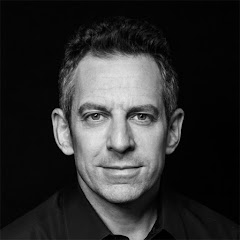 Sam Harris
Key Moments
Meditation on self, observing thoughts and sensations as transient phenomena within consciousness.
Key Insights
Awareness is the space in which all sensations, thoughts, and emotions arise and pass.
The self is not identical to any particular thought, feeling, or sensation, as these are transient.
Thoughts and moods can appear to color consciousness, but the underlying awareness remains unchanged.
The experience of being a 'thinker' is the result of not observing thoughts as they arise.
The world we perceive is constructed by concepts and patterns, not directly apprehended raw data.
True self-awareness involves resting in the spaciousness of consciousness, observing all appearances without identification.
ESTABLISHING MINDFULNESS AND CONTACT WITH THE BREATH
The meditation begins with finding a comfortable seated position, drawing awareness to the physical sensations of sitting, such as pressure points. A few deep breaths are taken to help settle into the posture. The primary anchor for attention is then introduced: the breath. Participants are guided to notice where the breath is most palpable, whether at the tip of the nose or the abdomen, and to follow its natural rhythm from inhalation to exhalation. The emphasis is on simply observing the breath as it is, without judgment or manipulation, allowing it to come and go naturally.
EXPANDING AWARENESS BEYOND THE BREATH
As awareness of the breath becomes more stable, participants are encouraged to broaden their focus to encompass all sensations arising in the body. This includes feelings of pressure, movement, and fatigue. Simultaneously, awareness can extend to sounds in the environment, noticing them without labeling or reacting. The core instruction is to be the 'space' or the condition in which all these phenomena—sensations, sounds, and eventually thoughts—emerge and dissolve. This expansive awareness recognizes that everything is appearing within the same field of consciousness.
DECONSTRUCTING THE ILLUSION OF A FIXED SELF
The meditation challenges the notion of a permanent, unchanging self residing within the body, particularly within the head. It highlights that even physical sensations like those in the face or head are experienced as appearances within consciousness, not as the consciousness itself. The feeling of 'being behind your eyes' looking out is also presented as an appearance. This suggests that the perceived boundary between self and world, or between internal experience and external reality, is a conceptual construct that arises within the same space as all other experiences.
OBSERVING THOUGHTS AND EMOTIONS AS TRANSIENT APPEARANCES
A significant portion of the meditation addresses thoughts and moods. When lost in thought, the instruction is to notice the thought itself—be it an image or words—and observe its arising and disappearance. The practice emphasizes that thoughts and emotions, whether pleasant or unpleasant, do not fundamentally change the nature of consciousness. A happy thought doesn't make consciousness happy, nor does a difficult thought make it sad. Consciousness is like a mirror that reflects these appearances without being altered by them, revealing the insubstantiality of fleeting mental states.
THE EXPERIENCE OF BEING THE THINKER VERSUS AWARENESS
The common experience of feeling like the 'thinker' of one's thoughts, or being identical to them, is explored. The meditation guides participants to look closely at this feeling and realize that it arises from a lack of mindful observation of thoughts as they emerge. When one is truly aware of a thought arising, it is seen as an appearance in consciousness, distinct from the awareness itself. The persistent engine of anxiety or self-criticism is also framed as a pattern of thoughts that can be observed and experienced as separate from the underlying awareness, simply because that awareness is what notices them.
THE NATURE OF PERCEPTION AND MENTAL CONSTRUCTS
The meditation touches upon how perception is mediated by mental constructs. The way we see the world, differentiating objects and boundaries, is shaped by concepts developed through experience and perhaps even genetic programming. Participants are encouraged to try and 'relax this machinery' and view the world as raw data—a sphere of light, color, and shadow—free from object identification. This exercise aims to reveal that the world we see is structured by the mind, and that the experience of seeing is itself an appearance within consciousness, indistinguishable in principle from other mental events.
RECOGNIZING CONSCIOUSNESS AS THE FUNDAMENTAL REALITY
Ultimately, the practice leads to the recognition of consciousness as the fundamental ground of all experience. Whether the eyes are open or closed, the space of awareness remains the same size and is the container for all perceivable phenomena. There is no inherent 'outside' or 'inside' from the perspective of experience; the visual field is simply another appearance within the same continuous field of consciousness where thoughts, emotions, and sensations arise. The self, when examined closely, dissolving into the direct experience of awareness, which is not defined by or identical to any of its contents.
RESTING IN THE SPACE OF AWARENESS
The concluding phase of the meditation involves returning to a state of open-eyed or closed-eyed awareness, resting in the spaciousness of consciousness. It encourages a non-judgmental observation of whatever arises—sensations, sounds, thoughts, or moods. The practice emphasizes that this state of 'mirror witnessing' is the natural condition. By continually returning to this awareness, whether through the breath, sounds, or bodily sensations, one cultivates a deeper understanding of the self as the unchanging witness, rather than the changing phenomena that appear within it.
Mentioned in This Episode
●People Referenced
Meditation Guide: Finding Your True Nature
Practical takeaways from this episode
Do This
Avoid This
Common Questions
Begin by settling into a comfortable seat and bringing awareness to the physical sensations of sitting and breathing. Notice where you feel the breath most distinctly and follow its natural rhythm.
Topics
Mentioned in this video
More from Sam Harris
View all 297 summaries 22 min
Why the Stock Market Has Become a Casino
 61 min
UNRAVELING THE DREAM (A New Documentary Executive Produced by Sam Harris)
 20 min
Francis Fukuyama: The End of History Was Never What You Think
 24 min
The Democratic Party Has a Reckoning Coming
Ask anything from this episode.
Save it, chat with it, and connect it to Claude or ChatGPT. Get cited answers from the actual content — and build your own knowledge base of every podcast and video you care about.
Get Started Free