Key Moments
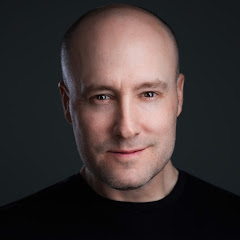
Vlad Tenev: GameStop, Founder Mode, AI
 The Knowledge Project
Want to know something specific about what's covered?
We've already dissected every moment. Ask and we will deliver (with timestamps).
Key Moments
GameStop crisis, founder mindset, and AI-driven pivot at Robin Hood.
Key Insights
Crisis decision-making under unprecedented conditions can be misinterpreted by the public, shaping narratives.
Stories can outrun data; a 'juicy falsehood' about collusion spread widely despite facts.
Diversification and customer value-focused pivots can turn a crisis into growth (Robin Hood Gold, Retirement).
A founder-friendly culture emphasizing high performance, safety, and lean operations drives resilience and rapid adaptation.
AI is embedded across Robin Hood: improved customer service, faster product development, and a new frontier in marketing and creativity.
Harmonic/Aristotle illustrate a shift toward math-capable AI with machine-checkable proofs and synthetic data.
PRELUDE TO A CRISIS
The GameStop moment unfolded with an overnight need for billions in collateral and a decision to restrict trading, a combination described by Vlad Tenev as a first-of-its-kind crisis. Amid the social-media storm and a viral narrative that cast GameStop as a pawn in a battle between retail investors and hedge funds, the immediate risk-management step became a political talking point. He describes the morning as chaotic, with constant calls and the weight of a decision that would later be mischaracterized in public discourse.
NARRATIVES VERSUS FACTS
Tenev notes that a 'juicy falsehood' travels far faster than a boring truth, turning a technical risk-management move into a story of collusion with hedge funds. He highlights how widely repeated wrong narratives—such as Robin Hood colluding to shut down trading or White House pressure on Sequoia—became meme-like certainties for many. The interview underscores the difficulty of refuting stories once they gain mind-share, a phenomenon with broad political and financial implications.
FROM CRISIS TO DIVERSIFICATION
While the acute GameStop crisis ended within a day, 2022 brought a slower, structural headwind as COVID-era tailwinds faded. Vlad explains how rising interest rates, inflation, and cash incentives reduced retail trading activity, forcing Robin Hood to diversify beyond trading. The revival of Robin Hood Gold and the launch of Robin Hood Retirement offered higher-yield options and retirement accounts, expanding from 1-2 revenue lines to 11, with revenue surpassing $100 million annually.
BUILDING A HIGH-PERFORMANCE CULTURE
A core theme is the commitment to high performance, safety, and lean operations. Vlad discusses adjusting leadership practices during growth, hiring aggressively at early stages, and engaging interns to stay connected with younger talent. He emphasizes rapid, merit-based decision-making, the ease of removing underperformers, and the desire to balance speed with security and regulatory compliance. The culture evolves through candid reflection on what worked and what didn’t during the COVID and post-COVID periods.
MARKETING, STORYTELLING, AND THE ART OF COMMUNICATION
Effective communication emerges from simplifying complex ideas into a coherent story that scales to millions. Vlad talks about product events, messaging discipline, and the aspiration to craft experiences rather than rely on jargon. He cites Yes No, a December AI/prediction market event, as a case study in aligning storytelling with product strategy. The emphasis on first-principles explanations helps ensure the company’s message travels clearly to diverse audiences.
EMBRACING AI: OPERATIONAL IMPACT AND FUTURE FRONTIERS
Robin Hood’s internal AI focus centers on customer service and software engineering for multiplicative impact. AI agents handle most customer inquiries, accelerating product velocity and enabling rapid experimentation. Vlad outlines a practical framework for measuring AI impact, such as AI deflection rates and AI-generated code contribution, while envisioning a future expansion into creative and marketing workflows powered by tools like 11 Labs and Runway. The discussion also covers ongoing AI governance and data readiness.
HARMONIC, ARISTOTLE, AND THE LIMITS OF MODERN AI
Beyond Robin Hood, Vlad oversees Harmonic and the Aristotelian approach to mathematical problem solving, where AI solves difficult Olympiad-level problems with machine-checked proofs. This project emphasizes networked agents and synthetic data pipelines, redefining AI training away from sole reliance on the internet. The conversation touches on current limitations of large language models and the potential for AI to contribute to deep, verifiable reasoning in mathematics and broader decision-making domains.
Mentioned in This Episode
●Products
●Software & Apps
●Companies
●Studies Cited
●Concepts
●People Referenced
Common Questions
Vlad explains it was an unprecedented, automated risk spike: Robinhood received a file showing rapidly changing, very large collateral requirements and temporarily limited new positions to control internal risk (position-closing only for ~one day).
Topics
Mentioned in this video
The stock at the center of the 2021 short squeeze / retail trading controversy; used as the example that triggered Robinhood's temporary trading restrictions.
The brokerage platform Vlad Tenev co-founded and runs; discussed throughout (decision-making during GameStop, products like Gold, Retirement, banking).
Named among creative/marketing AI tools that can supercharge creative output.
Another creative AI tool cited as part of the marketing/creative frontier.
Company Vlad chairs that builds math-focused AI (Aristotle); used as an example of specialized AI development.
An early AI coding assistant Vlad mentions as part of internal engineering AI adoption.
Mortgage partner mentioned as providing competitive mortgage economics within Robinhood's ecosystem.
Actor who played Vlad Tenev in the film Dumb Money; Vlad comments on his portrayal.
Actor mentioned as an alternative who might have played Vlad in Dumb Money.
Spotify CEO referenced in the context of crisis communications (Joe Rogan controversy) and as someone Vlad reached out to for advice.
Robinhood's premium product; revived to offer high yield on uninvested cash and other benefits (3% retirement match for Gold members).
Robinhood's retirement offering (over 1.5M accounts), highlighted as part of business diversification.
Robinhood's internal AI model used to generate real-time stock and crypto digests and other product features.
Robinhood's product/initiative to provide retail access to private markets (closed-end fund referenced).
Regulated US fund structure discussed as a vehicle to provide retail access to alternatives and private assets.
An LLM and coding-oriented tool referenced among the engineering AI tools used internally.
Referenced as an AI tool that was acquired and part of the engineering workflow history.
AI image generation tool mentioned in the context of creative augmentation.
Google/DeepMind's math-focused model mentioned as a competitor / comparable system to Harmonic's Aristotle.
More from The Knowledge Project Podcast
View all 108 summaries 46 min
Roblox Founder: Destroy Bureaucracy Before It Destroys You
 54 min
$4.6B CEO: Excellence Is the Capacity to Take Pain
 55 min
Microbiome Expert: Revealing the Biggest Myths About Your Gut, Diet, and Health
 62 min
Mental Models That Change How You Think | Bill Gurley
Ask anything from this episode.
Save it, chat with it, and connect it to Claude or ChatGPT. Get cited answers from the actual content — and build your own knowledge base of every podcast and video you care about.
Get Started Free