Key Moments
Urban Warfare 2.0: A Conversation with John Spencer (Episode #366)
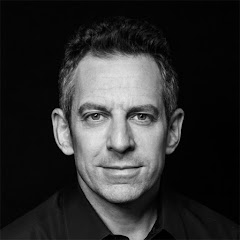 Sam Harris
Want to know something specific about what's covered?
We've already dissected every moment. Ask and we will deliver (with timestamps).
Key Moments
Expert analysis of urban warfare, Gaza conflict, Hamas tactics, and implications for regional stability.
Key Insights
October 7th attacks were an invasion, not just terrorism, with significant civilian participation.
Distinguishing combatants from civilians in urban warfare is exceptionally difficult, exacerbated by Hamas's human shield tactics.
Gaza casualty figures are unreliable and unique in their real-time, enemy-provided nature.
The IDF faces unprecedented challenges in Gaza due to Hamas's extensive tunnel network and human shield strategy.
Hamas's military strategy prioritizes prolonging conflict and influencing global opinion over maximizing civilian lives within Gaza.
Destroying Hamas requires a comprehensive approach, including military defeat and establishing a viable, non-hostile Palestinian governance.
Iran is the central instigator behind regional instability, directing proxies like Hamas and Hezbollah.
Hezbollah poses an existential threat to Israel, requiring a forceful response if diplomatic solutions fail.
THE NATURE OF THE OCTOBER 7TH ATTACKS
John Spencer, an expert in urban warfare, reframes the October 7th attacks not merely as terrorism but as a full-scale invasion. Characterized by multiple breach points and a coordinated rocket barrage, the attacks involved over 4,000 individuals from both Hamas and Palestinian civilians crossing into Israel with the intent to inflict suffering. Spencer emphasizes that crossing the border with the purpose of partaking in hostilities immediately designates an individual as a combatant, regardless of uniform or immediate weapon engagement.
CHALLENGES IN IDENTIFYING COMBATANTS AND MANAGING CASUALTIES
Distinguishing between combatants and non-combatants in urban warfare is a primary challenge, significantly amplified by Hamas's deliberate use of human shields and embedding within civilian infrastructure like tunnels, schools, and hospitals. The pervasive use of social media has created an environment of constant information bombardment, often leading to misinformation and misinterpretation of events. Spencer highlights the unreliability of casualty figures provided by the Gaza Health Ministry, noting that such real-time, enemy-provided numbers are unprecedented and impossible to verify accurately in a conflict zone.
HAMAS'S STRATEGY AND THE HUMAN SHIELD TACTIC
Spencer explains that Hamas's military strategy differs fundamentally from groups like ISIS. While ISIS focused on holding territory, Hamas's primary objective is to buy time and leverage global opinion to pressure Israel into halting its operations. This is achieved through an extensive network of tunnels and a deliberate 'human sacrifice' strategy, where Hamas encourages or compels civilians to remain in or near combat zones, maximizing civilian casualties to shape international perception. The fact that Hamas prohibits civilians from entering their extensive tunnel network, which could house Gaza's entire population, serves as evidence of this strategy.
IDF OPERATIONS AND THE ARGUMENT AGAINST COLLECTIVE PUNISHMENT
The Israel Defense Forces (IDF) face unprecedented challenges in Gaza, including a vast underground tunnel system and Hamas's human shield tactics. Spencer argues that despite accusations of genocide and collective punishment, the IDF has made efforts to mitigate civilian harm, such as issuing evacuation orders for northern Gaza. He critiques Israel's failure in the propaganda war, noting that embedding foreign journalists earlier could have provided a more balanced narrative. However, he stresses that accusations of intentional targeting of civilians, journalists, or aid workers lack evidence, with incidents often being tragic accidents in the complex fog of urban combat.
DEFEATING HAMAS AND THE POSTERITY OF GAZA
Destroying Hamas, Spencer explains, means dismantling its military capabilities and ruling power, not necessarily eliminating every member. This involves taking out active battalions, eliminating leadership, and securing the return of hostages. The aftermath requires establishing a new governance framework in Gaza, ideally with a viable Palestinian partner prioritizing the people's well-being over the destruction of Israel. Spencer is skeptical of a two-state solution as traditionally envisioned, given the Palestinian commitment to Israel's annihilation, and emphasizes the need for a Palestinian leadership that renounces terrorism and acknowledges Israel's right to exist.
THE ROLE OF IRAN AND THE THREAT OF HEZBOLLAH
Iran is identified as the central instigator of regional instability, directing proxies like Hamas, Hezbollah, and the Houthis. The recent direct Iranian attack on Israel, though largely neutralized by defensive capabilities, underscores this threat. Hezbollah, a better-trained and equipped force than Hamas, poses an existential threat to Israel, necessitating a response if diplomatic solutions fail. While southern Lebanon has urban areas, Hezbollah's infrastructure is less interwoven with civilian populations compared to Hamas, potentially allowing for more targeted military operations with less collateral damage, though the scale of the conflict could still be immense.
Mentioned in This Episode
●Products
●Software & Apps
●Organizations
●Books
●People Referenced
Common Questions
John Spencer classifies October 7th as a full-scale invasion rather than just a terrorist attack. Over 4,000 Hamas militants and Palestinian civilians crossed the border, breaching 22 sites, with 4,000 rockets launched. Their intention was to overwhelm Israel's defenses and push farther north.
Topics
Mentioned in this video
A publication where John Spencer's writing has appeared.
Co-directed by John Spencer, this project is associated with research and understanding of urban combat.
The institution where John Spencer earned his Master of Policy Management.
An Iranian-backed organization, mentioned as part of Iran's proxy network disrupting the Middle East, along with Hamas and Hezbollah.
An organization focused on underground combat strategies, of which John Spencer is a founding member.
A Palestinian Sunni-Islamist fundamentalist organization and de facto governing authority of the Gaza Strip, designated as a terrorist organization by many countries. The discussion highlights Hamas's military strategy, use of human shields, and intention to maximize civilian casualties.
The military forces of Israel, discussed in terms of their response to October 7th, their use of force, and efforts to minimize civilian casualties in Gaza.
Described as affiliated with Hamas and providing unreliable, inflated civilian casualty numbers, as it includes all deaths regardless of cause and does not distinguish combatants.
The institution where John Spencer currently serves as the chair of Urban Warfare Studies, focusing on research into military operations in dense urban environments.
A Palestinian enclave on the eastern coast of the Mediterranean Sea, the primary theater of the conflict discussed, characterized by dense urban areas and extensive tunnel networks.
Compared to Hamas in its use of human shields, though ISIS's primary goal was to hold terrain and its strategy did not explicitly aim to maximize civilian deaths to the same degree as Hamas.
Chair of Urban Warfare Studies at the Modern War Institute at West Point and co-director of the Urban Warfare Project. He served 25 years in the US military during two combat tours in Iraq and has researched urban combat zones globally.
His raid is referenced as an example of a successful intelligence-driven operation, but contrasted with the impossibility of conducting similar raids for all hostages in Gaza.
Mentioned as having misinterpreted a combat video on his podcast, believing it showed clear evidence of IDF war crimes due to a lack of understanding of the Law of War and combat context.
An Iranian-backed organization to Israel's north, posing an existential threat. Discussed in terms of its attacks since October 8th, its larger military capabilities compared to Hamas, and the need for a solution, potentially military force, to secure Israel's northern border.
A publication where John Spencer's writing has appeared and where he published an article on the alternatives to Israel's approach in Gaza.
A podcast hosted by John Spencer, part of his work in sharing insights on urban warfare.
A publication where John Spencer's writing has appeared.
Mentioned as a country with which Israel was close to a bilateral relationship, a potential threat to Iran's regional ambitions, and also helped Israel defend against the April 14th attack.
Described as the 'head of all these snakes,' funding and directing Hezbollah, Hamas, and the Houthis. Discussed in relation to the April 14th direct attack on Israel and the failure of international deterrence.
Mentioned as a war where Russia committed massacres, and where civilians sought refuge in subway tunnels, unlike in Gaza, and where Iranian tactics (mass drone attacks) have been previously used.
A city in southern Gaza where Hamas increased the civilian population by 300% before the IDF's operation, complicating combat.
An Arab nation Israel has a bilateral relationship with, and which assisted Israel in defending against Iran's April 14th attack.
John Spencer served two combat tours here, providing him with first-hand experience in military operations.
John Spencer studied the 2008 terror attacks here, noting similarities to the October 7th invasion of Israel.
John Spencer visited after the 2020 war, studying the urban battle over Shusha.
Alleged by intelligence to be the state-backer for the Mumbai 2008 attacks, using proxy forces.
Scenes from the 1993 battle were recalled by John Spencer as similar to the jubilation seen on October 7th, with local populations celebrating the death of American soldiers.
Mentioned in context of 'massacres' and atrocities in Ukraine, to contrast with the double standards applied to Israel.
Refused to allow Gaza civilians to enter its territory, contributing to the trapped population in Gaza.
The location of Hamas's political wing, suggesting a broad, distributed leadership structure.
The platform where Sheryl Sandberg's documentary about violence against women on October 7th is available.
Cameras used by Hamas members to record their atrocities on October 7th, providing unique, albeit disturbing, first-person footage.
Mentioned as a platform where video evidence from October 7th can be lost in threads.
More from Sam Harris
View all 304 summaries 30 min
Can AI Cure Loneliness?
 25 min
Why Is Everyone So Unhappy?
 27 min
Is America Heading for a Debt Crisis? An Economist Explains
 27 min
Is America Heading for a Debt Crisis? An Economist Explains
Ask anything from this episode.
Save it, chat with it, and connect it to Claude or ChatGPT. Get cited answers from the actual content — and build your own knowledge base of every podcast and video you care about.
Get Started Free