Key Moments
Trump is Going to Burn it All Down...What Are We Going to Build Instead?
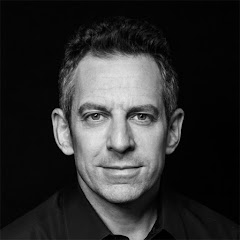 Sam Harris
Key Moments
Build, not preserve: reimagine institutions for a new era.
Key Insights
Trump is framed as a disruptor whose promise is to 'burn it all down,' creating urgency to imagine what comes next beyond old institutions.
Biden is critiqued for defending existing, creaky structures; the speaker argues for bold rethinking of education, immigration, and governance.
The concept of 'build mode' urges leaders to limit their own power while actively constructing new, more effective systems.
Education, border policy, and national governance are presented as canvases for experimental, outcome-oriented reform rather than mere repairs.
A radical pivot is proposed: replace or overhaul dysfunctional structures (like ICE) with humane, efficient, durable alternatives built to age with the country’s needs.
Effective leadership will require imagination paired with strategic restraint, coalition-building, and transparent accountability to sustain long-term reforms.
IMAGINING A NEW ROADMAP FOR AMERICA
To begin, the speaker frames the moment as a reckoning: Trump is going to burn it all down, and the country must decide what comes next. The central question is not simply whether to defend every old policy but whether we can craft a new architecture that better serves people today. Biden’s approach, the speaker argues, clings to creaky institutions that many voters already distrust. Rather than rebuild them as they were, the country should imagine bolder, more capable systems—starting with schools and other public goods—and chart a map for what should come after. Education, immigration, and national governance become canvases for experimentation. The speaker suggests moving beyond reform-by-repair toward a whole new approach to schooling—perhaps more flexible structures, local partnerships, and learning that prioritizes outcomes over ritual compliance. The point is not nostalgia for the old Department of Education but genuine redesign that addresses real needs. If we insist on preserving every component, we may inherit the dysfunction; if we rethink the purpose of these institutions, we can design alternatives that deliver safety, opportunity, and real value for diverse communities. Ultimately, the message is about timing and vision. It asks leaders to shed defensiveness and enter a sustained build mode, treating policy as an evolving project rather than a sacred monument. Achieving that requires political courage, technical competence, and public trust, because bold reform must be credible and implementable. The argument sets the stage for a broader claim: to move from defending yesterday’s institutions to constructing a durable framework for tomorrow that can absorb shocks and expand opportunity.
LEARNING FROM TRUMP: THE POWER OF DOING STUFF
Trump’s appeal, the speaker notes, lies in the conviction that you can simply do stuff. That sense of agency resonates with voters frustrated by gridlock and inaction. Yet such energy can be dangerous if it outpaces accountability or turns into reckless shortcuts. The takeaway is not to imitate chaos but to harness momentum for targeted, verifiable outcomes. The speaker advocates disciplined experimentation—small, measurable wins that accumulate into lasting reform—so action translates into tangible improvements people can feel and defend. With this energy, a future leader could pursue a ‘build mode’ that tempers power with constraints while pursuing ambitious change. The provocative example—‘we’re going to shut ICE down and build something new to secure our border’—is intended as a thought experiment in policy redesign rather than a policy recommendation. The point is to demonstrate that bold rethinking can occur within a framework of humane values, clear goals, and a strategy for safeguarding people while improving system performance. The broader claim is that politics should concentrate on outcomes, not the preservation of institutions for their own sake. Doing something meaningful in immigration or education requires reimagining the tools we use and the structures that govern them. It demands leadership that balances imagination with practical constraints and centers public trust. If leaders can reconcile aspiration with responsibility, the politics of reform can move from reactive crisis management to proactive, incremental progress that lasts beyond any one administration.
BUILD MODE IN PRACTICE: REIMAGINING INSTITUTIONS
ICE is used as a test case for reform, illustrating the potential and the peril of dismantling established mechanisms. The speaker envisions replacing a controversial enforcement apparatus with a system designed for efficiency, fairness, and national interest alignment. It is not abolition for its own sake but a reworking of governance tools to fit contemporary realities. The same logic should apply to education and border policy: swap out the dysfunctional parts for alternatives that deliver safety and opportunity more effectively. Education is framed as a prime opportunity to redesign how public learning is funded, organized, and assessed. Rather than merely rebuilding the old department, the talk hints at new architectures—more local control, smarter accountability, and stronger community ties that reflect diverse local needs. The aim is an adaptive system that learns and improves in real time, rather than rigidly following a century-old blueprint that no longer matches how students learn or how communities operate. Border policy becomes the ultimate test case for a build-first mindset. The envisioned framework emphasizes humane treatment, faster processing, and scalable structures capable of evolving with circumstances. It seeks to align security goals with ethical considerations while expanding the nation’s capacity to manage flows and protect workers. The broader message is that great governance requires durable, flexible institutions—engineered with clarity, built with public oversight, and designed to endure political change without collapsing in crisis.
LEADERSHIP AS CRAFT: CUSTODIANS VS BUILDERS
Leadership here is cast as a craft that blends vision with restraint. A genuine reformer is not a passive custodian but a builder who measures impact, invites diverse voices, and remains answerable to the people. This requires humility, strategic foresight, and a readiness to move beyond defending the status quo in service of clearer goals. The speaker’s framework insists that leaders must translate ideals into credible, actionable plans rather than offering glossy rhetoric that fails to connect with real constraints. Turning imagination into policy demands practical steps, coalition-building, and solid commitments of time and resources. The idea is to combine a clear set of constraints with ambitious system design, producing reforms that stick across administrations. Such leadership must articulate a persuasive narrative about liberty, opportunity, and security that resonates broadly, while maintaining rigorous standards for accountability. The aim is to construct durable institutions, not to chase the latest political flashpoint. The closing argument reframes success as the ability to rewrite what governance looks like in the modern era. If schooling, border management, and enforcement must evolve, the right leader will define build in terms of measurable milestones, transparent governance, and ongoing learning. This approach seeks to sustain momentum by earning public trust, guarding against zealotry, and ensuring reforms are adaptable. By focusing on outcomes and public accountability, leadership can transform upheaval into steady, inclusive progress for future generations.
Mentioned in This Episode
●People Referenced
Common Questions
The speaker argues for a whole-new approach to systems like education rather than rebuilding the old framework. The idea is to use imagination and forward-thinking leadership to design better schools and governance.
Topics
Mentioned in this video
More from Sam Harris
View all 297 summaries 22 min
Why the Stock Market Has Become a Casino
 61 min
UNRAVELING THE DREAM (A New Documentary Executive Produced by Sam Harris)
 20 min
Francis Fukuyama: The End of History Was Never What You Think
 24 min
The Democratic Party Has a Reckoning Coming
Ask anything from this episode.
Save it, chat with it, and connect it to Claude or ChatGPT. Get cited answers from the actual content — and build your own knowledge base of every podcast and video you care about.
Get Started Free