Key Moments
This Is What a Modern American Civil War Would Look Like (feat. Stephen Marche)
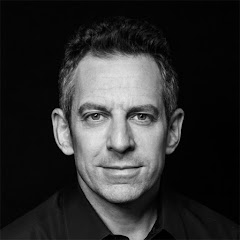 Sam Harris
Key Moments
An expert discusses the multiple factors leading to a potential modern American civil war, focusing on cascading crises rather than simple conflict.
Key Insights
Modern civil wars are complex, cascading systems driven by multiple interacting factors, not single causes.
Factors like demographic shifts (minority majority), declining institutional trust, and increasing inequality are significant precursors.
Hyper-partisanship, characterized by intense animosity and norm violations, is a critical and visible indicator of potential conflict.
The "flood the zone" strategy of chaos and unreliability is a key danger, making the future unpredictable.
America's unique diversity, while a historical strength, can also be a factor undermining social trust in specific contexts.
Canada views the current US political landscape as terrifying and destabilizing, prompting reevaluation of its own security and trade strategies.
Stephen Marche's research involves modeling, interviews with diverse groups, and analysis of historical civil war patterns.
THE NATURE OF MODERN CIVIL WAR
Stephen Marche, author of "The Next Civil War," explains that contemporary civil wars are intricate, cascading systems where various destabilizing factors combine and reinforce each other. He emphasizes that such conflicts are not typically characterized by pitched battles between armies, as historically depicted, but rather by widespread political violence that can escalate. This understanding is crucial for appreciating the complexity beyond a simple 'blue versus gray' scenario. The film 'Civil War,' while emotionally resonant in parts, misrepresents the political framework of modern conflicts, according to Marche.
GLOBAL PERSPECTIVES ON AMERICAN INSTABILITY
From Canada's vantage point, the United States appears increasingly unstable, likened to a 'bus going off a cliff.' This perception has led to significant shifts in Canadian foreign policy, including reassessments of security arrangements and trade diversification. Canadians view the US situation as terrifying, prompting serious discussions about national defense strategies, such as adopting 'whole society defense' or even exploring nuclear capabilities, akin to Finland's approach with Russia. The idea of the US attempting to conquer Canada is seen as unlikely due to its own historical difficulties in occupying territories.
KEY RISK FACTORS FOR AMERICAN CIVIL CONFLICT
Marche identifies several critical risk factors that, when combined, create a fertile ground for civil unrest. These include demographic shifts, such as the transition to a minority-majority country, which historically correlates with increased political violence globally. Declining trust in institutions—across government, media, and even civic organizations—has been a consistent trend since the 1980s. Furthermore, extreme levels of horizontal and vertical inequality exacerbate existing economic and social stressors, acting as 'threat multipliers'.
THE ROLE OF HYPER-PARTISANSHIP AND INSTITUTIONAL EROSION
Hyper-partisanship stands out as a particularly visible precursor to civil war, characterized by intense animosity and a disregard for political norms. This has devolved into a 'tit-for-tat' political warfare where fairness and collegiality are absent, and the primary strategy is to act if one can 'do something and get away with it.' This level of animosity has not been seen in American politics since the late 19th century. Correlated with this is the erosion of trust in institutions, which Marche argues is a core issue, with Trumpism being a symptom rather than the root cause.
THE IMPACT OF DIVERSITY ON SOCIAL COHESION
While acknowledging that diversity is often celebrated as a strength, Marche points to research, including studies from India, suggesting it can, under certain conditions, undermine social trust. He notes that as minority groups gain economic power, it can lead to increased conflict, not necessarily from those groups losing, but from a perceived shift in relative standing. While America's multiculturalism has been a source of its strength, it also presents challenges in maintaining social cohesion, especially when combined with other destabilizing factors.
RESEARCH METHODOLOGY AND THE 'NEXT CIVIL WAR' BOOK
Marche's book, "The Next Civil War," is rooted in extensive research, including writing a precursor article in 2018 and conducting around 200 interviews with diverse groups, from white power adherents to far-left activists and ordinary citizens. He synthesized political and social models of civil war, economic decline, and faith in legal systems to project potential scenarios. The book uses fictional vignettes to illustrate these models, making the abstract concepts more tangible and providing 'flesh to the bones' of dry academic projections.
TRUMP AS A SYMPTOM, NOT THE CAUSE
Marche posits that Donald Trump and his movement are primarily symptoms of deeper societal fractures, rather than the fundamental cause of America's instability. He argues that blaming Trump alone is a 'mug's game' that obscures the underlying breakdowns in trusted institutions, the erosion of the American Dream, and a general collapse of the constitutional order. While Trump himself causes damage, his significance lies in what he represents: the manifestation of systemic failures that have left many Americans feeling that their country is in collapse, regardless of political affiliation.
THE 'FLOOD THE ZONE' DANGER AND UNPREDICTABILITY
A significant danger highlighted by Marche, particularly in the context of a potential second Trump administration, is the 'flood the zone' strategy. This approach involves creating overwhelming chaos, unreliability, and a constant state of flux, making it impossible to predict what will happen next. This unpredictability, stemming from the slapdash, unreliable nature of actions and policies, is what makes the situation so precarious. It creates an incipient chaos that is deeply concerning, especially for intertwined nations like Canada.
Mentioned in This Episode
●Products
●Organizations
●Books
●Concepts
●People Referenced
Common Questions
Stephen Marche's book analyzes plausible scenarios for a 21st-century American civil war by synthesizing various predictive models and incorporating insights from interviews with diverse groups across America. It aims to illustrate the complex, cascading factors that could lead to such a conflict.
Topics
Mentioned in this video
More from Sam Harris
View all 297 summaries 22 min
Why the Stock Market Has Become a Casino
 61 min
UNRAVELING THE DREAM (A New Documentary Executive Produced by Sam Harris)
 20 min
Francis Fukuyama: The End of History Was Never What You Think
 24 min
The Democratic Party Has a Reckoning Coming
Ask anything from this episode.
Save it, chat with it, and connect it to Claude or ChatGPT. Get cited answers from the actual content — and build your own knowledge base of every podcast and video you care about.
Get Started Free