Key Moments
The War Was Necessary. The Way Trump Did It Wasn’t.
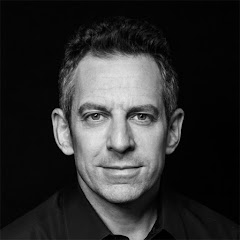 Sam Harris
Want to know something specific about what's covered?
We've already dissected every moment. Ask and we will deliver (with timestamps).
Key Moments
Iran regime change is rational; Trump’s execution risks chaos and missteps.
Key Insights
Long-standing belief that unseating Iran's regime would benefit open societies and advance women's rights.
Iran is framed as a jihadist regime with nuclear risks, complicating negotiations and stability in the region.
The speaker critiques Donald Trump’s approach as corrupt and incompetent, with poor planning and a lack of coalition-building.
There is a belief that regime change could be legitimate if executed with credible aims and solid planning, unlike past U.S. ventures in Afghanistan and Iraq.
Caution about artificial endgames (e.g., Venezuela-style scenarios) and the reality that Iran’s religious leadership resists pliant outcomes.
Despite concerns about execution, the speaker maintains that the potential for a better future in Iran may outweigh current risks if managed properly.
A LONG-TERM HAWKISH PERSPECTIVE: REGIME CHANGE AS A GOAL
The speaker foregrounds a longstanding belief that removing Iran's regime has been a desirable objective since 1979. They point to historical flashpoints—the hostage crisis, the Beirut bombing, and ongoing support for proxies—as evidence that the Islamic Republic operates as an engine of terrorism and oppression. This view extends beyond geopolitics to moral concerns about the Iranian people, especially women, who have faced severe limitations under the regime. The speaker argues that misgivings about intervening should not obscure the straightforward conclusion that regime change, at least in theory, could advance civil liberties and regional stability. They also suggest that Iran could be a more viable candidate for regime change than Iraq or Afghanistan, given its internal movements toward civil rights, though they acknowledge the need to avoid repeating past misadventures. The paragraph also emphasizes that effective change would require credible planning and a realistic assessment of post-regime outcomes, not just moral urgency.
THE DUALITY OF THE MOMENT: DESIRING CHANGE BUT FEARING EXECUTION
The speaker stresses a paradox: the moral and strategic case for change coexists with grave concerns about how the current administration would manage it. They describe Trump as the most corrupt and incompetent administration in memory, warning that he could declare victory quickly and abandon Iran to chaos without a coherent plan. The risk is not only strategic but constitutional: the lack of consultation with Congress, fragile allied support beyond Israel, and an enabling environment that does not reflect a sober national security process. Yet, the speaker does not dismiss the possibility that outcomes could eventually improve, should the policy be carefully executed. The tension between a desired end and feared means dominates the argument.
HUMAN RIGHTS AS A DRIVING FORCE: WOMEN'S PROTESTS AND CIVIL LIBERTIES
A central moral thread is the plight of Iranian women and civil rights activists who have risked torture and death to protest compulsory hijab and gender oppression. The speaker argues that support for Iranian dissidents and civil society should have been stronger across administrations, not merely rhetorical. This humanitarian motive is presented as a counterweight to strategic calculations, underscoring that regime change would serve human rights as a fundamental objective. While acknowledging other concerns about security and stability, the speaker frames protecting and promoting women's rights as a legitimate and urgent driver for policy, and implies that better support for these movements could influence outcomes beyond the battlefield.
NUCLEAR DETERMINANTS: JIHADISM, NUKES, AND THE LIMITS OF NEGOTIATION
The transcript characterizes Iran as a jihadist regime with a dangerous potential to obtain nuclear weapons, arguing that such a regime is fundamentally incompatible with genuine diplomacy. The speaker maintains that there is no viable world in which one can negotiate a stable peace with a regime defined by religious extremism and expansionist aims. This view extends to a caution about other states where nuclear capabilities intersect with religious extremism, though the speaker differentiates Iran from countries like Saudi Arabia. The underlying claim is that the combination of jihadism and nuclear weapons presents an existential challenge that constrains negotiation, pushes for regime-change considerations, and complicates any sustainable exit strategy.
THE AMERICAN POLITICAL CONTEXT: ALLIES, CONSTITUTIONAL PROCESS, AND POLICY RISK
The discussion highlights the political and institutional fragility surrounding any military action against Iran. With allies limited (the speaker mentions Israel as a primary partner) and Congress largely sidelined, the legitimacy and durability of any operation are placed in question. The portrayal of the administration as relying on problematic aides underscores a constitutional risk: war without transparent debate or a credible plan. The speaker calls attention to the broader governance challenges, warning that even well-intentioned intervention could collapse without a robust framework for authorization, accountability, and coalition-building.
POSSIBLE OUTCOMES AND LESSONS: WHAT TO WATCH FOR GOING FORWARD
The final section reflects ambivalence about what might follow: a post-war Iran could worsen or could evolve toward a more open, secular-democratic trajectory if the regime is removed and a legitimate transition is supported. The speaker cautions against applying Afghanistan and Iraq lessons wholesale, arguing that missteps should not silence the potential rationality of regime change. Across the discussion, there is a persistent insistence on keeping human rights front and center while demanding credible strategy, credible leadership, and credible international coordination. The overall message is one of guarded optimism tempered by a demand for responsible execution.
Mentioned in This Episode
●People Referenced
Common Questions
The speaker argues there were moments when unseating the regime would have been justifiable, citing incidents like hostage-taking, the Beirut bombing, and other conflicts as context. However, he also stresses the risk and complexity of war and warns against rash actions without clear plans. The answer emphasizes weighing both the potential for regime change against the likely costs and consequences.
Topics
Mentioned in this video
More from Sam Harris
View all 300 summaries 34 min
Is Psychedelic Therapy Ready for FDA Approval?
 26 min
You Lose Interest the Moment You Realize It's AI
 28 min
Michael Pollan on Consciousness, Psychedelics, and the Limits of Neuroscience
 22 min
Why the Stock Market Has Become a Casino
Ask anything from this episode.
Save it, chat with it, and connect it to Claude or ChatGPT. Get cited answers from the actual content — and build your own knowledge base of every podcast and video you care about.
Get Started Free