Key Moments
The Russian War in Ukraine: A Conversation with Garry Kasparov (Episode #275)
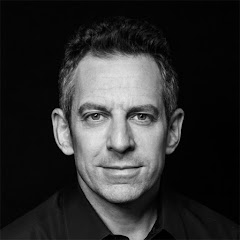 Sam Harris
Want to know something specific about what's covered?
We've already dissected every moment. Ask and we will deliver (with timestamps).
Key Moments
Kasparov and Harris discuss Putin's war in Ukraine, attributing it to Putin's imperial ambitions and Western weakness, not NATO expansion.
Key Insights
Putin's aggression stems from his deep-seated imperial ambitions and belief in Russian spheres of influence, not NATO expansion.
The perception of American and European weakness and internal divisions emboldened Putin to launch the invasion.
Sanctions are crucial, but their incremental rollout and the continued purchase of Russian oil and gas have diminished their effectiveness.
Putin has miscalculated the Ukrainian resistance and the West's response, but he has also strategically used negotiations to buy time.
Domestic propaganda in Russia is losing ground due to the significant Russian losses and the stark contrast with expected outcomes.
A domestic uprising in Russia is unlikely without severe economic collapse, potentially triggered by comprehensive sanctions and military defeat.
PUTIN'S HISTORICAL AMBITIONS AND WARNING SIGNS
Garry Kasparov, a prominent critic of Vladimir Putin, draws parallels between Putin's actions and the appeasement of Hitler in the 1930s. Kasparov recounts his early warnings about Putin, starting from his KGB background and his open disdain for the Soviet Union's collapse. Putin's public pronouncements, such as his 2007 Munich Security Conference speech advocating for 19th-century spheres of influence, and his actions like the 2008 Georgia invasion and 2014 Crimea annexation, were clear indicators of his imperial intentions. Kasparov argues that the failure of the international community to take these warnings seriously has led to the current tragic situation in Ukraine.
DEBUNKING THE NATO EXPANSION ARGUMENT
Kasparov vehemently dismisses the argument that NATO expansion provoked Putin's invasion, labeling it as classical Russian propaganda. He points out that countries in Eastern Europe sought NATO membership due to their historical experiences of Soviet occupation and the desire for security under the U.S. nuclear umbrella. Kasparov highlights the geographical proximity of these nations to Russia and notes that no threats have ever emanated from them. Instead, he asserts that the aggression and threats originate from Russia itself, culminating in the current conflict in Ukraine.
THE ROLE OF WESTERN WEAKNESS AND PERCEPTION OF AMERICAN LEADERSHIP
Contrary to the idea that NATO's strength provoked Putin, Kasparov argues that it was precisely the perception of American and European weakness and internal divisions that emboldened him. He critiques a pattern of concessions from successive U.S. administrations, suggesting that Putin saw a lack of decisive American leadership. This perception led him to believe he could liquidate Ukraine as an independent nation, install a puppet government, and continue his imperial policies beyond Russia's borders, as evidenced by previous interventions like the one in Syria.
PUTIN'S MISCALCULATIONS AND THE EFFECTIVENESS OF SANCTIONS
Kasparov believes Putin significantly miscalculated both the fierce Ukrainian resistance and the Western response. His initial plan to swiftly capture Kyiv and install a puppet government failed. However, he strategically used military build-ups and negotiations to his advantage, perceiving a lack of decisive action from the U.S. Kasparov criticizes the incremental rollout of sanctions, arguing that they were insufficient to deter aggression and that continued Russian oil and gas purchases directly funded the war. He stresses that only comprehensive sanctions can cripple Russia's economy and military.
DOMESTIC PROPAGANDA AND THE SHIFTING OPINION IN RUSSIA
Despite Putin's efforts to control information, Kasparov contends that his propaganda is losing ground within Russia. The protracted conflict, significant Russian military losses, and the stark reality of war crimes contradict the official narrative of a 'special operation.' While stringent laws now criminalize dissent, the truth is slowly filtering through, leading to a gradual shift in public opinion. Kasparov emphasizes that Putin fears the truth more than anything, as it directly challenges his fabricated reality and risks fueling widespread discontent.
PROSPECTS FOR DOMESTIC UNREST AND THE NEED FOR DECISIVE ACTION
Kasparov views a domestic uprising against Putin as unlikely without significant economic hardship, potentially triggered by comprehensive sanctions and a clear military defeat in Ukraine. He notes the bravery of those protesting within Russia, despite severe risks. Kasparov advocates for decisive action, including a no-fly zone and regime change, arguing that half-measures will not suffice and that a lasting peace requires Putin's removal. He believes that the loyalty of Russia's elites is transactional, and they may not be willing to die for Putin if faced with existential threats.
THE STRATEGIC IMPLICATIONS OF SANCTIONS AND WAR AIMS
Kasparov stresses the importance of a clear strategy regarding sanctions, lamenting that their incremental application has proven ineffective. He argues that while an oil embargo has psychological effects, the focus should be on technological embargoes that cripple Russia's core industries. He expresses concern about inadvertently benefiting other authoritarian regimes like Iran and Venezuela. Crucially, Kasparov emphasizes that the goal must be the collapse of Putin's regime, as no lasting peace is possible while he remains in power. This requires mobilizing all resources of the free world to ensure not only Ukraine's integrity but also Russia's liberation.
NAVIGATING THE RISK OF ESCALATION AND AVOIDANCE OF WORLD WAR III
Addressing the fear of escalation, particularly concerning a no-fly zone and regime change, Kasparov acknowledges the valid concerns about triggering a wider conflict or even nuclear war. However, he frames the situation as a zero-sum game where Putin must be stopped decisively. He argues that continued Western concessions and a lack of resolve have repeatedly emboldened Putin. Kasparov suggests that Russian pilots and generals may not be willing to risk their lives in a direct confrontation with NATO, implying that decisive action could deter further escalation by highlighting the severe consequences for the Russian military and political elite.
Mentioned in This Episode
●Organizations
●Concepts
●People Referenced
Common Questions
Kasparov grew up in the Soviet Union and had direct negative experiences with the KGB. Upon seeing Putin, a former KGB officer, take power, he recognized the potential danger due to Putin's evident sympathies for the Soviet Union and his early actions like the war in Chechnya.
Topics
Mentioned in this video
The country being invaded by Russia, the focus of the discussion.
A major global power whose role in the conflict is discussed.
A Baltic state that joined NATO in 2003 and is seen by Kasparov as having a legitimate security concern after Soviet occupation.
A country that, along with Iran and Saudi Arabia, could benefit from higher oil prices due to sanctions on Russia.
A region in Russia where Putin instigated a brutal war early in his presidency.
The country led by Vladimir Putin, which initiated the war in Ukraine.
The capital of Chechnya, which was heavily bombarded by Russian forces, a tactic now used against Ukrainian cities.
The former country where Garry Kasparov grew up and which Vladimir Putin views as a lost entity.
A Russian city close to Estonia, mentioned to illustrate the lack of threat from Baltic states to Russia.
A country that Putin reportedly considered splitting Ukraine with.
A country that, along with Iran and Venezuela, could benefit from higher oil prices due to sanctions on Russia.
A country where Russia has intervened militarily, cited as an example of Putin's foreign adventures not related to NATO.
A Syrian city that was bombed by Russian forces, used as an example of Putin's military actions.
A Baltic state that joined NATO in 2003 and is seen by Kasparov as having a legitimate security concern after Soviet occupation.
A country whose nuclear deal involvement with Russia is seen as contradictory by Kasparov.
A country mentioned in the context of potential oil production.
The surprising support for Vladimir Putin from some Republicans in American politics.
A proposal for a military operation to prevent Russian aircraft from operating over Ukraine, discussed as a potential escalation.
The idea of replacing the current Russian government, discussed as a potential objective and its risks.
The system of economic and political sanctions imposed on Russia, discussed for its effectiveness.
The foreign policy of the United States, discussed in relation to its potential role in provoking the conflict.
The foreign policy of the European Union, examined for its role in the lead-up to the war.
The geopolitical and ideological framework of Western democracies, discussed in relation to the war's implications.
The Joint Comprehensive Plan of Action, a deal involving Russia that Kasparov finds contradictory given Russia's nuclear threats.
The expansion of the North Atlantic Treaty Organization, discussed as a potential provocation for Russia.
Economic and political measures taken against Russia, discussed in terms of their effectiveness and potential for greater impact.
A Russian opposition leader currently imprisoned, whose fate is linked to Putin's.
Founder of the KGB, whose statue was toppled during the August 1991 revolution.
The former President of Ukraine, deposed in 2014, whom Putin allegedly intended to install as a puppet leader.
The first President of Russia, who appointed Putin as his successor.
Host of the Making Sense Podcast.
Former World Chess Champion and advocate for democracy, guest on the podcast.
U.S. Special Presidential Envoy for Climate, who mentioned climate change talks even after Putin's attack on Ukraine.
The President of Russia, who ordered the invasion of Ukraine and is characterized by Kasparov as a danger.
A Baltic state that joined NATO in 2003 and is seen by Kasparov as having a legitimate security concern after Soviet occupation.
The main security agency of the Soviet Union, which Kasparov had dealings with and which Putin is a former officer of.
A country that joined NATO and is seen by Kasparov as having a legitimate security concern after Soviet occupation.
The North Atlantic Treaty Organization, whose expansion is debated as a cause for the war.
More from Sam Harris
View all 304 summaries 30 min
Can AI Cure Loneliness?
 25 min
Why Is Everyone So Unhappy?
 27 min
Is America Heading for a Debt Crisis? An Economist Explains
 27 min
Is America Heading for a Debt Crisis? An Economist Explains
Ask anything from this episode.
Save it, chat with it, and connect it to Claude or ChatGPT. Get cited answers from the actual content — and build your own knowledge base of every podcast and video you care about.
Get Started Free