Key Moments
A $2 Product. $250M Revenue. One Owner.
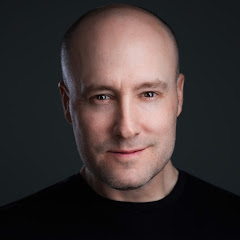 The Knowledge Project
Want to know something specific about what's covered?
We've already dissected every moment. Ask and we will deliver (with timestamps).
Key Moments
From $2 product to $250M revenue: Founder shares scaling, D2C, manufacturing, and relentless obsession.
Key Insights
Obsession is crucial for achieving disproportionate outcomes in life and business.
Building a brand and owning manufacturing are key to true Direct-to-Consumer (D2C) success.
Decision-making requires speed, risk awareness, and understanding one-way vs. two-way doors.
Cultivating self-awareness, focus, persistence, resilience, and accountability are vital for entrepreneurs.
Meaningful mission and values drive engagement and provide purpose beyond monetary gain.
Intent-based marketing and a vertically integrated logistics model were foundational to Filterbuy's growth.
THE POWER OF OBSESSION AND A CLEAR VISION
David Heacock emphasizes that significant achievements stem from an obsessive pursuit of a clear vision. He defines his mission as building the world's leading indoor air quality company, a goal that drives his every action. This relentless dedication, termed 'burning the boats,' ensures full commitment, as competing with those who are obsessed requires an equal level of dedication. Heacock advocates for this mindset as essential for anyone aiming for extraordinary outcomes, contrasting it with a more casual approach where success is merely a hope rather than a certainty. His personal brand journey is itself an act of 'burning the boats,' solidifying his public commitment to his lifelong mission.
LESSONS FROM WALL STREET AND BURNING THE BOATS
Heacock's time at Goldman Sachs, despite feeling like an outsider, instilled crucial skills in rapid decision-making and risk management. He learned to make decisions quickly, own them, and avoid second-guessing, a principle applied to his entrepreneurial ventures. This is likened to Jeff Bezos's one-way versus two-way door analogy, where he is hyper-aware of irrevocable decisions. His transition to entrepreneurship involved fully committing, akin to burning bridges, ensuring there was no fallback. This mindset was critical when leaving a secure job without a definite plan, fueled by a determination to succeed and build something substantial, echoing his earlier focus on momentum.
BOOTSTRAPPING MANUFACTURING AND SCALING THROUGH CRISIS
Starting Filterbuy involved a bold, albeit initially naive, decision to manufacture air filters from scratch with no prior experience. This 'hubristic' move took three to four years to achieve profitability, yet Heacock persisted, knowing vertical integration was key to long-term scale. The COVID-19 pandemic proved a critical inflection point. Facing supply chain disruptions, Heacock made a pivotal decision to expand geographically, opening a Utah plant, a move that significantly boosted capacity and customer acquisition. This strategic pivot, from $70 million in 2019 to $250 million in 2024, highlights how seizing opportunities during crises, coupled with a focus on consumables, can drive exponential growth.
BUILDING SYSTEMS AND THE EVOLUTION OF HIRING
Heacock’s entrepreneurial journey initially involved doing every job himself, a common bootstrap reality. He stresses that scaling requires building systems, which he believes the entrepreneur must initially create. His hiring strategy evolved from a scarcity mindset to a more deliberate approach, learning to identify and recruit top talent. He emphasizes hiring individuals who have already solved the specific problems the business faces, rather than hiring aspirationally. This includes building a strong management team with expertise in finance, operations, and marketing, crucial for achieving his vision of a billion-dollar company.
INTENT-BASED MARKETING AND THE POWER OF BRANDING
Filterbuy’s initial marketing success was built on intent-based campaigns, dominating Google and Amazon searches for air filters. Heacock's strategy of 'sucking all the oxygen out of the market' leveraged their vertically integrated advantage, allowing competitive pricing and quick delivery. This was complemented by a strong focus on brand building from day one, recognizing that a distinct brand offers competitive insulation. He differentiates marketing (awareness) from branding (value and reputation), stressing that effective marketing requires a superior product and customer experience, especially for recurring revenue models. His long-term marketing strategy has captured significant market share, with Filterbuy products representing a substantial portion of furnace filters sold on Amazon.
RETAIL EXPANSION AND THE LOGISTICS ADVANTAGE
Despite a D2C focus, Heacock recognized the importance of retail, launching Filterbuy into Walmart. He argues that 84% of transactions still occur in physical stores, making a pure online strategy short-sighted. Retail allows for different value propositions, such as selling single filters at competitive prices due to optimized shipping economics. This expansion also serves as a crucial customer acquisition channel, exposing millions of new potential customers to the Filterbuy brand weekly. He views Filterbuy not just as an air filter company, but as a logistics business optimized for delivering air filters efficiently, a key differentiator from competitors like 3M, which primarily focus on retail distribution.
COMMERCIAL VS. RESIDENTAL MARKETS AND TRUE D2C
Heacock highlights a unique positioning of Filterbuy within the filtration market by serving both residential and the rapidly growing B2B sectors (hospitals, hotels, gyms). While many competitors focus solely on one segment, Filterbuy leverages commercial-grade product standards across its entire line. This broad product catalog, including 300 standard and custom-made sizes, caters to diverse needs, including those of homes with multiple filter sizes. He contrasts this with the typical retail approach, often limited to a smaller selection of sizes. He also critiques the common mislabeling of brands that outsource manufacturing and fulfillment as 'D2C', defining true D2C as vertical integration from manufacturing to end-user sale.
THE IMPORTANCE OF MISSION, VALUES, AND ACCOUNTABILITY
Heacock's exploration of operating systems led him to prioritize a clear mission and core values for the business. He believes values like 'bias to action' provide a framework for coaching employees and reinforcing company culture. These values are not just aspirational but are lived daily, influencing hiring, performance reviews, and even employee recognition programs like 'employee of the month.' Accountability, particularly through external guidance like working with a coach or therapist, is crucial for self-awareness and ensuring commitment to goals. This structured approach, rooted in authentic mission and values, fosters a driven and purposeful work environment.
NAVIGATING FAILURES AND BUILDING RESILIENCE
Heacock shares his experiences with significant business failures, including a costly freight business venture and a flawed HVAC acquisition. These setbacks, while financially and emotionally taxing, served as critical learning opportunities. He emphasizes resilience as a muscle built by facing and solving problems, fostering confidence that even major challenges are surmountable. His approach to overcoming these obstacles, from a critical laminator malfunction that threatened manufacturing to broader market fluctuations, highlights a proactive mindset focused on finding solutions and learning from mistakes, which ultimately strengthens his capabilities.
CONFIDENCE BUILT THROUGH SKILL AND ACTION
Confidence, for Heacock, is not innate but earned through continuous learning, skill development, and consistent action. He attributes his self-assurance to his entrepreneurial journey, where building his own business and solving problems independently has cultivated a deep belief in his ability to recreate success. This contrasts with individuals who rely on external validation, often lacking the same foundational confidence. He views this self-generated confidence as the source of true freedom, enabling him to face potential loss without fear, fostering an expansive mindset essential for achieving significant goals. This is reinforced by his commitment to self-improvement and compounding skills over time.
THE DANGERS OF LIFESTYLE CREEP AND THE VALUE OF PURPOSE
Heacock warns against lifestyle creep, especially for individuals in high-paying fields like finance, where an inflated lifestyle can become unsustainable if income streams diminish. He highlights the resulting scarcity mindset and fear of loss, hindering further risk-taking and growth. His counter-approach is to build undeniable skills and add value, rather than solely cutting expenses. This philosophy aligns with his emphasis on purpose over mere wealth. He advocates for individuals to find a mission that provides fulfillment, likening it to a 'fuel' that drives daily action and prevents the misery that often accompanies a purposeless, affluent life. This personal realization was pivotal in defining his own mission.
BALANCING OBSESSION WITH FAMILY AND PRIORITIES
Despite his obsessive work ethic, Heacock maintains a strong family life, crediting a supportive partner and his own prioritization. He ensures presence at home for dinner most nights and minimizes travel disruptions. While acknowledging the sacrifices, such as limited time for hobbies or extensive social life, he finds deep fulfillment in his business and family. He contrasts this with the notion of 'having it all,' advocating instead for focused prioritization of what truly matters. This balance is achieved by consistently dedicating time to both his business ambitions and his family, demonstrating that a fulfilling life can encompass both intense professional dedication and strong personal relationships.
DEFINING SUCCESS AND THE DRIVE FOR IMPACT
For Heacock, success is defined by living without regret, particularly the regret of not attempting something known to be possible or avoided due to fear. This drives his public persona and ambitious business goals. He feels a profound responsibility to use his unique skills for positive impact, viewing giving up or selling prematurely as failing to reach his full potential. This mission-driven approach ensures he constantly pushes boundaries, seeking to make a significant impact on those he touches. This internal compass, focused on maximizing potential and leaving a meaningful legacy, is his ultimate measure of success.
Mentioned in This Episode
●Software & Apps
●Companies
●Organizations
●Concepts
●People Referenced
Common Questions
The speaker, a top economics student at George Washington University, wrote a paper on predicting currency crises using a diffusion index. His professors were impressed and forwarded it to someone at Goldman, leading to interviews and eventually a backdoor entry into the economics research department.
Topics
Mentioned in this video
Location of FilterBy's second manufacturing plant, opened in May 2020 in response to supply chain pressures during COVID.
Location of 'Filters Now,' a small air filter company that supplied office supplies to the speaker's drop-shipping business.
The speaker's hometown, where the initial air filter manufacturing plant was established and operated for the first eight years.
Location where the speaker acquired an HVAC service business in 2021 that ultimately failed, leading to a new, methodical approach to HVAC expansion.
The previous employer of FilterBy's CFO, indicating relevant experience in distribution and cost accounting.
A direct-to-consumer brand mentioned as an example of companies that emerged around the same time FilterBy started.
A direct-to-consumer brand mentioned as an example of companies that emerged around the same time FilterBy started.
A company started by the speaker in 2009 for drop-shipping office supplies, primarily on Amazon, which generated $6.5 million in sales.
A small air filter company in Carola, Alabama, from which the speaker's Drop Shipping business sourced air filters, influencing his later business venture.
More from The Knowledge Project Podcast
View all 108 summaries 46 min
Roblox Founder: Destroy Bureaucracy Before It Destroys You
 54 min
$4.6B CEO: Excellence Is the Capacity to Take Pain
 55 min
Microbiome Expert: Revealing the Biggest Myths About Your Gut, Diet, and Health
 62 min
Mental Models That Change How You Think | Bill Gurley
Ask anything from this episode.
Save it, chat with it, and connect it to Claude or ChatGPT. Get cited answers from the actual content — and build your own knowledge base of every podcast and video you care about.
Get Started Free