Key Moments
The Incredible Kyle Maynard — Fear{less} with Tim Ferriss
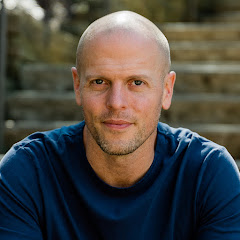 Tim Ferriss
Key Moments
Kyle Maynard shares his journey overcoming congenital amputation through resilience, adaptation, and a fearless mindset.
Key Insights
Embracing challenges and discomfort is key to personal growth and overcoming fears.
Parental attitude and belief in normalcy significantly shape a child's self-perception.
Adaptation and finding unique solutions are crucial when facing physical or situational limitations.
Inner strength and a proactive mindset can transform perceived disadvantages into advantages.
The journey of self-discovery involves confronting deep-seated fears and reframing them.
Building physical strength can serve as a powerful tool for mental, emotional, and social resilience.
OVERCOMING EARLY SETBACKS IN WRESTLING
Kyle Maynard's introduction to wrestling was marked by significant challenges, losing every match in his first season and nearly half of his second. This experience, however, set the stage for immense growth, transforming him into a successful competitor by his senior year, placing him near high school All-American status. This initial struggle highlights the power of perseverance and demonstrates that early failures do not define ultimate potential, setting a foundation for his future resilience.
THE IMPACT OF PARENTAL BELIEF AND NORMALCY
Born with a congenital amputation, Maynard's parents, particularly his mother, adopted a philosophy of normalcy that profoundly influenced his upbringing. By treating him as if he were not disabled, they fostered a sense of capability and self-worth, which in turn shaped his own perception. This approach was crucial in encouraging social integration and ensuring he didn't internalize limitations, demonstrating the powerful link between parental expectations and a child's developmental trajectory.
ADAPTING TO EVERYDAY CHALLENGES
Maynard recounts the practical adaptations needed for daily tasks, such as learning to eat independently with a prosthetic spoon. His father's insistence on self-sufficiency, rather than doing things for him, was vital. This philosophy extended to his childhood, where he opted against bulky prosthetics that hindered mobility, choosing instead to develop unique ways of navigating the world. This showcases his innate ability to adapt and find functional solutions when the environment is not inherently accommodating.
CONFRONTING SOCIAL AND EMOTIONAL FEARS
Beyond physical challenges, Maynard identifies asking his senior prom date as his most fear-filled moment, underscoring the universal nature of social anxieties. He reflects on the fear of not finding companionship due to his physical difference, a concern that many with visible disabilities share. Despite these fears, he emphasizes that he has since experienced a fulfilling dating life, demonstrating that perceived limitations often do not dictate the reality of emotional connection and personal relationships.
FINDING PURPOSE THROUGH ADVERSITY
Maynard describes a period at age ten where he didn't want to live, a profound struggle stemming from his condition. His turning point was making his first tackle in football, an experience that brought a sense of accomplishment and belonging. This moment of achieving something previously thought impossible ignited his drive. He realized that engaging in challenging activities, akin to flow states, could silence self-doubt and anxieties about his future, providing a powerful antidote to despair.
THE POWER OF PHYSICAL ENDEAVORS
Maynard views building physical strength as a primary access point for developing inner awareness and mental resilience. He likens the lessons learned in demanding physical activities, like wrestling and mountain climbing, to those in business and relationships. The discipline, perseverance, and ability to push through suffering in these pursuits translate directly into handling life's broader challenges. He advocates for embracing the 'pain cave' as a means to overcome mental and emotional obstacles, seeing the body and mind as deeply interconnected.
REFRAMING FEAR AND HELPFULNESS
His most significant fear, as he later realized, was being seen as helpless. This deep-seated fear drove him to prove his capabilities through intense physical challenges. While acknowledging this drove his successes, he now recognizes he doesn't need to be solely motivated by it. Understanding that fears, especially those unknown, can unconsciously steer one's life, he emphasizes the importance of bringing them into awareness to regain control and live a more intentional life.
THE 'MAP IS NOT THE TERRITORY' PHILOSOPHY
Maynard found profound impact in the concept that 'the map is not the territory.' This philosophy encourages viewing mental constructs and beliefs as representations rather than absolute reality. He advocates for regularly updating these 'maps' to avoid being limited by outdated perceptions or assumptions. This perspective is crucial for personal growth, enabling individuals to challenge their own beliefs and remain open to new possibilities, much like a cartographer updates their maps with new information.
SPIRITUALITY, EMPATHY, AND HUMAN CONNECTION
Maynard shares his journey through religious and spiritual beliefs, moving from Baptist upbringing to atheism, and eventually to a more inclusive spirituality that incorporates his understanding of Eastern thought and Christianity. He highlights figures like Emerson and Joseph Campbell for their wisdom. His perspective is that true understanding comes from acknowledging the common themes in human experience and questioning one's own rigid beliefs, recognizing that empathy and recognizing shared vulnerabilities ('we are all disabled in one way or another') foster deeper connections.
CLIMBING KILIMANJARO AND THE DANGER OF OPTIONS
The decision to climb Kilimanjaro stemmed from a desire to experience nature and overcome the physical barriers of his wheelchair. The climb involved significant practical challenges, including developing custom gear to navigate treacherous terrain. Ironically, Maynard found that having options like helicopter evacuation during the most brutal parts of the climb made the suffering worse. This experience taught him that sometimes, removing the safety net can paradoxically strengthen resolve and the ability to persevere through extreme hardship.
THE WISDOM OF 'SAY LESS' AND ACTIVE LISTENING
Drawing on conflict resolution advice, Maynard advocates for the power of 'say less,' emphasizing the importance of asking questions and truly listening. He believes that in discussions, actively listening to another's response before forming one's own opinion can resolve many potential conflicts. This approach, coupled with acknowledging that expert knowledge is often incomplete ('50% of what we know is wrong'), encourages humility and a more open, less confrontational dialogue, leading to greater understanding.
THE 'MOUNTAIN MOVEMENT' AND EMPOWERMENT
Maynard is creating 'The Mountain Movement,' an initiative aimed at empowering individuals to conquer their metaphorical mountains. The core idea is to challenge limiting beliefs and encourage people to explore their potential, regardless of perceived barriers. His message emphasizes that mountains, like life's challenges, are indifferent to personal circumstances; what matters is the willingness to climb and build a team. Ultimately, the movement seeks to inspire people to leave the world better than they found it through personal growth and collective effort.
Mentioned in This Episode
●Products
●Organizations
●Books
●Concepts
●People Referenced
Common Questions
Congenital amputation means being born without a limb or part of a limb. In Kyle Maynard's case, doctors did not find a known cause for his congenital amputation, and it was not detected during ultrasounds.
Topics
Mentioned in this video
A martial art discussed as a 'flow state' activity that prevents dwelling on other problems.
A concept discussed by Kyle, emphasizing that our perceptions are not reality.
Kyle discusses his journey and return to Christianity with an inclusive spiritual view.
Musician who gave a TED Talk on asking for help, which influenced Kyle.
Ancient Chinese philosopher mentioned in the context of ancient wisdom.
Mythologist and author whose work on the monomyth is admired by Kyle.
Author of '1000 True Fans', an article Kyle recommends.
Guest, athlete, author, and mountaineer who was born with congenital amputation.
A key figure in positive psychology, mentioned as an inspiration.
Navy SEAL commander interviewed by Kyle, discussed his views on research.
Host of the show and author, entrepreneur, interviewer.
Author mentioned in the context of discussing dating advice.
Psychologist known for self-efficacy theory, mentioned as an inspiration.
More from Tim Ferriss
View all 694 summaries 71 min
The Most Incredible Transformation I’ve Ever Seen — Jerzy Gregorek on Cerebral Palsy and Coaching
 34 min
PRISONER NO MORE: The True Story of Tae Jin Park
 89 min
From Food Stamps to the Super Bowl War Room — NFL Chief Security Officer Cathy Lanier
 55 min
From Dad’s Basement to Selling Two Companies — 4-Hour Workweek Success Story
Ask anything from this episode.
Save it, chat with it, and connect it to Claude or ChatGPT. Get cited answers from the actual content — and build your own knowledge base of every podcast and video you care about.
Get Started Free