Key Moments
The Fed Just Made a Move That Could Backfire Completely
 Impact Theory
Want to know something specific about what's covered?
We've already dissected every moment. Ask and we will deliver (with timestamps).
Key Moments
The Fed raised interest rates by 0.25% despite warnings of a deepening economic crisis driven by consumer sentiment and energy shocks, a move that could backfire spectacularly.
Key Insights
Consumer confidence is at recessionary levels, with more Americans fearing unemployment than not, contradicting the Fed's assessment of a resilient labor market.
The Fed's decision to raise rates is based on a belief that economic activity is expanding solidly, yet this view is challenged by data showing significant numbers of people leaving the labor force.
Persistent energy supply shocks from geopolitical events (Middle East, Russia) are likely driving inflation, an issue rate hikes cannot directly address and may exacerbate economic hardship.
The U.S. faces a debt crisis, with interest payments on over $40 trillion in debt already being the largest budget item, necessitating economic growth that current policies may hinder.
Investor sentiment shows 'trepidation' and a concern about a market bubble, indicating a disconnect between the Fed's optimism and market expectations.
The current economic resilience is partly propped up by the wealthy, while those on lower economic rungs are depleting savings, suggesting a potential deflationary spiral from reduced consumer spending.
The Fed's rate hike versus consumer reality
The Federal Reserve has raised its target range for the federal funds rate by a quarter of a percentage point, a move widely expected but questioned for its wisdom. While the FOMC statement cited solid economic expansion, resilient domestic spending, strong productivity, and robust capital investment, a stark contrast exists with the sentiment of the average American. Consumer confidence surveys, particularly the University of Michigan's, indicate levels typically seen only during recessions. More Americans express fear of rising unemployment than feel secure, a sentiment that has persisted since late 2025. This data suggests that the Fed's portrayal of a resilient labor market and economy is not aligned with the lived experiences of a significant portion of the population, particularly those on the 'bottom of the K' – the less well-off who are directly impacted by economic downturns.
Disconnect in labor market data and sentiment
The Fed emphasizes the low unemployment rate (around 4.1%) and increasing job openings as signs of labor market strength. However, a critical perspective highlights that this metric fails to account for individuals who have exited the labor force entirely, no longer actively seeking employment. This trend, especially among younger demographics, is interpreted not as a sign of strength but as a significant indicator of underlying weakness. If these individuals were included, the labor force participation data would appear considerably worse. This divergence between official statistics and real-world sentiment poses a significant challenge, as the Fed's policy decisions appear to be based on data that may not fully capture the economic distress felt by many.
Geopolitical shocks and the limits of rate hikes
A central argument against the Fed's rate hike is its ineffectiveness in addressing inflation driven by supply-side shocks, particularly those stemming from ongoing geopolitical conflicts. Events in the Middle East, impacting the Strait of Hormuz and the Red Sea, along with tensions involving Russia and its oil exports, have created sustained disruptions to energy supplies. These disruptions are considered 'transitory' by some, but their six-month duration and the potential for further escalation suggest otherwise. Rate hikes cannot directly reopen shipping lanes or resolve conflicts. Instead, they risk exacerbating economic pain for consumers already struggling, potentially leading to a crisis-led deflationary period as demand falters because people have run out of money, rather than a controlled reduction in inflation.
The looming debt crisis and growth imperative
The United States is burdened by over $40 trillion in debt, with interest payments alone constituting the largest line item in the federal budget. This debt level poses a significant challenge, especially if economic growth falters. Projections for GDP growth in 2026 and 2027 are modest (2.3-2.4%), with reliance placed on AI for future productivity gains. However, if AI development or adoption is slower than anticipated, or if protectionist policies (like tariffs) raise costs in the short term, the nation could struggle to manage its debt. Historically, significant debt reduction has been achieved through growth, as seen after World War II, often combined with financial repression (keeping interest rates below inflation). Without sufficient real economic growth, the debt burden could become unsustainable, leading to a potential spiral and further de-dollarization pressures.
Investor apprehension and market bubble concerns
Despite the Fed's assessment of economic resilience, investors exhibit significant trepidation. Many are concerned about an impending market bubble and the sustainability of current asset valuations. This sentiment is reflected in the rising yields on longer-term bonds, indicating a lack of confidence in the Fed's ability to control inflation or manage the economy effectively. The bond market appears to be signaling distrust, with yields climbing as investors anticipate higher inflation or economic instability. This cautious stance from investors contrasts sharply with the Fed's stated optimism and suggests a potential disconnect in outlooks.
The role of sentiment versus academic data
A core critique of the Fed's approach is its perceived over-reliance on academic data and trends, potentially overlooking the crucial role of human sentiment and psychology in driving economic behavior. Drawing parallels with Japan's decades-long struggle with deflationary pressures despite stimulative policies, the argument is made that if people feel uncertain and fearful about their prospects, they will not spend or invest, regardless of the availability of cheap money. The current economic situation is seen as precarious, with a divided populace where a segment of asset owners are thriving while a larger segment is experiencing financial strain. The Fed's decision to raise rates, therefore, may fail to account for this negative sentiment, potentially leading to unintended consequences.
The challenge of refinancing debt
With the U.S. needing to refinance a substantial amount of debt, persistently high interest rates present a significant obstacle. If rates remain elevated, the cost of servicing this debt will continue to grow, potentially overwhelming government finances. This situation creates a dilemma for the Fed: raising rates to combat inflation risks making debt refinancing more difficult, while holding rates low might allow inflation to persist. The current strategy of shifting debt to shorter-term instruments by the Treasury Secretary attempts to mitigate this, but the underlying debt problem remains a critical factor influencing future economic stability.
Potential for crisis-led deflation and Fed's gamble
The current economic narrative suggests that inflation may not be solely driven by an overheating economy and excess demand, as the Fed appears to assume. Instead, supply-side issues like energy disruptions and consumer spending drying up due to depleted savings could lead to a scenario where prices fall not because of successful policy, but because businesses are desperate for customers. This 'crisis-led deflation' could be misinterpreted by the Fed as a sign that its rate hikes are working, when in reality, it signals a deeper rot in the economy and a potential recession. The Fed's current policy is thus seen as a gamble, betting that inflation is demand-driven and controllable through rate hikes, while downplaying the impact of sustained supply shocks and consumer financial exhaustion.
Mentioned in This Episode
●Software & Apps
●Companies
●Organizations
●People Referenced
Inflation Data Points (as of August)
Data extracted from this episode
| Metric | 12-Month Change | 6-Month Change | 3.2% Basis | 2.4% Basis |
|---|---|---|---|---|
| Total PCE Prices | 3.6% | |||
| Core PCE Prices | 3.2% | 3.2% | ||
| CPI Prices | 2.4% | 2.4% |
Summary of Economic Projections (Median)
Data extracted from this episode
| Metric | This Year | Next Year |
|---|---|---|
| Real GDP Growth | 2.3% | 2.4% |
| Total PCE Inflation | 3.7% | 2.3% |
| Federal Funds Rate (End of Year) | 4.1% | 4.1% |
Unemployment Rate and Related Data
Data extracted from this episode
| Metric | Value | Trend/Context |
|---|---|---|
| Official Unemployment Rate | 4.1% | Remains low, consistent with full employment claims. |
| Effective Unemployment (Unofficial) | Rising | Not counted in official stats, indicates underlying weakness. |
| Unemployment Claims (4-week moving average) | Levels consistent with full employment | As stated by the Fed. |
| Unemployment Rate Projection (Median) | 4.1% | Expected to hold steady next year. |
| Consumer Expectation of Unemployment Rate Rise (Next Year) | Highest since 2020 | Indicates growing fear of job losses. |
Common Questions
The Federal Open Market Committee (FOMC) raised the target range for the federal funds rate by a quarter percentage point to combat elevated inflation, aiming to support price stability and a timely return to their 2% inflation goal.
Topics
Mentioned in this video
The Federal Open Market Committee, which decided to raise the target range for the federal funds rate.
The central bank of the United States, responsible for monetary policy, including setting the federal funds rate.
Referenced in the context of their view on Middle East geopolitical events as being temporary.
A news organization whose reporter, Matty, asked a question about AI risks.
A news organization whose reporter, Neil Irwin, asked about bond yields and market signals.
The National Bureau of Economic Research, which officially declares recessions in the US.
A group in Yemen mentioned in relation to their actions in the Red Sea, impacting oil supply and geopolitical stability.
Mentioned as a case study for long-term stimulatory environments where economic stimulation was not achieved.
Mentioned as a country that has cancelled crude exports, contributing to energy supply disruption.
Mentioned as no longer doing diesel exports, contributing to energy supply disruption.
A location where the Fed Chairman previously spoke about financial conditions and commodity prices.
A key waterway for oil transport, mentioned as a geopolitical factor that rate hikes cannot influence.
Mentioned as potentially funding militias attacking Saudi Arabia, contributing to geopolitical instability.
More from Tom Bilyeu
View all 162 summaries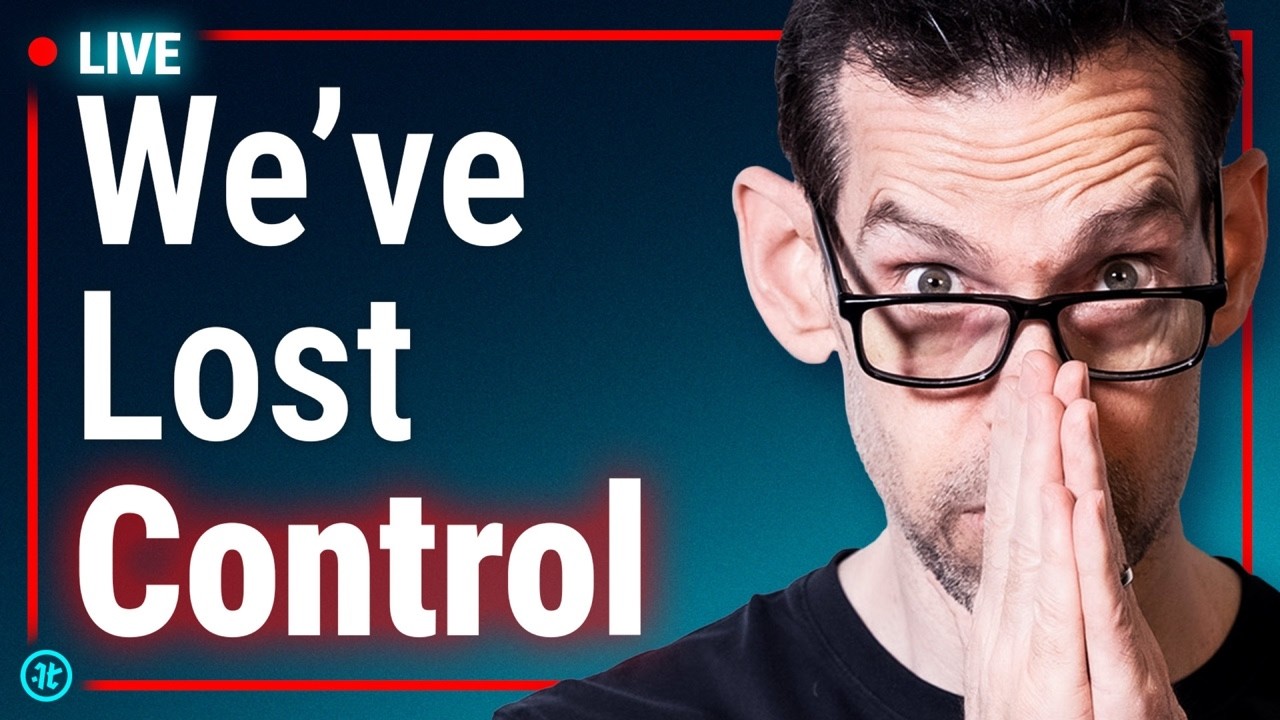 128 min
The Battle For The Future Of AI Just Went Nuclear!
 51 min
If You Think God Isn't Real, You Need To See This
 124 min
Trump Tries To Bribe The American People As The Gov't Is Choking To Death On The National Debt
 118 min
The OpenAI Scandal Is Getting Bigger By The Minute!
Ask anything from this episode.
Save it, chat with it, and connect it to Claude or ChatGPT. Get cited answers from the actual content — and build your own knowledge base of every podcast and video you care about.
Get Started Free