Key Moments
TensorFlow: Advanced Techniques Specialization
 DeepLearning.AI
Want to know something specific about what's covered?
We've already dissected every moment. Ask and we will deliver (with timestamps).
Key Moments
Advanced TensorFlow: custom models, training loops, CV tasks, GANs.
Key Insights
The Functional API enables non-sequential, multi-input/multi-output architectures and loops, unlocking exotic models beyond plain sequences.
Course 2 reveals the inner workings of the training loop and introduces distributed training across GPUs, cores, and TPUs.
Course 3 focuses on data parallelism and applying these techniques to advanced computer vision tasks like segmentation, detection, and interpretation.
Course 4 delves into generative deep learning, covering autoencoders, variational autoencoders, style transfer, and a primer on GANs.
A zombie detector example and other hands-on projects illustrate how these architectures function in real-world applications.
Prerequisites emphasize Python basics and TensorFlow familiarity, with a strong recommendation to complete the TensorFlow Developer specialization for context.
INTRODUCTION TO ADVANCED TENSORFLOW TECHNIQUES
The specialization guides learners toward building complex neural networks that go beyond simple sequences. It emphasizes models with multiple inputs and outputs, loops, and custom loss functions, using TensorFlow's functional API to enable these patterns. The goal is to prepare developers for research and advanced applications by providing hands-on experience and a clear path from theory to practice. Real-world motivation, such as object detection, helps illustrate why non-sequential architectures matter and how they scale in practice.
FUNCTIONAL API: BEYOND SEQUENTIAL MODELS
The Functional API is highlighted as the key tool for designing architectures that aren’t linear stacks. This approach allows combining diverse components into models with multiple inputs, multiple outputs, and even loops. It aligns with how modern research papers present models and enables experimental experimentation. By mastering the functional API, learners can implement complex topologies necessary for object detection, image segmentation, and other advanced tasks, setting the stage for later topics like distributed training.
COURSE ONE: CUSTOM MODELS, LAYERS, AND LOSSES
Course one focuses on creating fully custom components beyond what built-in layers provide. Learners will define and integrate custom layers, loss functions, and model configurations, enabling bespoke architectures tailored to specific problems. This foundation removes the constraint of being limited to pre-defined elements and prepares students to think creatively about how to structure networks, evaluate them, and adapt them to research questions and production constraints.
COURSE TWO: UNPACKING THE TRAINING LOOP AND DISTRIBUTED TRAINING
In course two, the training loop is brought out of the black box. Students examine what happens inside training, how gradients are computed, and how optimization steps are applied. The course then expands to distributed training, including strategies to spread work across multiple GPUs or TPUs and how to reduce losses coherently across devices. This deep dive equips learners to scale models efficiently while maintaining correctness and performance.
COURSE THREE: DATA PARALLELISM AND ADVANCED COMPUTER VISION
Course three translates the techniques into high-impact computer vision tasks. Data parallelism is paired with advanced CV problems such as image segmentation, object detection, and model interpretation. The hands-on emphasis helps students translate theory into practice, showing how to design pipelines that leverage distributed training to handle large datasets and complex architectures. A practical zombie detector example demonstrates applying these concepts to real-world, entertaining scenarios.
COURSE FOUR: GENERATIVE MODELS AND GANs PREVIEW
The final course explores generative deep learning, including style transfer, autoencoders, and variational autoencoders, with a forward-looking introduction to GANs. Learners will implement and experiment with generative architectures, gaining intuition about how chance, representation, and optimization interact to produce new data samples. The curriculum also points to an existing Deep Learning AI GAN specialization for those who want to dive deeper into this area.
PREREQUISITES AND LEARNING PATH
The series is designed to be accessible to developers with basic Python knowledge and some TensorFlow experience. A solid grasp of sequential models and convolutional concepts is helpful. The creators recommend having completed the TensorFlow Developer specialization to build the foundation needed for the more advanced topics covered here. With these prerequisites, learners can smoothly transition into functional API design, training loop mechanics, and generative modeling.
Mentioned in This Episode
●Software & Apps
●Books
●Concepts
●People Referenced
Common Questions
The specialization covers building complex neural networks with multiple inputs/outputs, loops, and custom loss functions, using TensorFlow. It also introduces the functional API, distributed training, and applications like object detection and generative models.
Topics
Mentioned in this video
More from DeepLearningAI
View all 99 summaries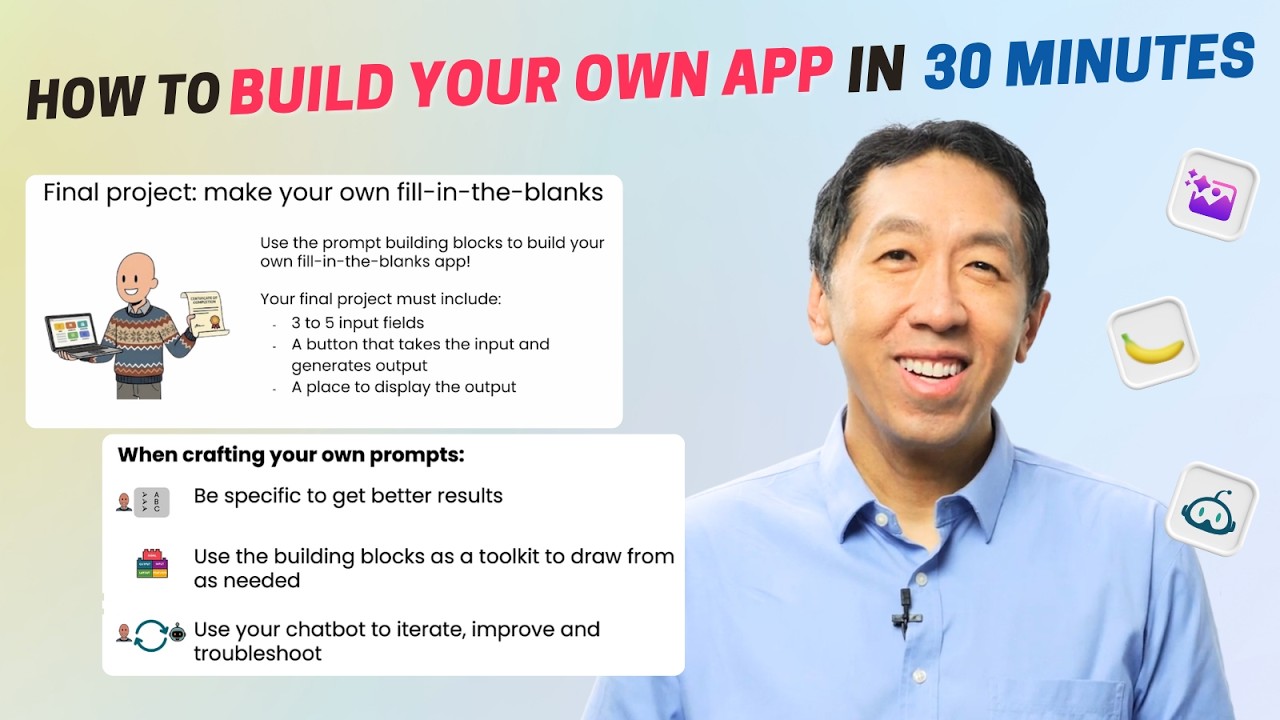 26 min
Build Your Own App In Just 30 Minutes! Full Course with Andrew Ng
 27 min
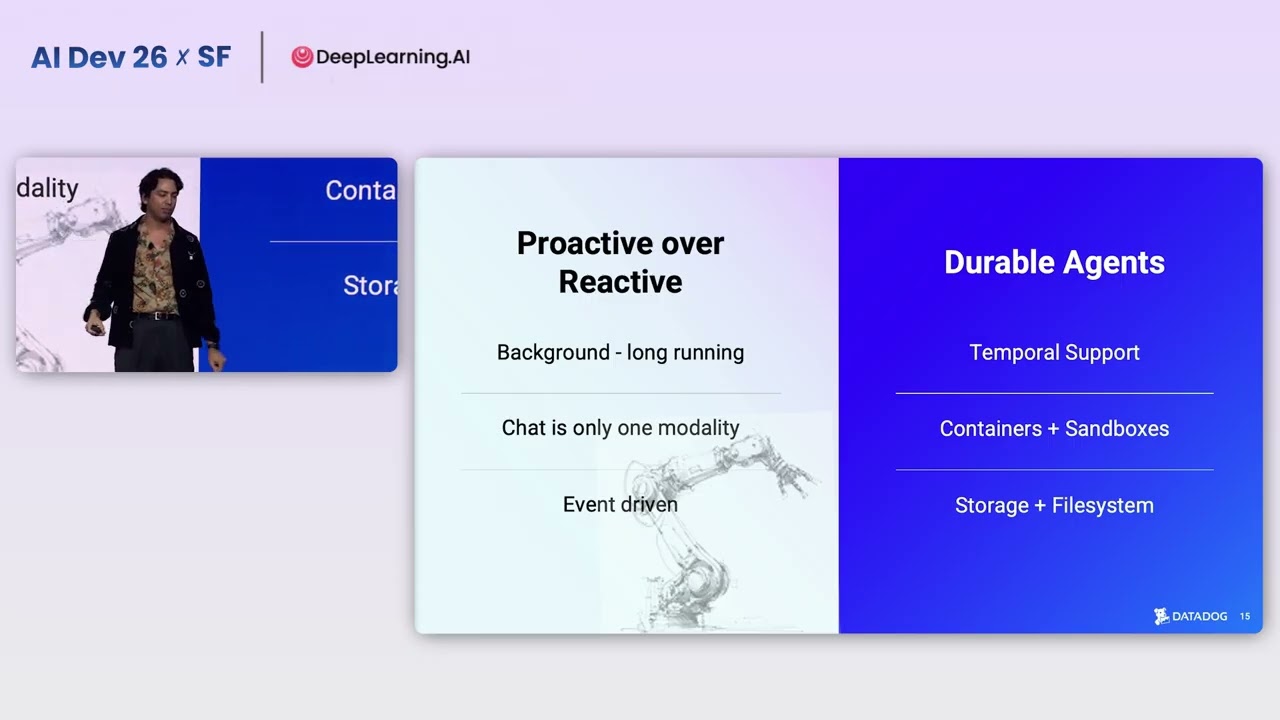
AI Dev 26 x SF | Diamond Bishop: The Next 100 Agents. Building the Agent Native Office
 26 min
AI Dev 26 x SF | João Moura: Building Recurring, Governed, and Embedded Enterprise Workflows
 22 min
AI Dev 26 x SF | Andrew K. Davies: Deterministic Memory: How to Build an AI That Cannot Lie
Ask anything from this episode.
Save it, chat with it, and connect it to Claude or ChatGPT. Get cited answers from the actual content — and build your own knowledge base of every podcast and video you care about.
Get Started Free