Key Moments
Startup Hiring Advice from Lever CEO Sarah Nahm with Holly Liu
 Y Combinator
Want to know something specific about what's covered?
We've already dissected every moment. Ask and we will deliver (with timestamps).
Key Moments
Startup founder Sarah Nahm shares insights on hiring, culture, and diversity from her experience at Lever.
Key Insights
A founder's primary job is recruiting and building a strong team.
Proactive and relationship-based recruiting is crucial for startups.
Focus on 'impact descriptions' over traditional job descriptions for more inclusive hiring.
Cultivating an inclusive culture is essential before scaling diverse hiring.
Developing a shared language and framework for discussing differences aids inclusion.
Founder's own journey and mindset significantly shape company culture and hiring practices.
THE NONLINEAR PATH TO FOUNDING
Sarah Nahm's journey to becoming a founder and CEO of Lever was not a direct one. Growing up in Birmingham, Alabama, her early interests leaned towards social justice, and upon attending Stanford, she was unfocused, initially considering design consulting. The rise of accessible technology and seeing peers take entrepreneurial leaps influenced her, but her path still meandered through a unique role as a speechwriter for Marissa Mayer at Google, which she describes as a crash course in creating something from nothing and learning about leadership.
DESIGN THINKING AS A FOUNDATIONAL SKILL
Nahm emphasizes the applicability of design thinking to entrepreneurship. She views her company, Lever, as a product that requires user research, with employees and customers serving as users. The process of understanding user needs and translating them into a clear strategy is fundamental to her leadership. This design-centric approach, she believes, equips individuals with a unique skill set highly relevant to building and leading organizations, suggesting more designers should pursue founding roles.
THE FOUNDING OF LEVER AND EARLY CHALLENGES
Leaving Google was a decision driven by a desire for broader experience rather than an immediate plan to start a company. The path to founding Lever involved a period of exploring different ideas and, critically, "trying out" potential co-founders to ensure team cohesion. The initial two and a half years were spent defining the problem and achieving product-market fit, with a significant pivot involving discarding an initial product based on user feedback and returning to core fundamentals, guided by a commitment to customer accountability.
STRATEGIC HIRING IN A COMPETITIVE MARKET
In today's talent market, startups must be highly strategic to compete with larger companies. Nahm advocates for proactive recruiting, treating hiring as a core business strategy rather than a passive process. This involves actively reaching out to potential candidates through networks, LinkedIn, and other platforms, and nurturing those relationships over time. She highlights that proactively sourced candidates are hired significantly faster and encourages founders to empower their teams to share authentic stories about why they are passionate about the company.
MOTIVATION FIT AND BEHAVIORAL INTERVIEWING
Assessing motivation fit is presented as a critical early stage in Lever's hiring process. This involves asking targeted questions about career aspirations, meaningful past decisions, and desired future experiences. Nahm stresses the importance of listening for an individual's comfort with ambiguity and their genuine understanding of 'impact.' Furthermore, she champions behavioral interviewing, specifically mentioning the "career trajectory" method (inspired by Topgrading), which involves methodically reviewing a candidate's past career to identify patterns of success and failure relevant to the company's needs.
NAVIGATING REMOTE WORK AND CULTURE
The shift towards remote work presents both opportunities and challenges. While it expands the talent pool and can offer competitive advantages, companies must intentionally build a culture that supports distributed teams. This includes refining communication, knowledge sharing, and meeting structures. Nahm notes Lever's relatively late adoption of remote work, emphasizing the importance of first building a strong, co-located culture. Founders must consider the cultural trade-offs and prepare for how remote work will impact team dynamics and information flow.
CRAFTING IMPACT DESCRIPTIONS FOR INCLUSIVITY
Lever has transitioned from traditional job descriptions to "impact descriptions." These focus on the achievements and outcomes a role is expected to deliver, rather than just required skills. This approach not only attracts top talent but remarkably increases diversity by welcoming candidates from non-traditional backgrounds. By articulating what needs to be achieved, Lever invites individuals to envision how their unique skills can contribute, fostering a more inclusive and effective hiring process that values diverse perspectives.
BUILDING AN INCLUSIVE CULTURE FROM DAY ONE
Addressing diversity and inclusion, Nahm identifies a key roadblock: the misconception that software alone can solve the problem without human behavioral change. She stresses that fostering an inclusive culture should precede scaling diverse hiring. This involves creating structural elements like diverse employee resource groups (ERGs) that inform policy, and developing a shared language for discussing differences. For a five-person company, simple actions like rotating chores can be a starting point, while larger companies might re-evaluate cultural facets like holiday schedules.
THE CHALLENGE OF TECHNICAL-NONTECHNICAL STEREOTYPES
Nahm discusses the prevalent stereotype in Silicon Valley that devalues 'non-technical' roles. Lever actively works to dismantle this by running training programs, such as 'I'm Technical and So Are You,' to empower all employees. The company believes that both technical and non-technical team members need to understand customer needs, value propositions, and go-to-market strategies. This shared understanding, fostered through open dialogue and accessible training, breaks down artificial barriers and enhances overall company performance.
FACILITATING OPEN CONVERSATIONS ABOUT DIFFERENCE
Creating a culture where open conversations about differences can occur is vital. Lever employs strategies like new hire onboarding sessions on diversity and inclusion, and utilizing personality assessments (like color-coded systems) to provide a neutral language for discussing varied working styles. This shared framework allows employees to express their perspectives without resorting to stereotypes, fostering a sense of empowerment and shared ownership culture that is crucial for long-term success and scalability. These initiatives encourage collective responsibility for the company's cultural evolution.
THE FOUNDER'S ROLE IN SHAPING CULTURE
Ultimately, founders have a unique advantage in early-stage companies to intentionally shape culture and inclusion. Nahm emphasizes that while founders won't have all the answers, enabling dialogue and empowering teams to take action is paramount. A "bottom-up" approach, where cultural initiatives are driven by the team, fosters collective ownership. By planting the seed of inclusion early, founders can create a self-reinforcing system that pays dividends as the company scales, ensuring that diversity and inclusion are integral to the company's identity.
Mentioned in This Episode
●Software & Apps
●Companies
●Organizations
●Concepts
●People Referenced
Startup Hiring and Culture Best Practices
Practical takeaways from this episode
Do This
Avoid This
Common Questions
Holly Liu grew up in Birmingham, Alabama, and studied design at Stanford. She initially thought she would go into design consulting, but ended up having a diverse early career at Google, including working as a speechwriter and on the Chrome team.
Topics
Mentioned in this video
Co-founder of Lever, discussing her journey from design consulting to founding a company, and her insights on startup hiring, culture, and diversity.
Holly Liu's first job at Google was as a speechwriter specifically for her.
Led the Chrome initiative at Google during Holly Liu's time there.
Co-founder of Lever, who built up the engineering organization, with a high percentage of his team being proactively sourced.
An early employee at Lever who runs the blog 'Inclusion at Work' and helped develop diversity and inclusion training.
Holly Liu's direct boss at Google later became the head of marketing at Instagram.
Mentioned as a platform for proactively reaching out to potential hires.
Its launch during Holly Liu's freshman year at Stanford is noted as a change in how young people were viewed as potential innovators.
Holly Liu initially thought she would work for this design consulting firm.
Holly Liu worked at Google, initially as a speechwriter for Marissa Mayer and later on the Chrome team. She discusses leaving Google to start Lever.
The company founded by Holly Liu, which focuses on recruiting software. Discussed extensively regarding its founding, culture, and hiring practices.
Highlighted as a great place to find people with technical skills.
Mentioned in relation to a hiring event and their application process, highlighting advice for early-stage companies.
More from Y Combinator
View all 600 summaries 43 min
The Age Of The 40-Year-Old Solo Founder Is Here
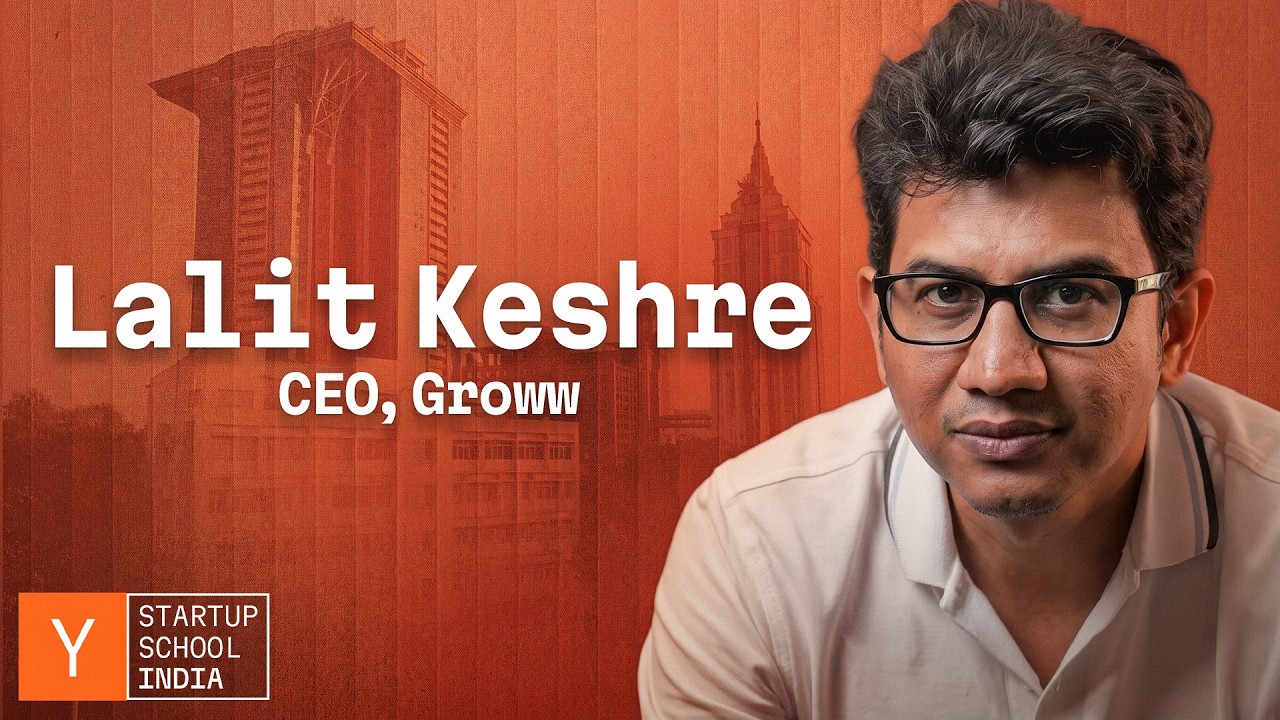 31 min
Groww: If Your Customers Don't Love It or Hate It, You've Already Lost
 77 min
5 Papers That Show Where AI Research Is Heading Right Now
 31 min
How Meesho Became India’s Biggest Shopping App
Ask anything from this episode.
Save it, chat with it, and connect it to Claude or ChatGPT. Get cited answers from the actual content — and build your own knowledge base of every podcast and video you care about.
Get Started Free