Key Moments
Self-Defense: Reality and Fantasy: A Conversation with Matt Thornton (Episode #316)
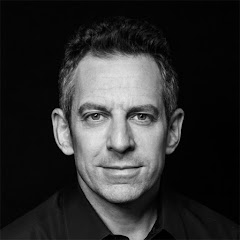 Sam Harris
Key Moments
Matt Thornton discusses martial arts, self-defense, and violence, emphasizing practical skills and emotional maturity.
Key Insights
The UFC revolutionized martial arts by demonstrating the effectiveness of certain functional styles through direct competition.
True martial arts training focuses on 'aliveness' – the ability to function under pressure, which is best achieved through sparring and competition.
The 'street vs. sport' fallacy is misleading; fundamental skills learned in combat sports are universally applicable, not limited to a specific context.
Grappling, particularly Brazilian Jiu-Jitsu, offers a unique advantage because it can be trained at near-full intensity without the same risk of severe injury as striking.
Emotional maturity is crucial for men to avoid unnecessary violence stemming from status disputes, while women's primary threat often comes from intimate partners.
Many traditional martial arts persist due to replication and a focus on tradition rather than functional effectiveness, serving as 'theaters of delusion'.
MATT THORNTON'S BACKGROUND AND THE SEARCH FOR EFFECTIVE MARTIAL ARTS
Matt Thornton, a fifth-degree black belt in Brazilian Jiu-Jitsu and founder of Straight Blast Gym (SBG), has dedicated over 30 years to understanding and teaching effective martial arts. His journey began with childhood experiences of bullying and conflicting advice from his police officer father and Jehovah's Witness mother. This led him to seek practical, effective fighting techniques, initially exploring boxing and Jeet Kune Do. Thornton became disillusioned with perceived hypocrisy in some martial arts circles and found Brazilian Jiu-Jitsu in the early 1990s, before the advent of the UFC.
THE REVOLUTIONARY IMPACT OF THE UFC AND THE RISE OF MMA
The early Ultimate Fighting Championship (UFC) events served as a crucial 'science experiment,' pitting various martial arts styles against each other. This competition revealed which disciplines were truly effective in a high-pressure, no-holds-barred environment. Thornton highlights that boxing, Muay Thai, wrestling, Judo, and Brazilian Jiu-Jitsu emerged as foundational arts. Their commonality lay in being sports with 'aliveness' – a meritocratic competition process where results matter, fostering functional skill development through continuous pressure testing and adaptation.
UNDERSTANDING 'ALIVENESS' AND THE STREET VS. SPORT FALLACY
Thornton emphasizes 'aliveness' as the key determinant of a martial art's effectiveness, referring to training that incorporates timing, energy, and motion against a resisting opponent. He debunks the 'street vs. sport' fallacy, arguing that fundamental combat skills developed in sports like Brazilian Jiu-Jitsu are universally applicable. Techniques that work under the pressure of a sport competition translate directly to real-world self-defense scenarios, as the core principles of leverage, base, and posture remain constant regardless of the environment.
THE UNIQUE ADVANTAGES OF GRAPPLING AND BRAZILIAN JIU-JITSU
Grappling, particularly Brazilian Jiu-Jitsu (BJJ), is uniquely powerful because it can be trained at a high intensity without the same inherent risk of severe injury as striking arts. While striking for effectiveness often involves potentially concussive blows, BJJ allows practitioners to experience realistic, high-stakes submissions (like chokes and joint locks) where the opponent can tap out, thus avoiding injury. This ability to train at '100%' against '100%' resistance is crucial for developing genuine skill and confidence.
ADDRESSING MALE VIOLENCE AND THE IMPERATIVE OF EMOTIONAL MATURITY
Thornton asserts that a significant portion of interpersonal violence, especially among young men, stems from a lack of emotional maturity and status-based disputes. This is often exacerbated in environments lacking positive male role models. He stresses the importance of developing a healthy relationship with violence, not by repressing it, but by understanding it and preparing for it. This preparation, through effective training, fosters confidence and circumspection, paradoxically reducing the likelihood of encountering violence.
THE PERSISTENCE OF FANTASY-BASED MARTIAL ARTS AND CULTURAL MYTHS
Despite the clear evidence from sports like MMA, fantasy-based or 'traditional' martial arts persist because they excel at replication and often tap into a desire for 'magic bullets' or simple solutions. These arts frequently rely on appeals to authority and tradition rather than functional testing ('aliveness'). Thornton likens this to religious dogma where belief is prioritized over empirical evidence, creating 'theaters of delusion' that can mislead students, particularly vulnerable young individuals seeking self-defense skills.
UNDERSTANDING THREATS DIFFERENTIALLY FOR MEN AND WOMEN
Thornton acknowledges that men and women encounter violence differently. For men, avoidable violence often arises from immaturity and disputes over status. For women, the primary threat frequently comes from their intimate partners or dating relationships, highlighting a critical difference in risk profiles. Effective self-defense training, therefore, needs to consider these distinct patterns of potential harm and equip individuals with appropriate skills and awareness.
THE EVOLUTION OF MARTIAL ARTS AND THE DEVELOPMENT OF INDIVIDUAL STYLE
Modern mixed martial arts (MMA) has evolved into a unified sport where athletes train across all ranges: striking, clinching, and grappling. Thornton advocates for focusing on fundamental movements within these ranges rather than adhering rigidly to specific traditional styles. He believes that through consistent, live training over many years, individual athletes organically develop their own unique fighting styles, building upon a shared foundation of effective techniques, a concept he sees as the truest interpretation of Bruce Lee's philosophy.
Mentioned in This Episode
●Organizations
●Books
●Concepts
●People Referenced
Principles of Effective Self-Defense Training
Practical takeaways from this episode
Do This
Avoid This
Common Questions
While societal progress reduces the likelihood of violence, interpersonal violence globally still results in approximately half a million deaths annually. Taking personal responsibility for safety is practical, and understanding violence helps cultivate a healthier relationship with this aspect of human nature.
Topics
Mentioned in this video
Host of the podcast, discussing current events and introducing his guest.
Discussed regarding a recent controversial video involving an interaction with a young boy, with speculation on possible brain damage as an explanation.
Mentioned as a previous guest on the podcast who discussed self-defense and firearms.
Founder of Jeet Kune Do, whose philosophy of absorbing what is useful and rejecting what is useless influenced Matt Thornton.
A Brazilian Jiu-Jitsu practitioner who was instrumental in bringing BJJ to Portland and challenging people to fight him for money.
Widely acknowledged as one of the greatest Jiu-Jitsu athletes, who had a significant impact on Matt Thornton's understanding of the art.
Matt Thornton's long-time coach for Brazilian Jiu-Jitsu, under whom he progressed from purple to black belt.
Mentioned as one of Matt Thornton's first black belts and notably Conor McGregor's coach.
An instructor whom Matt Thornton trained under in Jeet Kune Do, later becoming a Brazilian Jiu-Jitsu black belt.
Sam Harris mentions his long history with Buddhism and its branches, including Tibetan Buddhism.
One of the foundational martial arts Matt Thornton started with and which is considered essential for striking.
Bruce Lee's system, which Matt Thornton became an instructor of but later grew disillusioned with due to perceived hypocrisy.
A striking art that is considered a functional component of mixed martial arts.
A Russian martial art described as a ridiculous fake martial art, often involving non-compliant demonstrations.
A style of wrestling considered foundational for MMA.
A style of wrestling considered foundational for MMA and important for clinch work.
An art that contributes to grappling skills for MMA, particularly on the ground.
Mentioned as an example of a martial art that markets itself with exclusively lethal techniques for self-defense.
More from Sam Harris
View all 298 summaries 28 min
Michael Pollan on Consciousness, Psychedelics, and the Limits of Neuroscience
 22 min
Why the Stock Market Has Become a Casino
 61 min
UNRAVELING THE DREAM (A New Documentary Executive Produced by Sam Harris)
 20 min
Francis Fukuyama: The End of History Was Never What You Think
Ask anything from this episode.
Save it, chat with it, and connect it to Claude or ChatGPT. Get cited answers from the actual content — and build your own knowledge base of every podcast and video you care about.
Get Started Free