Key Moments
Russell Brunson Shares 10 YEARS of Funnelhacking Secrets!
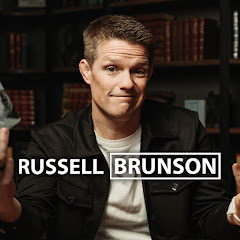 Russell Brunson
Want to know something specific about what's covered?
We've already dissected every moment. Ask and we will deliver (with timestamps).
Key Moments
Entrepreneurs are the true heroes changing the world, not politicians; true fulfillment comes from embracing challenges, not seeking easy pleasure without purpose.
Key Insights
Entrepreneurs are vilified in mass media, but they are the true drivers of change who imagine new realities and insist they become real, distinguishing them from the 98% of the population who shy away from responsibility.
Resistance, a negative force stemming from our own minds, is a shadow indicating the size of our dreams; the greater the dream, the greater the resistance, and it manifests as procrastination, shadow calling, or seeking pleasure without fulfillment.
The 'Ikigai' framework (reason for being) helps identify one's purpose at the intersection of what you love, what you're good at, what the world needs, and what you can get paid for.
Offers are the primary means of changing lives and making money, with the person making the most offers winning in the marketplace; an offer is not a product, but a map to a desired result.
Positioning an offer as a 'new opportunity' rather than an 'improvement' significantly boosts conversion rates, especially for attracting new customers who have tried and failed with previous solutions.
The single most important factor in funnel success, based on a study of over 6.1 million funnels and 130,000 split tests, is the ability to communicate one's story effectively, not the funnel type, design, or even the product itself.
Entrepreneurs: The unsung heroes driving change
Russell Brunson opens by highlighting the crucial, yet often overlooked, role of entrepreneurs as the true agents of change in the world. He contrasts this with political systems or societal structures, arguing that it is entrepreneurs who actively create solutions, innovate, and bring new realities into existence. This perspective challenges the common media portrayal of entrepreneurs as villains, emphasizing instead their contribution to societal progress. Brunson cites the Hero's Journey archetype, where individuals step up to solve problems, often taking responsibility for issues that are not directly theirs. He notes that this drive to solve problems is not the norm, as most people avoid responsibility. Entrepreneurs, however, are different; they identify a problem and feel compelled to solve it, enduring financial and personal sacrifices, often for years, before seeing significant returns. This dedication, he argues, is what enables them to change lives and ultimately, the world for their specific communities.
Understanding and overcoming resistance
A significant part of the entrepreneurial journey, Brunson explains, is encountering resistance. Drawing from Stephen Pressfield's 'The War of Art,' he describes resistance as an internal, negative force that prevents individuals from realizing their dreams and potential. This resistance manifests daily, from the moment one wakes up, hindering actions like going to the gym, working on a project, or starting a business. The key insight from Pressfield is that resistance is not an indicator that one is on the wrong path; rather, it signals the magnitude of the dream or calling. A large dream casts a large shadow of resistance. Therefore, feeling significant resistance is a positive sign, indicating that the aspiration is substantial and real. The goal of resistance is to lead individuals towards an 'unlived life' by promoting procrastination, enabling 'shadow callings' (less risky, derivative versions of true callings), and offering pleasure without true fulfillment.
Identifying your reason for being: The Ikigai framework
To navigate the challenges and find sustained motivation, understanding one's 'reason for being,' or 'Ikigai,' is essential. Brunson introduces a framework that maps the intersection of four key areas: what you love, what you are good at, what the world needs, and what you can get paid for. The overlap between what you love and are good at is 'passion.' The overlap between what you love and what the world needs is 'mission.' The overlap between what you are good at and what you can get paid for is 'profession.' The overlap between what the world needs and what you can get paid for is 'vocation.' True 'Ikigai' lies at the center where all four converge, representing a purpose that is fulfilling, impactful, and sustainable. Brunson stresses that while passion projects are enjoyable, they might not align with the world's needs or provide financial viability, thus not fulfilling one's ultimate reason for being.
The art of creating offers that change lives
Brunson emphasizes that making offers is the core mechanism for creating impact and generating revenue. He debunks the notion that selling is inherently 'icky,' explaining that offers are the vehicles through which entrepreneurs help others achieve desired results. Using his own journey and mentors like Mark Joiner and Dan Kennedy as examples, he illustrates the transformative power of investing in oneself through compelling offers. A critical aspect of offer creation is positioning it as a 'new opportunity' rather than an 'improvement.' An improvement offer, which suggests doing something 'better' or 'faster,' often fails because customers may have already tried similar things and failed. A new opportunity, however, presents a completely novel approach that bypasses past failures and offers a fresh path to success. This differentiation is crucial, especially for attracting a broad audience who are often seeking a breakthrough.
Building a complete offer stack
Every solution provided by an entrepreneur inherently creates a new problem for the customer. Brunson illustrates this with the example of building a sales funnel: understanding how to build one (the map) solves the initial problem, but then customers realize they need software, copy, and traffic. A complete offer stack addresses these subsequent needs, guiding the customer from their current state to the desired result comprehensively. This involves more than just selling a product; it's about providing all the necessary components, like a map, equipment, and guidance for a challenging expedition. By anticipating and fulfilling these evolving needs, entrepreneurs ensure their customers have the resources to succeed, leading to greater satisfaction and loyalty. The goal is to create an offer that feels complete, providing everything necessary for the customer to achieve their transformation.
The single most important factor: Communicating your story
Analyzing over 6.1 million funnels and 130,000 split tests, Brunson reveals that the most critical element for funnel success is not the type of funnel, the design, or even the product itself. Instead, it is the entrepreneur's ability to effectively communicate their story. A compelling narrative engages potential customers, builds connection, and moves them towards a purchase decision. This skill is paramount, outweighing even sophisticated funnel design or product features. Brunson explains that the ultimate goal of any funnel is to deliver a sales presentation, and the effectiveness of that presentation hinges on the story being told. He encourages entrepreneurs to focus on mastering this communication, as it is the foundation upon which all other elements of a successful funnel are built, leading to greater impact and sales.
Mentioned in This Episode
●Companies
●Books
●Concepts
●People Referenced
Funnel Hacking Secrets for Entrepreneurs
Practical takeaways from this episode
Do This
Avoid This
Common Questions
The 'Funnel Hacker Evolution' refers to the personal and entrepreneurial growth journey required over a decade to achieve success in online business, emphasizing mindset shifts and developing new skills.
Topics
Mentioned in this video
A book by Russell Brunson that discusses concepts like 'vehicles' for customer journeys.
A book by Stephen Pressfield that explains the concept of resistance as the primary obstacle for artists and creators.
A personal finance book by Robert Kiyosaki that inspired Russell Brunson to pursue real estate investment early in his career.
A speaker at Funnel Hacking Live who describes entrepreneurs as 'evolutionary hunters' who envision and create future realities.
One of Russell Brunson's early mentors who sold an 'internet marketing farewell package' which Brunson invested in, significantly impacting his career.
Dan Kennedy's business partner who led a mastermind group that Russell Brunson attended.
A marketing expert and mentor to Russell Brunson, known for his direct response marketing strategies and mastermind groups.
Author of 'The War of Art,' who discusses the concept of 'resistance' as an internal force that prevents people from pursuing their dreams.
An affiliate marketer who sold an audio product about Mark Joiner's farewell package, which Russell Brunson purchased.
An author quoted to illustrate the constant battle between one's calling and resistance.
An entrepreneur quoted as defining an entrepreneur as someone who takes responsibility for a problem that isn't their own.
An American showman and entertainer known for his book 'The Art of Money Getting,' which inspired Russell Brunson's section title.
A presentation and theme discussed in the video about the personal and entrepreneurial growth required over a decade in the funnel building space.
A Japanese concept meaning 'reason for being,' representing the intersection of what you love, what you're good at, what the world needs, and what you can get paid for.
Ask anything from this episode.
Save it, chat with it, and connect it to Claude or ChatGPT. Get cited answers from the actual content — and build your own knowledge base of every podcast and video you care about.
Get Started Free