Key Moments
[One Million AI Engineer Special] How Stanford Teaches AI-Native Engineering — Mihail Eric, Monaco
 Latent Space Podcast
Key Moments
Stanford's AI-native engineering course is rapidly evolving, with students now contributing to open-source projects instead of just theoretical assignments, raising the bar for new engineers.
Key Insights
Stanford's CS146S course, 'Modern Software Developer,' has evolved from a broad tour of AI in the SDLC to focusing on solidifying principles like context engineering and design architecture.
Students in the course are no longer just consumers; a significant part of the curriculum involves contributing to open-source projects, requiring them to understand unfamiliar repos and explain their proposed changes to maintainers.
The course structure includes a deep dive into the internals of coding agents, allowing students to build their own basic agent and understand advanced concepts like context engineering, tool design, and skills.
Agent-ready codebases are a crucial focus, emphasizing how to design repositories that are easily ingested and consumed by AI agents, with considerations for documentation and verifiability.
Security is a key module, addressing new attack vectors introduced by AI-generated code and emphasizing dependency tracking and supply chain management.
The concept of a 'software factory' is explored, where AI agents build and maintain software, with discussions on where human involvement remains crucial, primarily in defining intent and review processes.
The AI engineer's elevated bar
Mihail Eric, who teaches Stanford's 'Modern Software Developer' course (CS146S) and leads AI at Monaco, emphasizes a significantly higher bar for entry-level engineers due to AI advancements. The course, now in its second iteration, aims to equip students to be highly productive assets to any company, moving beyond traditional foundational software engineering principles to incorporate AI-native development practices. While core CS fundamentals remain important, the focus shifts to leveraging AI for implementation details, allowing humans to concentrate on higher-level problem-solving and strategic thinking. This increased productivity expectation means that a new graduate might need to perform at a near-senior level from day one.
From assignments to open-source contributions
A major shift in the course from its first iteration to the current one is the move away from purely pedagogical assignments to active contributions to open-source projects. Eric found that last year's assignments were too easily completed with AI tools, and students were already heavily reliant on coding agents. This year, students engage with complex, unfamiliar codebases from open-source maintainers. Their task is to understand these repositories, propose changes, and present them to the maintainers. This hands-on experience aims to uplevel students by exposing them to large-scale codebases, good software design principles, and direct mentorship, bridging the gap between AI-savvy juniors and experienced seniors.
Understanding the AI agent's inner workings
The curriculum dedicates significant time to the internals of coding agents. Week one focuses on building a basic coding agent from scratch, demystifying the technology. Subsequent weeks delve into advanced concepts like context engineering, which involves carefully structuring the information provided to an agent to improve its performance, especially in large codebases. The course also covers tool design and MCP (model-centric programming), emphasizing effective strategies for interacting with and leveraging AI models. Students explore skills, which are formalized procedures for agents to automate actions, and understand how to extend single-purpose tools into more complex, automated workflows.
Designing for AI: Agent-ready codebases
A dedicated week (week five) focuses on 'agent-ready codebases.' This concept is crucial for integrating AI agents effectively into software development workflows, particularly for large-scale projects. The goal is to prepare code repositories so they can be easily ingested and consumed by AI. This involves thoughtful design, clear documentation, and ensuring verifiability. Principles like service level boundaries and maintainable structures are key. This focus acts as a building block for subsequent topics like background agents and software factories, as a well-structured and understandable codebase is foundational for complex, agent-driven development.
Navigating the evolving landscape of AI tools
The course navigates the rapidly changing ecosystem of AI development tools. While not endorsing specific tools, it introduces concepts and frameworks like Claude Code, its open-source counterpart, and discusses the evolution of system prompts and their increasing integration into model weights rather than just harness configurations. Students learn about context engineering, with frameworks like RPI (Research, Proposal, Implementation, Test) being introduced as scalable methods for interacting with large codebases. The discussion on context engineering highlights the challenges of multi-agent communication and context sharing, emphasizing the art and science of managing information flow.
Security and the AI frontier
Security is addressed as a critical component, especially given the rise of AI-generated code and new attack vectors. The course emphasizes the importance of dependency tracking and supply chain management, cautioning against arbitrary installations of packages. The discussion explores the trade-offs between building everything in-house for maximum security versus leveraging open-source components, where community scrutiny can help identify vulnerabilities faster. The complexities of AI introducing new types of bugs and the reduced human awareness of generated code are highlighted, stressing the need for robust security practices, particularly around data storage, billing, and authentication.
The 'software factory' and the future of roles
The concept of a 'software factory' – an automated system that builds and deploys software – is a central theme. The course examines where human involvement remains critical in such systems, primarily in defining 'intent' (specifications) and performing 'review.' The discussion extends to the evolving roles of engineers, with the rise of 'platform engineers' who manage critical infrastructure, cloud, DevX, and security operations. The future likely involves increasing levels of abstraction, with individuals needing to understand holistic systems and make strategic judgments, even as AI handles more of the implementation details. The idea of 'manager of agents' or similar roles emerges, requiring an understanding of product requirements, technical constraints, and the ability to adjudicate between them.
Monaco's AI-native approach
Mihail Eric also shares insights from his role as Head of AI at Monaco, a startup building an all-in-one sales platform powered by native AI agents. Monaco has developed its own agent harness tailored for sales use cases and internal tools like 'Monocoder' for scaling engineering product development. They follow a 'buy to learn, build to keep' philosophy, leveraging external tools initially and building in-house for core functionalities where mature offerings are lacking. Their focus on an all-in-one platform and codifying their go-to-market expertise into the product highlights a strategic approach to vertical AI, starting with user needs and then refining the underlying models.
Mentioned in This Episode
●Software & Apps
●Companies
●Organizations
●Concepts
●People Referenced
AI-Native Engineering Best Practices
Practical takeaways from this episode
Do This
Avoid This
Common Questions
The Stanford CS146S course, 'The Modern Software Developer,' is taught by Adjunct Professor Mihail Eric. It focuses on AI-native development practices, equipping students with skills for complex coding agent tasks and real-world production environments. Mihail Eric is also the Head of AI at Monaco, bringing practitioner experience to the curriculum.
Topics
Mentioned in this video
Adjunct Professor at Stanford, head of AI at Monaco, and teacher of the CS146S modern software developer course.
Creator of the 'Explain Diff' skill, which helps students understand code changes and reinforces learning with quizzes.
The founder of Amazon, mentioned in the context of Andy Jassy's transition into leadership.
A friend of Mihail Eric who taught a class on designing machine learning systems, providing inspiration for the CS146S curriculum design.
Monaco's marketing mastermind, known for his unconventional advertising tactics like flying planes with dollar amounts.
Someone with whom the host and guest discussed the software factory and the evolution of developer roles.
The CEO of Amazon, known for stating 'job zero is security.'
A person noted for being particular about pruning and cleaning unused agent skills regularly.
An influencer mentioned for creating 'Grill Knee,' a fun agent skill.
An influential figure whose 'levels of psychosis' talk describes the progression of AI development and the challenges of delivering real products.
Credited for building Monicoder, Monaco's internal background agent platform, and Hal, their Slack bot.
A tool used to intercept requests and responses to look under the hood of AI coding agents like Claude Code.
A task management tool that has evolved to become a coding agent company, holding a 'source of truth' for tasks and specs.
An AI code review tool that existed before it was acquired, part of the landscape of tools evaluated by Monaco.
A fundamental concept that students should learn to understand basic security and permissioning, as it can be prompted once the language is understood.
A Greylock-backed company doing a good job in broadly background agents.
A cybersecurity company that, along with Snyk, is cited as one of the only successful security companies in the last five years from a VC perspective.
An AI coding assistant that primarily operates as a desktop application, moving away from CLI interaction.
An AI model, mentioned as part of educational programs for students, suggesting widespread usage.
A very involved system built by Steve Yegge, perhaps ahead of its time, that illustrates the 'psychosis' of AI development when not accountable to real products.
An AI coding tool mentioned as being popular among Stanford students and part of educational programs.
A company involved in providing additional credits for students and early on the concept of agent readiness in codebases.
A coding agent and software factory product that is an OSS partner, involving students in building and contributing to its factory.
An AI coding agent that has gained significant popularity, known for its focus on simplicity and use of powerful tools like SQL and Bash.
An open-source software (OSS) partner that students will build with as part of their contributions to the OSS program.
An AI code review tool that Monaco uses and has found valuable, developed by Cognition AI.
A programming language suggested by Malta from Vercel as a more secure and faster alternative to C++ for critical software.
A powerful AI model that significantly advanced the capabilities of autonomous agents and influenced curriculum changes.
An early adopter vendor used by Monaco for enrichment data and general search.
A powerful Swiss Army knife tool that Claude Code effectively leverages for its capabilities.
A powerful Swiss Army knife tool that Claude Code effectively leverages for its capabilities.
A vendor used by Monaco for enrichment data, alongside Parallel.
An AI framework that published many blogs about good context engineering and managing precious context windows in earlier agent models.
A consumer-facing tool that is actually powered by Cursor under the hood, raising questions about codebase integration for power users.
The platform on which Monaco's internal background agent platform, Monicoder, is built, designed for isolating development environments and scaling multi-agents.
An AI legal assistant mentioned in the context of vertical AI companies considering building their own models due to cost considerations with frontier models.
Monaco's internal Slack bot, an AI-powered tool serving purposes for customer success, QA, and sales, with different personalities depending on the user.
A successful model gateway that focuses solely on model routing, challenging the idea that gateways should also handle ops and observability.
An undergraduate project from Princeton, cited as an example of a valuable benchmark that can lead to significant opportunities.
A company that has posted about the design of their AI code review system.
A company that has posted about the design of their AI code review system.
A buzzy startup where Mihail Eric serves as Head of AI, implementing AI-native development practices.
A company mentioned for its strong design engineers and where a former student from the course found a job working on app generation from design sketches.
A company that handles ops and observability, contrasting with OpenRouter's focus on model routing only.
An example of a large enterprise client where Resolve's AI SRE solutions would be valuable due to complex service level dependencies.
A company providing AI tools, mentioned as being involved in providing credits for students and having a good code review product (Devin).
A large enterprise sales platform that Monaco aims to differentiate from by focusing on early-stage startups with an all-in-one AI-native solution.
A cybersecurity company that, along with Wiz, is cited as one of the only successful security companies in the last five years from a VC perspective.
The company of Ankit, a guest writer for Latent Space who published an article on 'killing the AI review.'
A company mentioned in the context of 'job zero is security,' a principle stated by Andy Jassy.
A company mentioned by the host when questioning the claim about successful security companies.
An example of a large enterprise client where Resolve's AI SRE solutions would be valuable due to complex service level dependencies.
An interesting security company that existed before agents and augmented its offering into the agent space.
A company where former members of Sam's world-class Go-to-Market team, now at Monaco, previously worked.
A YC company that developed an AI code review tool, mentioned as part of the market evaluation by Monaco.
An AI company suspected by the speaker to favor the 'death' of agent skills due to perceived sloppiness in skill creation and management.
An AI SRE company doing well, particularly in the enterprise space with complex service dependencies, and previously created a sandbox assignment for Mihail Eric's class.
Mentioned as the company whose spreadsheets early-stage startups might use for tracking pipeline before adopting a platform like Monaco.
A company that published a blog post about building an internal tool with zero lines of manually written code, illustrating harness engineering and the software factory concept.
A platform where changes in job status serve as a good signal for sales outreach, detected by Monaco's systems.
A 'legacy' or bigger company that has done a fantastic job with content around AI-SDLC and the design of their AI code review system.
An AI code review tool, mentioned as one of the many tried by Monaco before settling on Devin.
The principle that organizations design systems that mirror their own communication structure (i.e., 'you ship your org chart').
A Stanford course taught by Mihail Eric, focused on AI-native development practices and preparing junior engineers for the modern workforce.
A framework for thoughtful context engineering, similar to Dex's approach, involving research, proposal, spec, and implementation phases.
Mechanisms like agent.md, cloud.md, and hooks used to customize agents in modern harnesses.
A source of ideas that Mihail Eric provides to students for their capstone projects, encouraging them to 'go build a company.'
Internal AI tools or systems developed by Ramp for scaling operations, used as an example of background agents in the course.
Internal AI tools or systems developed by Stripe for scaling operations, used as an example of background agents in the course.
The institution where Mihail Eric teaches the CS146S course on modern software development practices.
A publication that wrote an article about the CS146S class, highlighting its relevance.
The institution where Sweetbench, an example of a valuable undergraduate project, originated.
A startup accelerator whose approach of selling to batchmates and growing up-market is similar to Monaco's strategy.
More from Latent Space
View all 278 summaries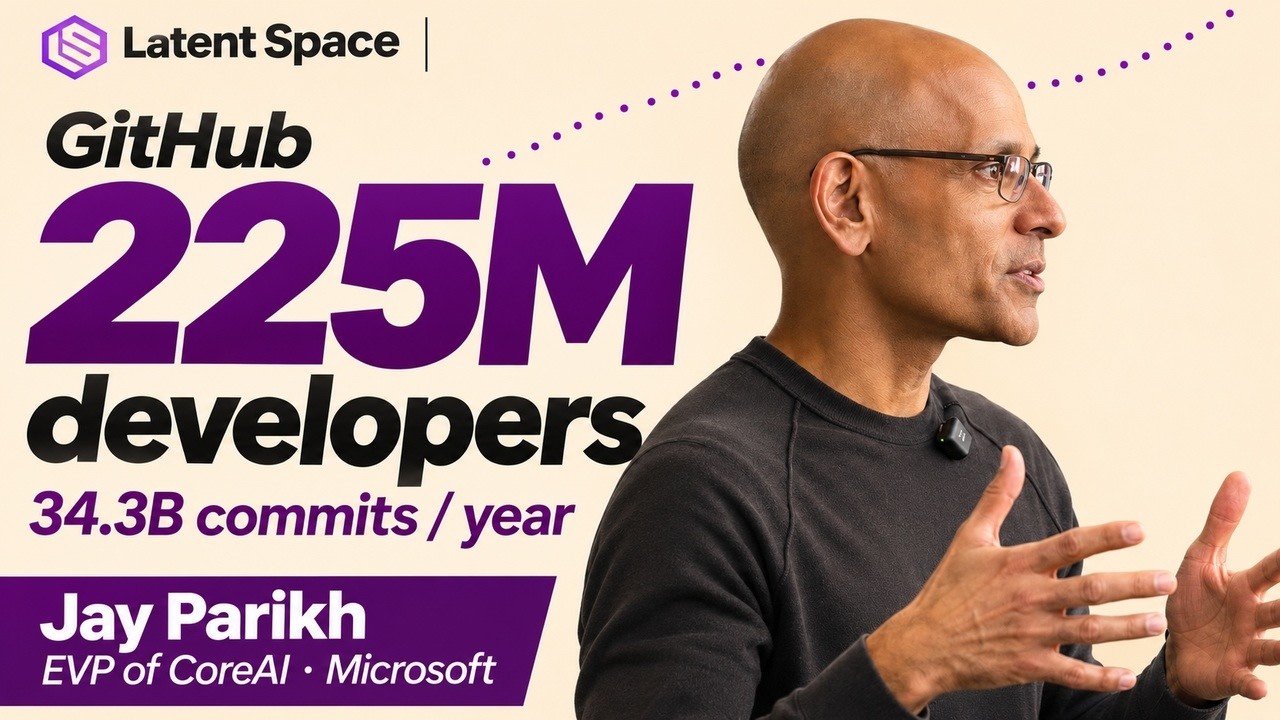 24 min
GitHub’s Growth: 225M Developers, 34.3B Commits — Jay Parikh, EVP of CoreAI, Microsoft
 103 min
Deep Dive: Anthropic S-1 Myths and Mythos — Jamin Ball, Altimeter
 51 min
Mini Brains, Beating Heart Organoids, and the AI That Predicts Them — Fabian Theis, Helmholtz Munich
 51 min
Cooking with Reducto’s CEO: Why PDFs Still Break AI — Adit Abraham
Ask anything from this episode.
Save it, chat with it, and connect it to Claude or ChatGPT. Get cited answers from the actual content — and build your own knowledge base of every podcast and video you care about.
Get Started Free