Key Moments
NYT Bestselling Author on Writing 200+ Children's Books — Tish Rabe
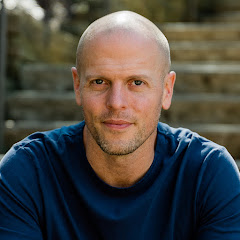 Tim Ferriss
Want to know something specific about what's covered?
We've already dissected every moment. Ask and we will deliver (with timestamps).
Key Moments
Author Tish Rabe shares her journey from opera singer to prolific children's book author, including her early work at Sesame Street and her Dr. Seuss series.
Key Insights
Tish Rabe's career began unexpectedly in opera and jazz before landing her a role at Sesame Street, where she discovered her passion for children's literature.
Her experience at Sesame Street, a highly creative and research-backed environment, taught her the importance of writing endings first and embracing collaborative creativity.
Rabe's transition into children's books was solidified by her work with Dr. Seuss, for whom she wrote science-based rhyming books, adhering to his specific rhythmic and rhyming style, even inventing words when necessary.
She emphasizes the power of rhyme and music in children's education, using them as mnemonic devices and incorporating songs into most of her books.
Rabe founded her own publishing company, Tish Rabe Books, to have more creative control and focus on specific messages, such as fostering financial literacy and supporting military families.
Her work, including the book 'Sometimes a Part, Always in My Heart,' aims to provide comfort and understanding to children facing unique life circumstances.
Rabe highlights the importance of childhood and encourages reading and writing as essential activities for children's development and imagination.
AN UNEXPECTED PATH TO SESAME STREET
Tish Rabe's initial ambition was to be an opera singer, pursuing a degree in opera with a minor in jazz. While auditioning in New York, a chance encounter led her to a job as a music production assistant at Sesame Street. Despite her initial desire to sing with the Muppets, her role evolved, and she found herself not only singing but also typing and filing, eventually getting the opportunity to sing on the show and albums. This unexpected turn marked the beginning of her illustrious career in children's media.
CREATIVITY AND LESSONS FROM SESAME STREET
Rabe describes Sesame Street as an incredibly creative environment where ideas were generated daily. The show, which had educational research behind it, focused on teaching children various concepts like numbers, letters, and compassion. A key lesson Rabe learned from the writers was the strategy of writing the endings first, a technique she applies to her own books. She also notes the show's use of double-level humor, making it enjoyable for both children and adults, which was groundbreaking at the time.
CO-AUTHORING DR. SEUSS'S LEGACY
A pivotal moment in Rabe's career was a rejection from Random House for her book about a brachiosaurus named Morris Aurora. She was informed that Random House was the 'rhyming home of Dr. Seuss.' However, instead of ending her prospects, this led to an offer to write a new series for Dr. Seuss. Tasked with continuing Dr. Seuss's vision for science-based rhyming books for early readers, Rabe meticulously studied his rhythm and rhyme schemes, sometimes inventing words, like 'Gerlatz,' to fit his unique style.
THE CRAFT OF RHYME AND SONGWRITING
Rabe emphasizes the importance of rhyme and music in children's literature, often incorporating songs into her books. She explains that she selects public domain melodies for her original songs, making them easily accessible and memorable for families. Her musical background, including singing jingles and counting off Muppet performances, provided a strong foundation. Rabe learned from Dr. Seuss's innovative approach, particularly his use of non-rhyming lyrics in songs like 'Being Green,' and his willingness to create new words when necessary to maintain rhythm and rhyme.
LAUNCHING TISH RABE BOOKS AND SPECIALIZED PROJECTS
At age 71, Rabe founded her own company, Tish Rabe Books, driven by a desire for creative control and the ability to produce books with specific messages, such as financial literacy ('Days Can Be Sunny for Bunnies and Money') and support for military families ('Sometimes a Part, Always in My Heart'). This venture has allowed her to explore topics like dialogic reading and to collaborate on projects with organizations like Rotary Clubs, aiming to spread kindness and understanding.
DEDICATION TO LITERACY AND MILITARY FAMILIES
Rabe's book 'Sometimes a Part, Always in My Heart' was inspired by her father's military service and her desire to support military children facing parental separation. The book, developed in collaboration with 'United Through Reading,' offers comfort and relatable stories for children of deployed service members. She is passionate about getting free books into the hands of children in underserved communities, a mission aligned with her initial work at Sesame Street and amplified through her company's initiatives.
THE CHARACTERS AND INSPIRATION BEHIND THE BOOKS
Rabe shares insights into the creation of her characters, like Alaska the stuffed dog, inspired by the need to address military families leaving pets behind. She also discusses the process of developing books for specific purposes, such as a book about Central Park prompted by a request from the Mystic Chamber of Commerce, and a book commissioned by a bank to teach financial literacy. Her approach involves extensive research, often drawing inspiration from everyday observations and a deep understanding of children's needs and perspectives.
OVERCOMING CHALLENGES AND EMBRACING THE FUTURE
Rabe acknowledges that writing can present challenges, including writer's block, but she has developed strategies to overcome them, such as stepping away from a project and working on something else. She shares an anecdote about a book assignment about healthy habits that she initially found boring but which became a bestseller after she infused it with Dr. Seuss-like characters. Rabe remains dedicated to writing and promoting literacy, viewing children as the world's most precious gift and the future to be nurtured.
Mentioned in This Episode
●Products
●Tools
●Companies
●Organizations
●Books
●Concepts
●People Referenced
Tips for Aspiring Children's Book Authors
Practical takeaways from this episode
Do This
Avoid This
Common Questions
Tish Rabe initially pursued opera singing but pivoted to writing after getting a job at Sesame Street. Her first book was for Sesame Street, and she later wrote for major publishers before embarking on her own series, inspired by Dr. Seuss.
Topics
Mentioned in this video
An 'old friend' of the host and 'new friend' of the guest, who facilitated their connection.
The creator of The Muppets and co-founder of Sesame Street, described as a 'gentle giant with a mind of steel' who was very creative and kind.
A renowned children's author whose rhythm and rhyme scheme Tish Rabe was tasked with emulating for a new series.
The composer who wrote the theme song and many iconic songs for Sesame Street, including 'Being Green'.
Tish Rabe's widow, who commissioned the book 'Oh, Baby, the Places You'll Go' to be read to babies in utero, referencing Dr. Seuss's works.
An illustrator Tish Rabe has worked with on several books, including 'Huff and Puff', chosen for 'Sweet Dreams' due to her style.
Comedic duo whose movies served as inspiration for the Sesame Street writers to write endings first.
Theodore Geisel, better known as Dr. Seuss; his widow requested a book referencing all his works.
Former VP and Publisher of Sesame Street Books, now executive editor at Tish Rabe Books, and a trained greeter at Central Park.
A Muppet character from Sesame Street with whom Tish Rabe had her first big break singing.
A character Tish Rabe developed, a clumsy dinosaur, built upon her earlier character Morris Aurorus.
A made-up word used by Tish Rabe in a Dr. Seuss-style book about sleep, similar to Dr. Seuss's invented words.
A fictional place created by Tish Rabe for her book 'Oh, the pets you can get', paying homage to Dr. Seuss.
A Dr. Seuss-like character created by Tish Rabe for a book on healthy habits, who 'loves washing her hands'.
A New York Times Bestseller written by Tish Rabe for Random House, inspired by Dr. Seuss's works and intended for prenatal reading.
A book by Tish Rabe about three bunny triplets focused on financial literacy: earning, saving, and spending.
A children's book about Mystic, Connecticut, written by Tish Rabe for the town's anniversary.
Tish Rabe's first board book for her company, featuring dialogic reading elements to encourage interaction.
A series of books Tish Rabe collaborated on with illustrator Jill Guile.
A book written by Tish Rabe for military children and families, based on interviews and experiences.
Another song mentioned as an example of a song that does not use end rhymes.
A book written by Tish Rabe featuring the fictional place Gerlatz, inspired by Dr. Seuss.
A song from Sesame Street celebrated for its sophisticated lyrics and enjoyed by children.
A lullaby book written by Tish Rabe for her company, designed to help children fall asleep, set to public domain melodies.
A book written by Tish Rabe in collaboration with international Rotary Clubs, focusing on themes of friendship and kindness.
Tish Rabe's proposed rhyming book about a brachiosaurus that could not be published by Random House due to Dr. Seuss's exclusivity.
A song written by Joe Raposo for Sesame Street, notable for its lack of end rhymes.
Tish Rabe's first children's book, written for Sesame Street, about Bert trying to fix David's favorite teapot.
A book by Dr. Seuss where the artwork was so perfect that editors did not need to make any changes.
An organization that provides pajamas and books to children facing adversity, which inspired Tish Rabe's 'Sweet Dreams' book.
An organization that records deployed service members reading to their children, inspiring Tish Rabe's book for military families.
The current name of the Pajama Program, an organization providing resources to children.
College where Tish Rabe studied opera, graduating in the class of '72.
The iconic children's television show where Tish Rabe began her career as a music production assistant and later sang with the Muppets.
A writing group to whom Tish Rabe gave a presentation addressing writer's block.
Tish Rabe's high school where she had both a phenomenal music director and English teacher who influenced her career.
organization Tish Rabe joined to network for her new company, which led to the commission of a book about their town.
An international service organization with which Tish Rabe collaborated on a book about kindness and friendship.
A famous park in New York City for which Tish Rabe wrote a rhyming children's book, aiming to guide families.
A stuffed dog character created by Tish Rabe for her book 'Sometimes a Part Always in My Heart', also available as a plush toy.
A major park for which Tish Rabe wrote a rhyming children's book aimed at helping families explore its attractions.
More from Tim Ferriss
View all 703 summaries 70 min
Q&A with Tim — The Art of Male Friendship, Reinvention in The Age of AI, & More
 125 min
Dr. Andrew Huberman — Peptides, Performance, and Protocols
 112 min
The Random Show! Mortality, AI, Supplements, Rock Climbing, & More
 88 min
The Legendary Hollywood Power Broker — Guy Oseary on 36 Years of Managing Madonna, 26 IPOs, and More
Ask anything from this episode.
Save it, chat with it, and connect it to Claude or ChatGPT. Get cited answers from the actual content — and build your own knowledge base of every podcast and video you care about.
Get Started Free