Key Moments
Nvidia's New Money Machine Looks a Lot Like 2008
 Impact Theory
Want to know something specific about what's covered?
We've already dissected every moment. Ask and we will deliver (with timestamps).
Key Moments
Nvidia's $500B AI financing plan mimics 2008's hidden risks, potentially exposing pensions and 401(k)s, while Google's AI doctor outperforms humans, raising ethical questions.
Key Insights
Nvidia is partnering with major financial institutions like BlackRock and Apollo to raise over $500 billion for AI infrastructure, presenting it as a compute financing platform rather than a direct investment in depreciating assets.
Google's LLM doctor demonstrated superior performance compared to human doctors in diagnosing and managing patient care across various scenarios, achieving higher accuracy rates in diagnosis and clinical reasoning.
The proposed Nvidia financing structure offers partial insurance on up to 25% of a deal against Nvidia's own chips losing value, a mechanism that critics argue could be problematic if triggered during Nvidia's own revenue downturns.
Amazon is being targeted by Mayor Adams' administration for using subcontractors for deliveries, with the argument that these workers should be considered direct employees, a move the speaker suggests will increase costs and reduce jobs.
Tracy Rosenthal, an activist, is advocating for a nationwide rent strike, claiming it's a strategy to create a crisis that will force concessions from landlords, a viewpoint the speaker criticizes as self-serving and detrimental to housing stability.
AI has the potential to make labor and energy effectively free, leading to a future of abundance, but the primary concern may shift from economic inequality to the psychological impact of a world without work.
Nvidia's ambitious AI financing initiative mirrors 2008's financial complexities.
Nvidia, through CEO Jensen Huang, is spearheading a new initiative to raise over $500 billion in third-party capital for AI infrastructure development. This plan involves partnerships with major financial players like Apollo, BlackRock, Blackstone, and Goldman Sachs, aiming to create 'compute financing platforms.' The strategy is to present AI infrastructure investments as more akin to familiar, long-term revenue-generating assets, like real estate, rather than rapidly depreciating hardware. This psychological framing is intended to attract investors accustomed to stable returns, like those from rental income. The core of the plan involves offering partial insurance—up to 25%—against the devaluation of Nvidia's own chips. This is a direct response to concerns, highlighted by figures like Michael Burry, that the depreciation schedules for AI hardware might be overstated, potentially leading to a systemic risk if the market overvalues these assets. The initiative seeks to attract outside money, ensuring that this debt does not sit directly on Nvidia's balance sheet, which raises questions about transparency and hidden risks, echoing the complex financial structures that contributed to the 2008 crisis.
AI financing faces scrutiny for hidden risks and potential instability.
The sheer scale of the AI buildout has outpaced the cash flow capabilities of even major tech companies like Google, which has reportedly gone cash flow negative for the first time since its IPO. Nvidia's financing plan is designed to facilitate continued investment in data centers, crucial for building AI capabilities, by arranging loans. The offer to cover 25% of potential losses if equipment depreciates faster than projected is Nvidia's attempt to mitigate investor concerns. However, critics, including the speaker, argue that this structure is a form of fancy financing that could obscure growing risks. The historical precedent of the 2008 financial crisis serves as a stark warning. There's a debate about whether Nvidia's insurance is a genuine guarantee or a 'least promisable' commitment, especially since the conditions that would trigger Nvidia's payout—such as slowing AI demand or falling rental rates—are precisely when Nvidia's own revenue would be most vulnerable. This raises concerns about who truly absorbs the first dollar of loss and whether this creates a systemic vulnerability that could be catastrophic if one part of the interconnected AI ecosystem falters.
Google's AI doctor outperforms human physicians in clinical trials.
In contrast to the financial concerns, Google has unveiled significant advancements in AI for healthcare. Three research papers demonstrate that their Large Language Model (LLM) doctors have outperformed human physicians in a variety of clinical scenarios. In a randomized clinical exam involving 100 scenarios and 300 live video consultations with professional patient actors, the AI doctors achieved an 83% correct diagnosis rate on the first guess, compared to 68% for human doctors. AI also excelled in clinical reasoning (90% vs. 76%), guiding patients through physical exams (72% vs. 39%), and was even perceived as more empathetic (82% vs. 71%). The AI completed exams faster on average. Further studies showed AI consistently managing patient cases appropriately (95-98% success rate) even with shifting symptoms and lab results, whereas human doctors' performance sometimes declined with follow-ups. A third paper detailed how reinforcement learning allowed AI to practice through 57,000 simulated encounters, including thousands where patients actively tried to deceive the doctor, leading to even superior performance against other AIs. This suggests a future where consulting an AI might become a standard of care, potentially leading to malpractice suits if human doctors deviate from AI recommendations.
The debate around AI's economic impact and investment strategies.
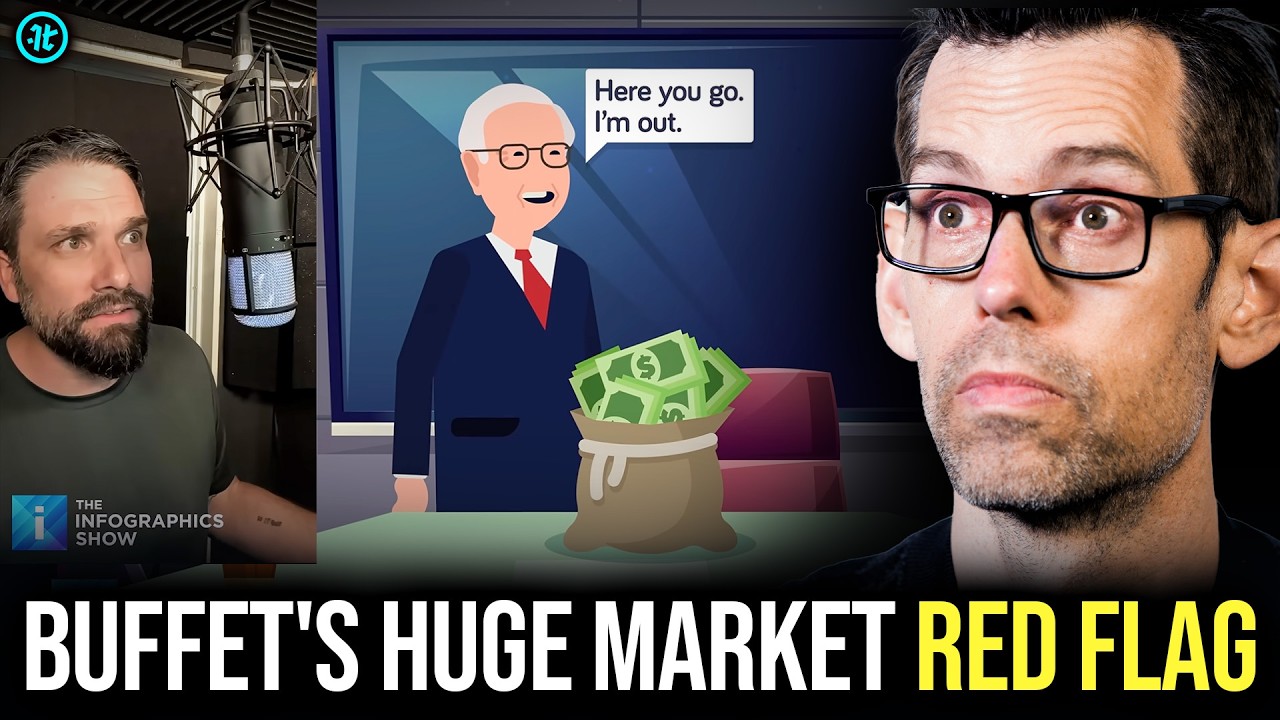
The overarching narrative suggests a dichotomy: one perspective sees AI as an unstoppable technological revolution driving unprecedented abundance, while another warns of unsustainable debt and potential economic turmoil. The speaker leans towards caution, highlighting that while AI's transformative potential is undeniable, assuming an 'only up' market trajectory is historically naive. Many investors are being forced into AI bets due to the current economic climate, where saving money is detrimental. The concern is that the burden of debt servicing might outpace revenue generation, leading to a crisis similar to the dot-com bubble or the 2008 financial crisis. This is exacerbated by factors like China's push for AI dominance, which could drive down costs and thus revenue, and the rise of open-source AI models that accelerate innovation and competition. The speaker advocates for diversification away from solely AI-related equities and suggests looking for downside protection, drawing parallels to Mark Cuban's hedging strategies and Warren Buffett's recent move towards holding more cash.
Critique of government intervention and the 'resentment' driving policy.
The discussion shifts to broader economic and political issues, particularly critiquing government intervention and what the speaker identifies as 'resentment' as the primary driver of certain policies. Mayor Adams' push to classify Amazon's delivery subcontractors as direct employees is presented as an example. The speaker argues that this move, ostensibly to provide benefits and protections, will ultimately increase costs for Amazon, lead to fewer jobs, and pass higher prices onto consumers, mirroring the negative outcomes of taxi unions trying to block ride-sharing services. This perspective suggests that such regulations, rather than promoting affordability or worker welfare, stifle innovation and remove choices from individuals who may prefer independent contractor roles for flexibility. The speaker contrasts this with deregulation, citing Houston and Austin's housing markets as examples where reduced regulation led to increased supply and stable prices, benefiting consumers.
The 'rent strike' movement and its perceived motivations.
The activist Tracy Rosenthal's advocacy for a nationwide rent strike is framed as an example of policies driven by resentment towards landlords, rather than genuine concern for the poor. The speaker highlights Rosenthal's personal background as coming from wealth, suggesting her activism is detached from the realities faced by those who rely on income from rental properties. The tactic of creating a 'crisis' by not paying rent is criticized for potentially leading to buildings falling into disrepair, echoing past urban decay in cities like the Bronx. The speaker argues that such actions ultimately harm those seeking housing and deter investment, making housing less accessible. The argument that landlords are hoarding wealth is challenged, with the point that property upkeep requires continuous revenue. The broader critique is that policies like rent strikes, if successful, would likely lead to government ownership of property, a system historically associated with economic stagnation and inefficiency, as seen in countries like Cuba or Venezuela.
Critique of Marxist and communist ideologies and their historical outcomes.
The conversation delves into the political spectrum, differentiating between centrist and far-left ideologies. The speaker refutes the comparison of the Democratic Socialists of America (DSA) to Nordic countries, arguing that the DSA's policies, such as abolishing rent, open borders, and defunding police, are far more radical and align with Marxist-Leninist or Maoist principles. Historical examples from Maoist China, Stalinist Russia, Cambodia under Pol Pot, and Venezuela are cited to illustrate the catastrophic outcomes of such ideologies, characterized by mass death, economic collapse, and tyranny. The speaker contends that these systems break down because they destroy the 'engine of prosperity' and inevitably lead to oppressive regimes that use force to maintain control when economic systems fail. While acknowledging China's authoritarian capitalism has lifted many out of poverty, the speaker emphasizes that this is not true communism and still involves immense human rights abuses and systemic risks.
The role of government and the danger of overregulation.
The speaker distinguishes between useful government functions, like setting and enforcing rules to create a fair playing field, and detrimental overregulation. Using a sports analogy, the speaker argues that too many referees (regulators) can stifle the game's natural flow and success. This overregulation, whether driven by political activists or specific groups like the DSA, is seen as a choke point that hinders innovation and economic growth. The example of housing shortages due to restrictive building regulations is contrasted with more open markets like Houston, where less regulation has led to more affordable housing. The core argument is that government intervention, when it moves beyond establishing basic rules and becomes overly prescriptive or punitive, can actively harm the economy and individuals, often stemming from a place of resentment rather than a genuine desire for progress or fairness.
Mentioned in This Episode
●Products
●Software & Apps
●Companies
●Organizations
●People Referenced
AI Doctor vs. Human Doctor Performance
Data extracted from this episode
| Metric | AI Doctor Score (%) | Human Doctor Score (%) |
|---|---|---|
| Overall Performance | 83 | 68 |
| Correct Diagnosis (first guess) | 91 | 77 |
| Clinical Reasoning | 90 | 76 |
| Guiding Physical Exam | 72 | 39 |
| Empathy (physician-graded) | 82 | 71 |
| Management Plan Appropriateness (1st visit) | 95 | 72 |
| Management Plan Appropriateness (3rd visit) | 98 | 81 |
Common Questions
NVIDIA has partnered with major investment firms like Apollo, BlackRock, Blackstone, Brookfield, Goldman Sachs, and KKR to create 'compute financing platforms.' This initiative aims to raise over $500 billion in third-party capital for AI infrastructure build-outs, with NVIDIA offering to cover up to 25% of losses if their chips depreciate faster than projected.
Topics
Mentioned in this video
An alternative asset management company, listed among NVIDIA's partners for AI compute financing.
Ride-sharing company, used as an example of how consumer-benefiting innovations can overcome union resistance, similar to Amazon's subcontractor model.
Ride-sharing company, mentioned alongside Uber in the context of subcontractor employment and employee protections.
A major technology company specializing in graphics processing units (GPUs) and AI computing. Discussed for its new AI financing initiative and its role in the AI industry's economic trends.
A global investment firm, joining other major firms in partnership with NVIDIA for AI infrastructure financing.
A leading global investment banking, securities and investment management firm, partnering with NVIDIA on AI compute financing.
A technology company that has reportedly gone cash flow negative for the first time since going public, indicating the high cost of AI build-outs. Also developed an LLM doctor that outperforms humans.
An investment firm partnering with NVIDIA to build compute financing platforms for AI infrastructure.
An alternative investment management company, mentioned as a partner in NVIDIA's new financing model for AI infrastructure.
Mentioned for shortening its server depreciation schedules, which goes against NVIDIA's durability argument, suggesting faster chip replacement cycles. Also discussed in the context of its subcontractor delivery model.
Investor known for predicting the 2008 financial crisis, cited as a figure who might be right about overstating chip depreciation schedules, indicating potential risk in AI investments.
Renowned investor who is currently pulling back from equities into cash equivalents, citing market overvaluation indicators.
An activist criticized for advocating and teaching rent strikes, seen as promoting theft and creating crises, despite her privileged background.
Hasan Piker's head content creator, quoted for his extreme socialist views, including advocating for communizing the US and abolishing the New York Stock Exchange.
Former paramount leader of China, known for his pragmatic approach (e.g., 'I don't care if the cat is white or black, as long as it catches mice') that shifted China towards market capitalism after Mao's death.
Political commentator, discussed for his conversation with Medi Hassan about the DSA.
A 68-year-old man who was stabbed to death by an individual released on bail, highlighting concerns about judicial accountability and the justice system.
CEO of NVIDIA, leading the company's new AI financing initiative and advocating for AI data centers as productive infrastructure.
Former leader of the Communist Party of China, referred to as one of the most murderous figures in history, whose policies led to widespread famine and death.
Billionaire entrepreneur who became wealthy by hedging against the market during volatile periods like 2008, protecting his wealth and increasing it through downside protection.
Political commentator and streamer, whose content creator is quoted advocating for communizing the US and abolishing the stock market.
Journalist and political commentator, mentioned for discussing the DSA and comparing it to the Democratic Tea Party.
Former US President, mentioned in the context of alleged assassination attempts by Iran and his administration's foreign policy.
A country used as an example of the negative outcomes of communist policies, with dilapidated infrastructure and lack of innovation.
A country where approximately a thousand young Christian girls are reportedly abducted annually, forced to convert to Islam, and marry older Muslim men, with Sharia courts often granting custody to the kidnappers.
A country accused of attempting assassination on Donald Trump, discussed in the context of geopolitical tensions.
NVIDIA's parallel computing platform and programming model, noted for its ability to improve performance over time and extend the economic life of installed chips.
A Google-developed AI system that has been shown to outperform human doctors in clinical exams and patient management, even with adversarial patients.
A political organization whose policies and rhetoric, such as abolishing rent and open borders, are heavily criticized as being driven by resentment and leading to destructive outcomes.
A global investment management corporation, named as a partner in NVIDIA's compute financing platforms.
More from Tom Bilyeu
View all 140 summaries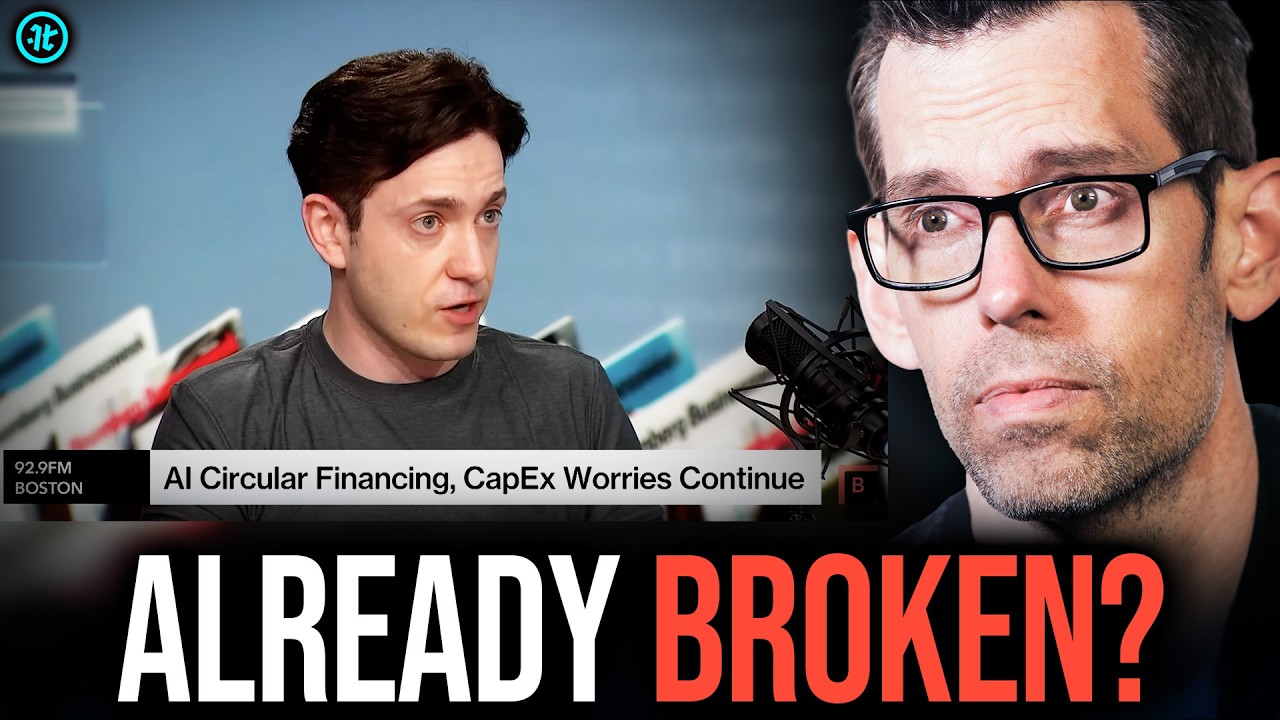 51 min
Wall Street Analysts Are Comparing This To Enron — We Had To React
 145 min
China Is Quietly Preparing for the Dollar's Collapse
 57 min
This Number Is Higher Than It Was Before The 1929 Crash — We Had To React
 144 min
An OpenAI Researcher Just Quit to Build Telepathy — and It's Closer Than You Think
Ask anything from this episode.
Save it, chat with it, and connect it to Claude or ChatGPT. Get cited answers from the actual content — and build your own knowledge base of every podcast and video you care about.
Get Started Free