Key Moments
Molly Graham: The grief, burnout, and opportunity hiding inside the AI transition
 Lenny's Podcast
Key Moments
AI is forcing professionals to confront profound career grief and burnout, and the traditional advice to 'delegate and make yourself obsolete' no longer applies when handing off work to machines.
Key Insights
The core 'lego piece' advice—giving up projects and responsibilities to evolve with company growth—was incredibly effective for 13 years but needs re-evaluation in the AI era.
A recent survey shows a 10% increase in tech workers reporting burnout from 2025 to 2026, rising from 44% to 55%, signaling immense pressure from AI adoption.
While AI can boost productivity, it also significantly increases the need for code rewriting (8x more in one engineering study) and security incidents, highlighting a gap between raw output and efficiency.
The concept of 'reverse centaur' describes AI using humans for its tasks, a scenario to avoid, contrasting with the 'centaur' model where humans control AI.
Half of employees report feeling happier than ever, with the strongest correlations to smaller teams and increased AI-driven capabilities, indicating AI's potential for positive individual experiences.
Unlike delegating to humans, delegating tasks to AI doesn't free up mental bandwidth due to the continued need for supervision and accountability, contributing to mental load and burnout.
The 'lego piece' advice re-evaluated for the AI era
Molly Graham, a veteran organizational change expert, revisits her famous 'give up your lego pieces' career advice in the context of AI. For 13 years, her core message was to delegate projects and responsibilities to make space for new growth, both for individuals and companies. This involved naturally letting go of what you were good at as the organization scaled. However, the current AI landscape presents a significant challenge to this philosophy. The prevalent narrative is that new AI employees are incredibly capable, but they will soon take your job. This narrative makes it difficult to encourage people to enthusiastically hand over their 'lego pieces' to AI, as it implies obsolescence rather than evolution. The conversation now centers on discerning which resources should be delegated and which should be retained, especially when the recipient is an AI.
AI's impact on the workplace and employee sentiment
The integration of AI is not only changing job functions but also profoundly affecting employee well-being. A two-year survey on tech worker sentiment revealed a significant increase in burnout, jumping from 44% in 2025 to 55% in 2026. This escalation is attributed to increased expectations for output without commensurate compensation or support, creating a feeling of being exploited. Many engineers report missing the past, where tasks like coding were more direct and less mediated by AI. This sentiment is amplified by the shift from 'rowing' (direct execution) to 'steering' (managing processes), a transition many find difficult or undesirable. The pervasive feeling of grief and burnout suggests that simply telling people 'don't worry, it will be okay' is no longer sufficient reassurance.
The challenge of delegating to AI versus humans
A critical distinction emerges when considering delegation to AI versus human colleagues. Traditionally, Graham's advice was to hand over 'lego pieces' completely, trusting others to build upon them and thereby freeing up your own mental capacity. However, delegating to AI doesn't offer the same liberation. Because AI often requires continuous supervision, context setting, and accountability, the mental load remains. You are still responsible for the output, even if an AI generated it. This is akin to managing an intern, but with less emotional nuance. This constant oversight prevents the creation of new mental space needed for innovation and growth, contributing to a feeling of being overwhelmed rather than liberated. The 'centaur' model, where humans control AI, is the ideal, contrasting with the 'reverse centaur' where AI directs human actions.
Redefining value and the human element in an AI-driven world
In the face of AI's capabilities, the definition of human value is shifting. Graham emphasizes that the future will be determined by those who are willing to learn and adapt, rather than those who cling to existing knowledge. The concept of 'making yourself obsolete' in traditional growth models is being challenged, as delegating to AI doesn't fully equate to obsolescence because human oversight and direction are still required. The core question becomes: what are the uniquely human skills that AI cannot replicate? These might include judgment, trust, creativity, and the ability to define vision. While AI can execute tasks with incredible speed and efficiency, it lacks the nuanced understanding, ethical reasoning, and intrinsic motivation that humans bring. The focus should shift from pure productivity to genuine effectiveness and creating lasting value.
The lingering grief and the need for acceptance
The transition into an AI-integrated workforce is inherently emotional. Many individuals experience grief over the loss of familiar roles and the perceived disappearance of their expertise. This grief is not a sign of weakness but a natural human response to profound change. Graham highlights the importance of acknowledging and validating these feelings, both individually and organizationally. Instead of pushing past these emotions with platitudes like 'it will be okay,' creating space for mourning what is lost allows for healthier adaptation. The transition requires embracing the difficulty and complexity of change, understanding that it's a challenging journey rather than a seamless upgrade. This acceptance is crucial for navigating the uncertainties and discovering new opportunities.
Opportunities and the evolving definition of roles
Despite the anxieties, AI also presents immense opportunities. Graham notes that many individuals, particularly those in smaller teams or with greater autonomy, report being happier than ever, largely due to AI augmenting their capabilities. The key lies in reframing roles and embracing continuous learning. For instance, the field of journalism, often predicted to be automated, has seen professionals like Manoush Zomorodi successfully navigate decades of change by adapting and reinventing their careers. The question is no longer 'what if my job disappears?' but 'how will my job evolve, and how can I shape that evolution?' This proactive, entrepreneurial mindset is vital for thriving in a landscape where job descriptions are likely to change significantly every few years.
Key takeaways for leaders and individuals
Graham offers actionable advice for navigating this new era. For leaders, she stresses the importance of role modeling, acknowledging the emotional toll of change, and fostering open dialogue about these feelings. Leaders must also set clear standards for AI use, emphasizing accountability and the distinction between human-driven quality and AI-generated output. For individuals, the core message is to embrace change, focus on learning over static knowledge, and understand that stagnation is the real risk. Crucially, it's important to identify and retain uniquely human skills—those requiring judgment, trust, and vision—while leveraging AI as a powerful tool, akin to a highly capable intern. The goal is not to replace human ingenuity but to augment it, allowing individuals to focus on more meaningful and creative work.
Mentioned in This Episode
●Software & Apps
●Companies
●Organizations
●Concepts
●People Referenced
Common Questions
The 'Give Away Your Legos' principle advises professionals to delegate projects, teams, and responsibilities as their company grows, rather than holding onto them. This allows for personal growth and adaptation within an evolving organization.
Topics
Mentioned in this video
Guest on the podcast, known for her 'Give Away Your Legos' professional advice, and currently hosts the WorkLife podcast on TED.
A friend of the speaker who states that the distance between a novice and an expert is very short, especially with new tools.
Mentioned as someone who observed the rapid change in how AI is viewed and adopted within six months.
Mentioned for her framework of 'storming, norming, performing' in team development.
Mentioned as Fiona Fong's boss, adding a humorous personal detail.
A journalist who Molly Graham had a conversation with, inspiring the idea that jobs won't disappear but will reinvent themselves.
A previous podcast guest who talked about the importance of grieving what is lost during transitions, particularly in midlife.
Author who developed the mental model of 'centaurs' and 'reverse centaurs' in the context of AI.
Head of Design at OpenAI, who stated that it's the best time in history to be a designer, enabling rapid learning with new AI tools.
A previous podcast guest who described work as transitioning from 'rowing' to 'steering' in the age of AI.
Founder of O'Reilly Media and creator of the Web 2.0 concept, known for organizing Foo Camp.
An online marketplace for lodging, used as a contrast to Booking.com to represent a focus on a pleasant user experience rather than aggressive optimization.
A company that uses the DX platform to measure the impact of AI on developer productivity.
A leading AI research and deployment company, mentioned in the context of rapid shifts in AI adoption strategies.
Founded by Tim O'Reilly, a company known for its publishing and conferences related to technology.
A company that uses the DX platform to measure the impact of AI on developer productivity.
One of the companies where Molly Graham worked, experiencing rapid growth that inspired her 'Give Away Your Legos' advice.
An example of a fast-growing company whose employees might relate to the 'Give Away Your Legos' concept.
A self-driving car company, used as an example to illustrate how some tasks (like driving) might be better handled by AI than humans.
A platform that enables independent journalists to publish newsletters, illustrating how individuals can become entrepreneurs in fields like journalism.
An example of a company whose workers might experience the 'reverse centaur' dynamic where humans are controlled by algorithms.
An online travel agency, used as an example of a service that prioritizes aggressive optimization and conversion, contrasting with Airbnb's approach.
Another company where Molly Graham worked, experiencing significant growth, further solidifying her Lego principle.
An example of a company whose workers might experience the 'reverse centaur' dynamic where humans are controlled by algorithms.
An AI community and platform, mentioned in the context of an attempt to break an OpenAI model.
An AI tool mentioned as making it easier for new designers to learn quickly, shortening the gap between novice and expert.
An AI tool mentioned as making it easier for new designers to learn quickly, shortening the gap between novice and expert.
A platform that published Molly Graham's article on 'Give Away Your Legos,' leading to its widespread recognition.
An AI program mentioned by Molly Graham to illustrate how easy it is for anyone to 'design' using AI, potentially devaluing the role of professional designers.
An AI tool mentioned as making it easier for new designers to learn quickly, shortening the gap between novice and expert.
An AI program mentioned by Molly Graham to illustrate how easy it is for anyone to 'design' using AI, potentially devaluing the role of professional designers.
An example of a fast-growing platform whose employees might relate to the 'Give Away Your Legos' concept.
A platform that helps measure and compare the impact of AI adoption across the entire product lifecycle, used by companies like Snowflake, Sony, and BNY.
A podcast hosted by Molly Graham, which has allowed her to have interesting conversations about the changing nature of work with many people.
A program hosted by Manoush Zomorodi, showcasing her extensive experience in media.
A podcast where Chip Conley is scheduled to appear, likely to discuss themes related to career and personal development.
The British Broadcasting Corporation, mentioned as an organization Manoush Zomorodi helped found.
A company that uses the DX platform to measure the impact of AI on developer productivity.
A leadership community run by Molly Graham, where leaders can connect and discuss challenges like AI transition.
More from Lenny's Podcast
View all 56 summaries 29 min
Why Claude can’t be your PM (yet) | Anthropic CPO Panel
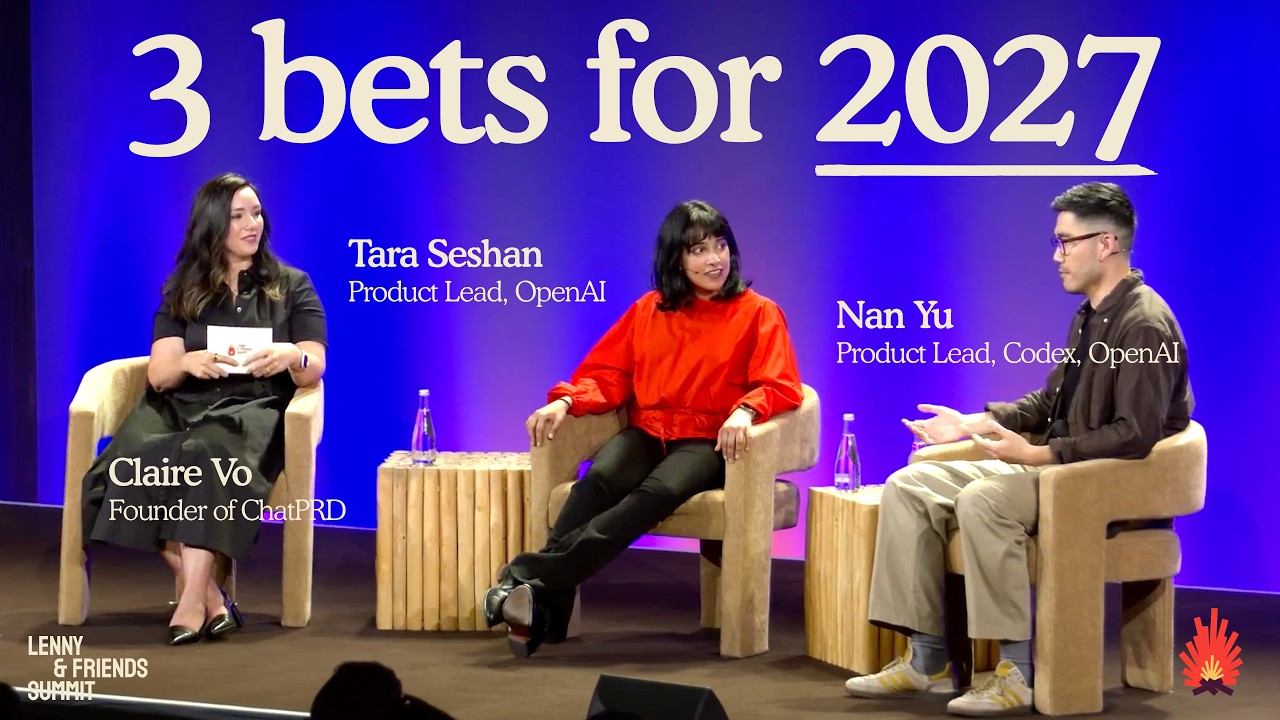 30 min
Stop planning for 2027: how OpenAI builds product 90 days at a time | Tara Sesha and Nan Yu (OpenAI)
 22 min
Roles aren't converging—they're expanding | Tamar Yehoshua (Atlassian CPO)
 23 min
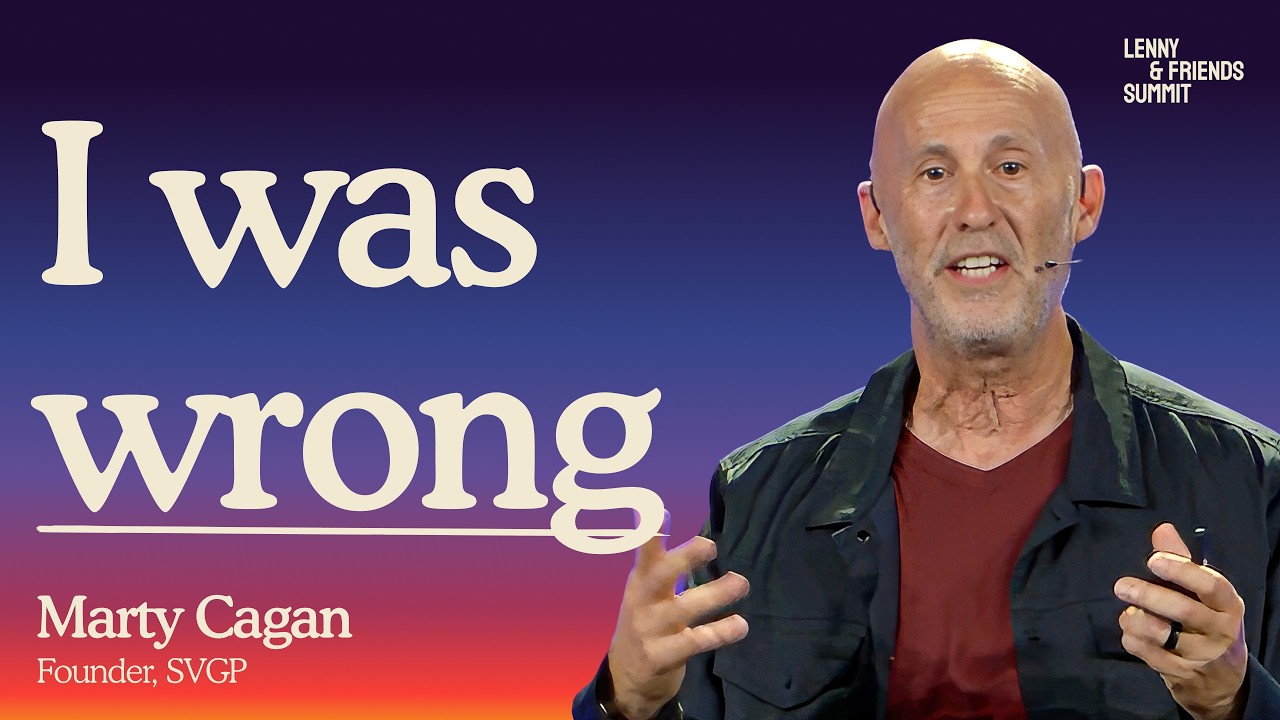
Marty Cagan: Strong Opinions, loosely held
Ask anything from this episode.
Save it, chat with it, and connect it to Claude or ChatGPT. Get cited answers from the actual content — and build your own knowledge base of every podcast and video you care about.
Get Started Free