Key Moments
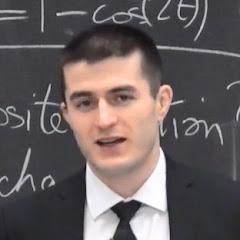
Mohammed El-Kurd: Palestine | Lex Fridman Podcast #391
 Lex Fridman
Want to know something specific about what's covered?
We've already dissected every moment. Ask and we will deliver (with timestamps).
Key Moments
Palestinian writer Mohammed El-Kurd discusses displacement, occupation, and the fight for dignity, challenging the narrative of legal disputes.
Key Insights
El-Kurd's family was expelled from their home in 1948 and faced subsequent eviction attempts, highlighting the ongoing displacement of Palestinians.
The Israeli legal system is presented as politically motivated, favoring Israeli settlers and disregarding Palestinian documentation, making legal battles inherently unfair.
Palestinian resistance, though facing immense power imbalance, is framed not as terrorism but as a fight for survival and dignity against occupation.
El-Kurd critiques the framing of the conflict as religious, emphasizing its roots in colonialism and the Zionist movement's secular ideology.
The US plays a negative role by providing significant military aid to Israel, perpetuating the occupation while public opinion shifts.
The concept of 'martyrdom culture' is reframed as a refusal to let the occupier break the Palestinian spirit, emphasizing resilience and dignity.
THE PERSONAL AND POLITICAL BATTLE FOR SHEIKH JARRAH
Mohammed El-Kurd recounts his childhood in Sheikh Jarrah, East Jerusalem, a neighborhood targeted by settler expansion and forced expulsions. His family, refugees from the 1948 Nakba, were settled in UN-provided housing, only to face renewed claims by settler organizations in the 1970s. The Israeli judicial system, skewed in favor of settlers, disregarded Palestinian documentation, leading to a decade of legal battles, over 50 expulsion orders, and the eventual partial loss of his family home in 2009.
THE ASYMMETRY OF THE LEGAL SYSTEM AND COLONIAL AGENDAS
El-Kurd elaborates on the inherent bias within the Israeli legal system, where Israeli regulations and settler claims are prioritized over Palestinian ownership documents. This asymmetry transforms legal disputes into political tools for social engineering, demographic shifts, and the displacement of Palestinians from East Jerusalem. He contrasts this with the narrative of a 'real estate dispute,' highlighting that evictions in an occupied territory involving foreign military presence are fundamentally political acts of colonialism.
THE NAKBA: AN ONGOING CATASTROPHE
The 1948 Nakba, or catastrophe, is presented not as a singular event but an ongoing process. El-Kurd explains that Zionist paramilitaries destroyed over 500 villages and displaced a majority of the Palestinian population. This historical dispossession continues today through evictions, home demolitions, and the classification of land as military zones, all facilitated by laws and judicial decisions that systematically erase Palestinian presence and connection to their land.
RESISTANCE AS SURVIVAL AND A REFUSAL TO BE BROKEN
El-Kurd reframes Palestinian resistance not as a cultural phenomenon or a desire for violence, but as an act of survival born from unbearable circumstances and the denial of basic human rights. He counters the narrative of Palestinian 'rejectionism' by highlighting decades of compromise attempts by Palestinian leadership that have yielded no peace. True anger, he argues, lies in the bulldozers and the denial of basic humanity, not in the expression of frustration.
CHALLENGING THE FRAMING: RELIGION, TERRORISM, AND MEDIA
The conflict's portrayal as a religious war is challenged, with El-Kurd emphasizing its origins in a secular, colonial Zionist ideology. He criticizes the equation of anti-Zionism with anti-Semitism, arguing it's a tactic to silence political opposition. Furthermore, he exposes the double standards in media coverage, where Palestinian resistance is labeled terrorism while Ukrainian self-defense is celebrated, and the occupation's context is often omitted, leading to a distorted perception of the conflict.
THE IMPOSSIBLE DREAM OF 'TWO-STATE SOLUTION' AND THE REALITY OF CONTINUOUS DISPLACEMENT
El-Kurd dismisses the viability of a two-state solution due to the extensive Israeli settlement expansion in the West Bank, which fragments the territory. He advocates for recognition, return of refugees, and redistribution of land, emphasizing that true peace requires acknowledging the Nakba and rectifying past injustices. The current reality for many Palestinians involves fragmented legal statuses, restricted movement, and the constant threat of displacement, perpetuating a cycle of exile.
THE LAND REGISTRY AND THE PERPETUATION OF INJUSTICE
The ongoing land registry process in Jerusalem poses a significant threat, as Israeli law refuses to recognize land ownership documents predating the state's establishment. This technicality, El-Kurd fears, will legitimize settler organizations' claims over Palestinian lands. The legal battles are fought in Hebrew, a language many Palestinians do not speak, and strategies often involve delaying tactics and building international campaigns, as recourse within the Israeli courts is deemed futile.
THE UNITED STATES' ROLE AND THE POWER OF THE DIASPORA
The United States' role is characterized as negative, primarily through substantial military and financial aid to Israel, which perpetuates the occupation. Despite shifting public opinion in the US, politicians remain largely committed to supporting Israel. El-Kurd highlights the power of the Palestinian diaspora, particularly in the US, to effect change by raising awareness, engaging in activism, and challenging the dominant narrative through various platforms, including literature and media.
THE LIMITATIONS OF DIPLOMATIC AND POLITICAL AVENUES
El-Kurd critiques the Palestinian Authority as ineffective and complicit through security coordination with Israel. He notes that Hamas, though elected, lacks genuine power, and that true change hinges on Israeli society's willingness to dismantle the occupation. He envisions a future beyond nation-states and militaries, advocating for a world where borders, walls, and oppressive laws are dismantled, and where all people have equal rights and dignity.
THE POWER OF WORDS AND THE STRUGGLE FOR NARRATIVE CONTROL
As a writer and poet, El-Kurd emphasizes the importance of shaping narratives and challenging media biases. He uses English to bridge the 'chasm' between Palestinian realities and international perceptions, aiming to educate and influence public opinion. His work, including his poetry and upcoming memoir, focuses on themes of displacement, dignity, and resistance, offering a more nuanced and human perspective often absent in mainstream discourse.
HOPE IN RESILIENCE AND THE INEVITABILITY OF JUSTICE
Despite the daily atrocities and psychological toll, El-Kurd finds hope in thePalestinian people's resilience, their 'stubbornness,' and their refusal to let their spirits be broken. He believes that throughout history, no injustice has endured indefinitely. His hope is rooted in the understanding that colonialism and occupation are unsustainable, and that justice, though it may be delayed, is ultimately inevitable, drawing parallels to past historical struggles that were once considered legal and acceptable.
CELEBRATING PALESTINIAN CULTURE AND DIGNITY
El-Kurd highlights the Palestinian cultural resilience, particularly their ability to find humor and maintain dignity in the face of immense suffering. He reframes the perception of 'martyrdom culture' as a defiant assertion of the inextinguishable spirit, and draws parallels with Palestinian prisoners who continue their education and engage in life-affirming acts. This unwavering spirit, he argues, is the most admirable aspect of the Palestinian people.
Mentioned in This Episode
●Products
●Software & Apps
●Organizations
●Books
●Concepts
●People Referenced
Common Questions
Sheikh Jarrah is an East Jerusalem neighborhood where the speaker grew up. His family, like many others, was expelled from their homes in 1948 and later settled in a UN- and Jordanian-established housing unit in 1956. Since the 1970s, settler organizations, often registered in the US, have claimed these homes. Israeli courts, operating with a bias against Palestinian documents, issued over 50 expulsion orders, leading to violent evictions starting in 2009. The speaker's family lost half their home, and a global campaign successfully halted further evictions temporarily in 2020.
Topics
Mentioned in this video
Brilliant Palestinian writer and member of the PFLP, assassinated for his revolutionary articulations of the Palestinian plight.
Pastor and founder of Christians United for Israel, known for anti-Semitic statements.
Friend of the speaker who created a documentary report on the day Haifa fell during the Zionist invasion.
Jerusalem council member and activist in settler movements, responsible for rejecting Palestinian building permits and openly advocating for another Nakba.
Pioneer of Zionism, explicitly racist, called for fighting Palestinians and founded the Irgun.
Presidential candidate mentioned for his campaign with the Green Party and his critical stance against mainstream media figures.
Controlled East Jerusalem at one point and provided documents that Israeli courts refuse to acknowledge.
Forced to cancel eviction orders due to international pressure but still seen as part of the system perpetuating injustice.
Organization founded by Pastor John Hagee.
Framed a political conflict as a real estate dispute.
Organization that labeled the speaker an anti-Semite, criticized for its historical and current practices including police training and surveillance.
Palestinian leadership, criticized for 'giving up' and being subcontractors to the Israeli regime.
Political and military organization Ghassan Kanafani was a part of.
The Israeli Army, referred to as an aggressor and accused of killing civilians.
Political party Cornel West is running with.
Another neighborhood in Jerusalem threatened with expulsion through home demolitions.
Place in the occupied West Bank where Bedouin and cave-dweller Palestinians were expelled from their homes.
Site of a bombing mentioned in relation to the Irgun.
Neighborhood in East Jerusalem where the speaker grew up, threatened by settler expansion and forced expulsion.
Region in the occupied West Bank including Masafri Yatta.
A paper by Jabotinsky arguing for the colonization of Palestine.
The speaker's book of poetry, named after his grandmother, chronicling displacement and expressing large ideas simply.
A recommended book that traces the Zionist movement in their own words.
A sarcastic poem in reaction to Israeli land laws, translating bureaucratic laws' impact to everyday Palestinians.
The tentative title of the speaker's new memoir, exploring the realities and universes within Palestine and documenting expulsions and resistance campaigns.
More from Lex Fridman
View all 550 summaries 174 min
Biggest Mysteries in Physics: Antimatter, Dark Energy & ToE - Don Lincoln | Lex Fridman Podcast #497
 259 min
FFmpeg: The Incredible Technology Behind Video on the Internet | Lex Fridman Podcast #496
 124 min
Vikings, Ragnar, Berserkers, Valhalla & the Warriors of the Viking Age | Lex Fridman Podcast #495
 146 min
Jensen Huang: NVIDIA - The $4 Trillion Company & the AI Revolution | Lex Fridman Podcast #494
Ask anything from this episode.
Save it, chat with it, and connect it to Claude or ChatGPT. Get cited answers from the actual content — and build your own knowledge base of every podcast and video you care about.
Get Started Free