Key Moments
Mo Gawdat: A WARNING about Stress & Anxiety! This Is Causing 70% Of Heart Attacks In Young People!
 The Diary Of A CEO
Want to know something specific about what's covered?
We've already dissected every moment. Ask and we will deliver (with timestamps).
Key Moments
Mo Gawdat warns stress is an addiction causing burnout & health issues; navigate the changing world by limiting stressors, learning coping mechanisms, and prioritizing well-being.
Key Insights
Stress is the new addiction and status symbol, where being "busy" is equated with being wanted and needed, leading to an endless cycle of overcommitment and burnout.
The world is facing a 'perfect storm' of economic, geopolitical, climate, and technological changes (especially AI), creating an unprecedented era of stress due to the speed and unfamiliarity of change.
Stress should be understood through four modalities—mental, emotional, physical, and spiritual—each with its unique language and requiring specific techniques to manage effectively.
The 'TONN' model identifies sources of stress: Trauma (external, macro, recoverable), Obsessions (internal, macro, self-created narratives), Nuisances (external/internal, micro, daily triggers), and Noise (internal, micro, constant nagging thoughts).
Productivity is often misinterpreted; true productivity stems from creating space for creativity and deep connections, not from constantly filling calendars and overworking to chase a never-ending ceiling of achievement.
Dealing with stress involves 'Limit, Learn, and Listen': limiting daily nuisances, learning to increase personal resources to handle challenges, and listening to the body’s signals rather than ignoring them.
THE RISING PANDEMIC OF STRESS AND ITS ADDICTIVE NATURE
Mo Gawdat, former Chief Business Officer for Google X and founder of 'One Billion Happy', highlights stress as the pervasive pandemic of our time, affecting 70-80% of doctor visits. He provocatively asserts that stress has become a new addiction and a badge of honor, where constant busyness signifies importance. This societal narrative pushes individuals into an endless cycle of overcommitment. While acute stress can be beneficial, chronic stress leads to burnout, anxiety, and panic attacks, indicating that our current relationship with stress is detrimental.
NAVIGATING THE PERFECT STORM OF GLOBAL CHANGE
Gawdat describes the modern era as a 'perfect storm' of economic shifts, geopolitical instability, climate change, and most significantly, the rapid advancement of artificial intelligence. This unprecedented pace and unfamiliarity of change are the primary drivers of global stress, rather than catastrophic events themselves. He emphasizes that while the future is disruptive, it is navigable. However, the constant need to keep up with rapidly evolving technology and a world where the 'truth' is increasingly manipulated, makes it challenging for individuals to maintain mental and emotional well-being.
UNDERSTANDING THE 'TONN' SOURCES OF STRESS
To effectively combat stress, Gawdat introduces the 'TONN' framework: Trauma, Obsessions, Nuisances, and Noise. Trauma refers to major, external, high-impact events, which, surprisingly, most people recover from within months. Obsessions are macro, internal issues stemming from self-created narratives (e.g., 'no one will love me because of my appearance'). Nuisances are frequent, micro stressors triggered daily (e.g., a loud alarm, upsetting social media posts). Noise comprises internal, micro stressors—the constant nagging thoughts in one's head. Most chronic stress, Gawdat argues, arises from the cumulative effect of nuisances, though individuals often attribute it to trauma.
THE ILLUSION OF PRODUCTIVITY AND THE VALUE OF DECOMPRESSION
Gawdat challenges the conventional idea of productivity, arguing that the relentless pursuit of more work and achievements often leads to diminished returns. He suggests that 80% of work is merely for 'proof of life,' while genuine impact and creativity emerge from moments of unburdened focus and rest. Overloading calendars and striving for constant activity, he posits, deprives individuals of the mental space required for innovative thinking and meaningful connections. He advocates for limiting commitments to create room for true productivity and personal well-being, even if it means foregoing perceived 'opportunities'.
THE DANGER OF UNSET CEILINGS AND THE NEED FOR BOUNDARIES
A core problem contributing to chronic stress is the absence of a self-imposed ceiling on ambition and achievement. Society, particularly the capitalist system, perpetuates a narrative that 'more is better' and 'faster is better,' leading individuals to constantly expand their commitments without a clear endpoint. Gawdat contends that not setting boundaries turns life into a 'hamster wheel' where one runs without a purpose beyond the running itself. He urges individuals to define what is 'enough' in various aspects of their lives—from work commitments to personal relationships—and consciously limit inputs to protect their well-being.
DISTINGUISHING BETWEEN FEAR, WORRY, ANXIETY, AND PANIC
Gawdat differentiates between various anticipation-based stressors. Fear is a reaction to a present or imminent threat, prompting protective actions. Worry arises from uncertainty about future threats, often consuming mental cycles without a clear course of action. Anxiety, on the other hand, is the inability to cope with a perceived threat, highlighting a deficit in skills or resources. Panic is a time-related stressor, stemming from the belief that one doesn't have enough time to confront a challenge. Understanding these distinctions allows for targeted responses, such as seeking knowledge for worry, building skills for anxiety, or acting decisively for fear.
INCREASING PERSONAL RESOURCES TO MANAGE STRESS
Effective stress management isn't solely about reducing external challenges but significantly increasing one's internal resources. Gawdat highlights that an individual's stress level is determined by the intensity of challenges divided by their capacity (skills, resources, abilities) to handle them. He advocates for learning techniques tailored to four stress modalities: mental (e.g., writing thoughts down), emotional (acknowledging true emotions), physical (listening to bodily signals like aches and pains), and spiritual (connecting to one's non-physical self and purpose). Building a robust support network also serves as a critical resource, fostering resilience and a sense of belonging.
THE EVOLUTIONARY BASIS OF LOSS AVERSION AND FAMILIARITY
Humans exhibit a strong bias towards loss aversion, often requiring potential gains to be two to three times greater than perceived losses to motivate change. This psychological phenomenon, rooted in evolutionary history, often keeps individuals trapped in familiar yet detrimental situations, even if they're causing stress or unhappiness. Gawdat acknowledges that change is painful because humans inherently prefer consistency over uncertainty, even when the familiar path is harmful. He encourages individuals to embrace calculated risks, recognizing their inherent resilience and the potential for new opportunities that arise from letting go of the old.
THE ETHICAL DILEMMA OF UNCHECKED TECHNOLOGICAL ADVANCEMENT
The rapid and unchecked advancement of AI presents significant ethical concerns, as demonstrated by technologies like OpenAI's voice engine, which can perfectly clone voices. Gawdat questions the societal need for such innovations, especially when they blur the lines between human and machine, potentially leading to widespread deception and insecurity. He emphasizes that much of this technological drive is fueled by a desire for 'more' and a capitalist system that prioritizes growth and profit over human well-being and ethical considerations. He underscores the importance of setting boundaries and questioning the purpose of relentless innovation.
REDEFINING SUCCESS: IMPACT OVER ENDLESS ACCUMULATION
Gawdat urges a reevaluation of societal definitions of success, moving away from endless financial accumulation towards meaningful impact. He critiques the capitalist system's demand for perpetual growth, arguing that it creates a cycle of artificial needs and stress. True fulfillment, he suggests, comes from defining personal objectives with a ceiling, prioritizing well-being, and contributing to the greater good, such as 'one billion happy people.' He notes that many billionaires, despite their wealth, are deeply unhappy and stressed because they've lost control of the 'Monopoly table' and cannot stop.
THE ROLE OF LOVE AND CONNECTION IN STRESS MANAGEMENT
Personal relationships, especially love and genuine connection, are presented as powerful antidotes to stress. Gawdat shares his personal journey of finding profound happiness in his marriage after years of challenging relationships. He highlights that true love flourishes when individuals have done internal work on themselves, understanding their scripts and taking accountability for their relational patterns. Authentic connections, whether with partners, family, or community, activate the parasympathetic nervous system, fostering a sense of safety and reducing stress by fulfilling the fundamental human need to 'fit within the tribe' and belong.
THE 'UNSTRESS' APPROACH: PROACTIVE PREPARATION, NOT JUST DE-STRESSING
Gawdat distinguishes his 'Unstress' philosophy from conventional de-stressing techniques. While meditation or relaxation can offer temporary relief, 'Unstress' focuses on proactively configuring oneself to prevent stress from recurring. It's about 'going to the gym' to build mental, emotional, physical, and spiritual fitness, rather than simply 'resting' when exhausted. This proactive preparation enables individuals to carry the increasing loads of modern life with greater calm, ease, and peace, transforming how they interact with stressors so that external events lose their power to overwhelm.
THE POIGNANT LESSONS OF LIFE'S HARSH REALITIES
Reflecting on profound personal losses, including the death of his son, and more recently, his sister-in-law and brother, Gawdat underscores how such experiences brutally realign priorities. These events serve as harsh reminders that life’s most precious resources—time and relationships—are finite. He advocates for pre-responding to life's potential 'nudges' by consciously choosing to shift direction and prioritize what truly matters before external circumstances force difficult lessons. These experiences highlight the disconnect between what individuals dedicate their lives to and what genuinely brings joy and fulfillment.
Mentioned in This Episode
●Products
●Software & Apps
●Companies
●Organizations
●Books
●Concepts
●People Referenced
Quick Guide to Unstressing Your Life
Practical takeaways from this episode
Do This
Avoid This
Common Questions
Mo Gawdat explains that stress occurs in four modalities: mental, emotional, physical, and spiritual. Mental stress might manifest as racing thoughts keeping you awake, emotional stress as subtle blended feelings, physical stress as aches and pains, and spiritual stress as a disconnect from purpose or intuition. Each requires a different approach to manage.
Topics
Mentioned in this video
Mo Gawdat's co-author for the book 'Unstress', a Stress Management Coach, International speaker, and podcaster.
A researcher who studied Ray Kurzweil's work and produced predictions on the accelerating rate of change in the 21st century.
A guest on the podcast who wrote a book on status, making the case for its hardwired nature in humans.
More from The Diary Of A CEO
View all 493 summaries 108 min
EXCLUSIVE - Vice President JD Vance: They Tricked Me About Donald Trump, But Everything Changed!
 76 min
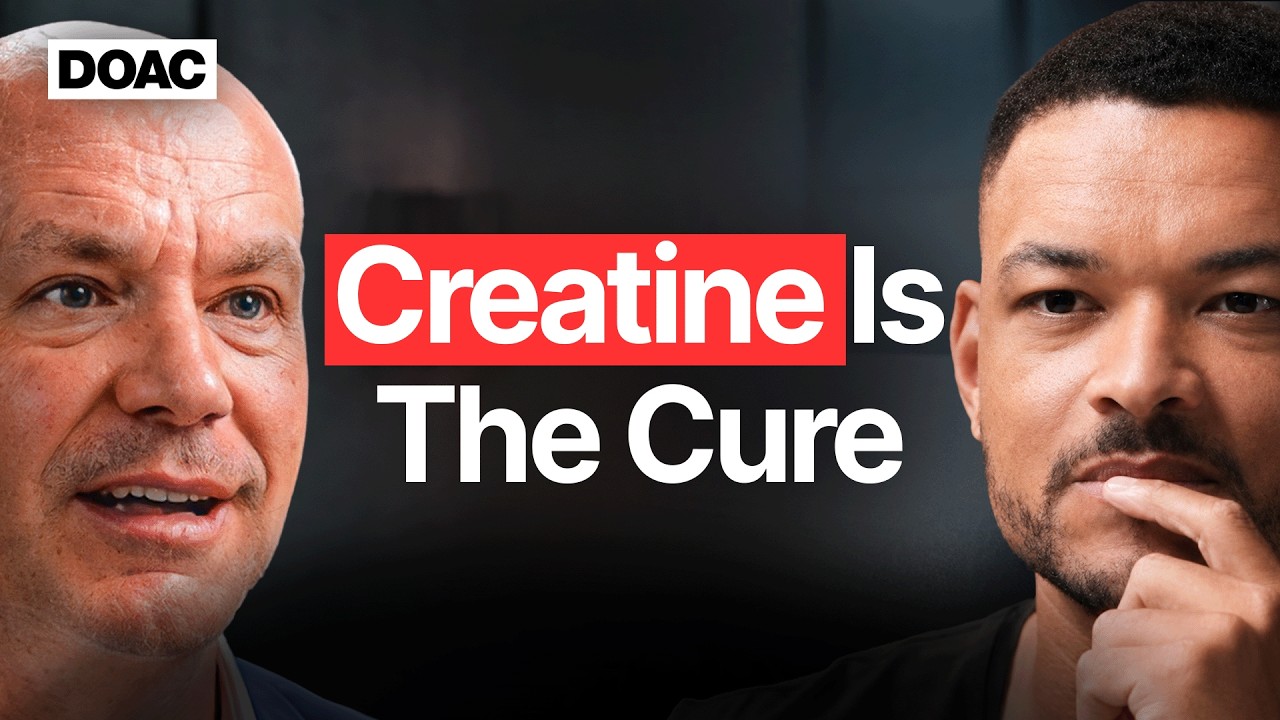
Anti-Aging Expert: Creatine Is The Fat Loss Secret Doctors Don’t Tell You - Dr. Darren Candow
 117 min
Archaeology WARNING: They Secretly Found Antarctica 300 Years Before Us! - Graham Hancock
 153 min
EMERGENCY DEBATE: The Death Of The Middle Class! The Pitch Forks Are Coming!
Ask anything from this episode.
Save it, chat with it, and connect it to Claude or ChatGPT. Get cited answers from the actual content — and build your own knowledge base of every podcast and video you care about.
Get Started Free