Key Moments
Marc Andreessen: Trump, Power, Tech, AI, Immigration & Future of America | Lex Fridman Podcast #458
 Lex Fridman
Want to know something specific about what's covered?
We've already dissected every moment. Ask and we will deliver (with timestamps).
Key Moments
Marc Andreessen discusses America's potential for growth, the pitfalls of conformity, and the state of tech and politics.
Key Insights
The US is uniquely positioned for economic growth due to physical security, natural resources, energy potential, dynamic population, and advanced technology leadership.
American society exhibits an inherent entrepreneurial spirit and resilience, consistently bouncing back from periods of demoralization.
The 'soft authoritarianism' of excessive regulation, censorship, and ideological pressure stifles growth and innovation, particularly in tech and other industries.
Preference falsification leads to widespread public lying about private beliefs, creating a society where people cannot accurately gauge true public opinion, as seen in the fall of communist regimes.
The 'ring of power' representing censorship and control is inherently corrupting, tempting even well-intentioned individuals and entities into anti-democratic actions.
Activist investors like Bill Ackman and courageous public figures like Elon Musk and Mark Zuckerberg are catalyzing shifts by speaking truths and challenging established narratives, despite immense pressure.
The iron law of oligarchy dictates that all political structures are governed by a small, organized elite, with America's founders ingeniously designing checks and balances within this framework.
The integrity of academic and government institutions is severely compromised by entrenched bureaucracies, lack of accountability, and widespread compliance with ideological agendas over merit.
Affirmative action and other social engineering policies in education and employment have inadvertently harmed native-born Americans, including Asians, Jews, and even some Black Americans, by prioritizing foreign-born individuals in an attempt to address historical injustices.
AMERICA'S UNPARALLELED POTENTIAL FOR GROWTH
Marc Andreessen expresses profound optimism for the United States' future, envisioning a new 'Roaring 20s.' He highlights America's unique advantages: continental physical security, abundant natural resources, and the potential for energy independence. Furthermore, the nation benefits from a dynamically aggressive and capable population, largely due to centuries of global immigration. The US also maintains a dominant lead in advanced technologies like software, AI, and biotech. These factors, combined with comparative issues in rival nations, position the country for a period of exceptional economic and productivity growth, driven by rapid technology adoption.
THE RESILIENT AMERICAN SPIRIT
Andreessen identifies a distinct American entrepreneurial spirit, characterized by intensity and a willingness to 'fuck without condoms', symbolizing daring and freedom. This spirit, a unique amalgamation of diverse ethnic groups like the Scots-Irish, Northeast Yankees, and Texans, fosters innovation and a continuous drive to 'build, grow, and do things.' He draws parallels between the current era and the post-1970s malaise, which was overcome by revitalized national optimism under figures like Ronald Reagan. Andreessen believes Americans possess an inherent individualism and passion, capable of resurrecting the nation's spirit from self-inflicted demoralization and negativity that has characterized the last decade.
SOFT AUTHORITARIANISM AND ITS IMPACT
A significant impediment to American progress, according to Andreessen, is a form of 'soft authoritarianism.' This manifests as an oppressive blanket of regulations, rules, and a pervasive 'ochlocracy' requiring numerous sign-offs for any action. It is coupled with an anti-progress mentality that demonizes technology, capitalism, and success, fostering a 'tall poppy syndrome.' Specific government actions, such as censorship regimes, debanking, and intentionally kneecapping critical industries, further suppress national spirit. Andreessen contends that the previous administration's policies brought this demoralization to a peak, and relieving this pressure could unleash immense pent-up energy and growth.
THE IRREDUCIBLE ROLE OF ELITES AND THE IRON LAW OF OLIGARCHY
Andreessen emphasizes that society is always ruled by some form of elite, citing Robert Michels' 'iron law of oligarchy.' He argues that pure democracy is a theoretical ideal rarely achieved in practice because the masses, whether in a union or a nation, cannot effectively organize. Instead, a small, organized minority consistently governs. America's founders, understanding this, designed a representative democracy with built-in oligarchic elements (like Congress, the executive, and judiciary) and checks and balances to prevent any single elite from accumulating excessive power. This framework, though imperfect, has allowed the U.S. to thrive for nearly 250 years.
THE 'RING OF POWER': CENSORSHIP, MISINFORMATION, AND THE CORRUPTION OF CONTROL
Andreessen details the historical progression of censorship on the internet, from early requests for nudity filters in 1992 to the widespread implementation of 'hate speech' and 'misinformation' policies by 2012-2013 among social media companies. He likens the ability to censor to the 'ring of power' from Lord of the Rings—inherently corrupting and irresistibly tempting. Initially, these mechanisms addressed clear legal violations, but they rapidly expanded to suppress uncomfortable ideas. This culminated in the censorship of the COVID-19 lab leak theory, which Andreessen identifies as a critical turning point for many, exposing the anti-Western, authoritarian nature of deciding 'truth' by a select group of experts.
PREFERENCE FALSIFICATION AND THE AWAKENING OF PUBLIC OPINION
Drawing on Timur Kuran's work on 'private truths, public lies,' Andreessen explains preference falsification as the act of publicly conforming to beliefs one privately disagrees with, or supporting statements one doesn't believe. This creates societies where people cannot gauge true public opinion, leading to widespread demoralization and an amplification of 'over-socialization' among elites. He posits that a suppressed majority can lead to rapid societal shifts once a courageous individual, like Elon Musk, publicly challenges a 'shibboleth.' This act can spark a 'preference cascade,' revealing a large, silent majority, and catalyzing a revolution, much like the fall of the Berlin Wall.
THE VIBE SHIFT AND THE ROLE OF COURAGEOUS LEADERS
Andreessen observes a significant 'vibe shift' occurring across Silicon Valley, Hollywood, and corporate America away from the 'woke' ideology of the last decade. He attributes this to the efforts of platforms like Substack that prioritize free speech and individuals like Elon Musk, who, through his acquisition of X (formerly Twitter), directly challenged censorship regimes. He also praises Mark Zuckerberg's recent public statements, noting his clear evolution and honesty, which reflects a growing willingness among leaders to speak their deeply held beliefs. Andreessen emphasizes that effective leadership requires courage to withstand immense internal and external pressures, particularly from government, media, and activist employees.
THE CRISIS IN AMERICAN INSTITUTIONS
Andreessen strongly criticizes the current state of American universities, seeing them as fundamentally broken and beyond internal reform. He argues that powerful institutions like universities and government bureaucracies are entrenched due to various factors including federal funding, tax exemptions, and accreditation cartels run by incumbents. He highlights the academic tenure system as a disincentive for professors to exercise intellectual freedom, leading to a 'rot at the heart of our education system.' These institutions, he suggests, resist change because their internal structures prioritize maintaining power and avoiding accountability over actual progress or academic integrity. He contends that external pressure, such as cutting federal funding, is necessary to allow these systems to fail and be rebuilt, much like in the business world where inefficient companies are replaced.
THE TRUMAN ADMINISTRATION'S REFORM AGENDA: MONEY, PEOPLE, AND REGULATIONS
Andreessen offers insights into the potential agenda of a new Trump administration, focusing on 'Doge' (Divesting of Growth-Hindering Executive Orders). The plan targets three areas: money, people, and regulations. He highlights the astronomical national debt and inefficient government spending. The administration aims for substantial regulatory relief to 'get the government off people's backs,' leveraging recent Supreme Court decisions that challenge the legality of regulations not directly tied to congressional legislation. Andreessen is particularly optimistic about the caliber of personnel joining, noting a generational shift and a deeper talent pool compared to the first Trump term. He believes social media will play a crucial role, allowing the administration to bypass cynical media and directly engage the public, exposing inefficiencies and celebrating victories, thereby catalyzing a 'sandwich' of monarchical executive power combined with popular support to tackle the entrenched oligarchy.
DEBUNKING THE 'MONEY IN POLITICS' MYTH
Andreessen challenges the popular notion that money dictates political outcomes, citing the 2016 and subsequent elections where Trump won despite being significantly outspent. He suggests that this observation has led to the decline of 'money in politics' as a dominant public discourse topic. Instead, he argues that voters ultimately exercise their voice, and direct communication of 'truth' by figures like Elon Musk, even when perceived as 'crazy shit,' holds profound power. He posits that in an era of pervasive untruths, a commitment to factual honesty becomes a powerful instrument for social and political change, fostering a healthier public sphere.
THE COMPLEXITIES OF IMMIGRATION AND 'SOCIAL ENGINEERING'
Andreessen presents a nuanced view on immigration, acknowledging the strong economic arguments for high-skilled immigration (H1-B visas) that benefit the US by attracting top global talent and fostering new industries. However, he contrasts this with his personal experience growing up in rural Wisconsin, a 'blank spot' on the tech talent map, and challenges the narrative that America lacks sufficient native-born talent. He highlights that systematic 'social engineering' experiments, such as affirmative action, have led to the exclusion of native-born Americans (including Asians, Jews, and even some Black Americans) from educational and professional opportunities. He cites cases where highly qualified individuals are rejected in favor of foreign-born candidates, arguing that this deeply flawed system perpetuates injustice and undermines the very groups it purportedly aims to help.
Mentioned in This Episode
●Products
●Software & Apps
●Companies
●Organizations
●Books
●Concepts
●People Referenced
Common Questions
Marc Andreessen envisions an economic boom for the US, driven by factors like natural resources, energy independence, a dynamic population enriched by immigration, and leadership in advanced technology fields like software and AI. He believes the country is primed for significant economic and productivity growth with widespread technology adoption.
Topics
Mentioned in this video
Author of 'The True Believer,' a book that explores the psychology of mass movements and the roles of elites and masses.
An 'incredible legend of private equity' and current number two at the Pentagon in the incoming administration.
A renowned novelist and writer who penned an influential piece for New York Magazine debunking the natural origin theory of COVID-19, which helped unravel social media censorship.
Mentioned as an excellent candidate to run the FDA in the new administration, highlighting the caliber of incoming talent.
A potential Supreme Court appointee and close friend of Hillary Clinton, quoted in a New York Times article about affirmative action.
A 19th-century French historian and professor of Classics at the Sorbonne, author of 'The Ancient City'.
A character from the TV show 'Succession' whose quote about America is used to describe the American spirit.
Author of 'The Machiavellians,' a political philosopher who resurrected the Italian realist school of thought and whose work had a big impact on Marc Andreessen.
A professor at Stanford with whom Marc Andreessen did a podcast about Milton Friedman.
An Italian political philosopher from about 100 years ago, known for his concept of the 'Iron Law of Oligarchy'.
Inventor of the television, cited as an example of American innovation originating from unexpected places like the middle of nowhere.
A political philosopher who concluded that communism and Nazism were 'political religions' that caused mass murder and death, relevant to understanding modern 'religious frenzies'.
Dean of African-American studies, quoted in a New York Times article about foreign-born blacks being admitted to top schools at higher rates than American-born blacks.
A book by French historian Numa Denis Fustel de Coulanges, important for understanding ancient Greek and Roman culture and the origins of Western society.
A book written by Peter Thiel, ironically mentioned in the context of NASDAQ's diversity rules and Peter Thiel being classified as diverse.
A definitive work by Timur Kuran discussing preference falsification, where individuals lie in public about their true beliefs due to social pressure.
A influential book by James Burnham that resurrects the Italian realist school of political philosophy, including Michels' 'Iron Law of Oligarchy'.
A book by Václav Havel describing the other side of preference falsification, where people are forced to say things they don't believe, like the 'workers of the world unite' slogan.
A book by Eric Hoffer discussed for its insights into the distinction between the roles of elites and masses in social movements.
A publication that featured a piece by Nicholson Baker, contributing to the shift in discourse about the COVID-19 lab leak theory.
A new university attempting to counter the corruption in the education system by hiring free-thinking professors, but facing accreditation challenges.
A third-party censorship bureau funded by the federal government, potentially exposed for flagrantly illegal activities by acting as government agents.
A Congressional committee led by Jim Jordan, which investigated government overreach and pressure on tech companies regarding censorship.
More from Lex Fridman
View all 550 summaries 174 min
Biggest Mysteries in Physics: Antimatter, Dark Energy & ToE - Don Lincoln | Lex Fridman Podcast #497
 259 min
FFmpeg: The Incredible Technology Behind Video on the Internet | Lex Fridman Podcast #496
 124 min
Vikings, Ragnar, Berserkers, Valhalla & the Warriors of the Viking Age | Lex Fridman Podcast #495
 146 min
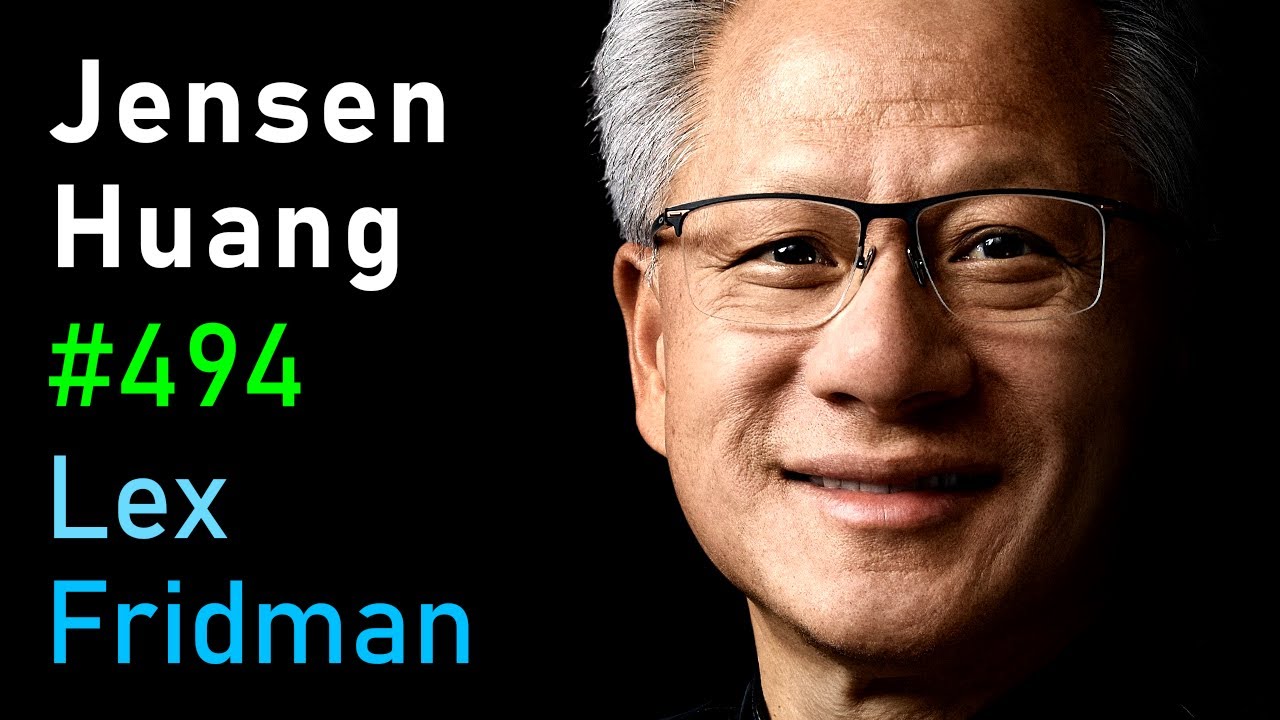
Jensen Huang: NVIDIA - The $4 Trillion Company & the AI Revolution | Lex Fridman Podcast #494
Ask anything from this episode.
Save it, chat with it, and connect it to Claude or ChatGPT. Get cited answers from the actual content — and build your own knowledge base of every podcast and video you care about.
Get Started Free