Key Moments
Making Sense of Free Will
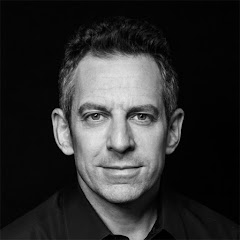 Sam Harris
Key Moments
Free will is an illusion; determinism and randomness preclude genuine choice, impacting responsibility and justice.
Key Insights
Libertarian free will, the feeling of having been able to do otherwise, is scientifically and philosophically incoherent.
Our actions are determined by a complex web of biological, environmental, and even ancestral influences, none of which we choose.
Even introducing randomness (indeterminism) does not grant us control or authorship over our actions.
The concept of free will is deeply tied to notions of moral responsibility, crime, and punishment.
Without free will, retributive justice is challenged, suggesting a shift towards rehabilitative or preventative measures (like quarantine models).
Compatibilists argue for a form of free will compatible with determinism, focusing on control and degrees of freedom, but this is often seen as redefining the term.
THE ILLUSION OF CONTRACASUAL FREE WILL
The common intuition of "libertarian free will"—the belief that we could have chosen differently in precisely the same circumstances—is presented as a widely held, yet ultimately illusory, feeling. This notion evaporates upon close examination, as Sam Harris and his guests argue that every event, including our choices, arises from a causal chain extending back infinitely. This fundamental feeling of freedom, so central to our self-perception, cannot withstand scientific and logical scrutiny.
DETERMINISM AND THE CHALLENGE TO AGENCY
The universe, according to a deterministic view, operates on a strict cause-and-effect principle. Each state of the universe inevitably leads to the next, creating an unbroken causal chain. This perspective leaves no room for an agent to freely interject a different choice, as the outcome is already predestined by prior conditions. The feeling of being able to "do otherwise" is thus incompatible with a mechanistic or deterministic understanding of reality.
RANDOMNESS AS AN INSUFFICIENT RESCUE
Even if one introduces randomness, perhaps through quantum mechanics, into the causal chain, it does not salvage the concept of libertarian free will. While indeterminism might make future outcomes unknowable, it does not grant individuals authorship or control over these random events. The introduction of chance simply replaces determined outcomes with unpredictable ones, but the agent remains a passive recipient rather than an active, free chooser.
IMPLICATIONS FOR MORALITY AND JUSTICE
The absence of free will has profound implications for our understanding of moral responsibility, crime, and punishment. If individuals are not the ultimate authors of their actions, then retributive justice—punishing someone because they "deserve" it—becomes problematic. This challenges traditional legal and ethical systems that rely heavily on the assumption of free will for assigning blame and consequences.
RETHINKING PUNISHMENT: THE QUARANTINE MODEL
In a world without free will, the focus shifts from retribution to prevention and rehabilitation. Analogies like the "quarantine model" suggest that dangerous individuals should be managed not as deserving of punishment, but as malfunctioning systems that pose a risk to society. This perspective encourages interventions aimed at fixing or containing these "problems," much like one would fix a faulty machine or isolate a contagious disease, rather than condemning an entity with a "bad soul."
THE COMPATIBILIST COUNTERARGUMENT
Compatibilists, like Dan Dennett, propose that free will can coexist with determinism. They redefine free will not as the ability to do otherwise, but as the capacity for control, rational deliberation, and self-governance. While acknowledging that humans cannot control the ultimate causes of their actions (genes, environment), compatibilists argue that we possess a "free will worth wanting" based on our complex cognitive abilities and our responsiveness to reasons, a notion Sam Harris finds to be a subject-changing evasion.
THE FIRST-PERSON VS. THIRD-PERSON PERSPECTIVE
A key point of contention in the free will debate lies in navigating the distinction between the subjective, first-person experience of making choices and the objective, third-person scientific account of those choices. While individuals may feel they are conscious authors of their thoughts and actions, scientific observation suggests these arise from unconscious processes and external influences, creating a disconnect that fuels much of the confusion and philosophical disagreement.
THE ROLE OF GENES, ENVIRONMENT, AND HISTORY
Our actions are influenced by a vast array of factors, including our genetic predispositions, our upbringing, past traumas, environmental stimuli, and even the cultural norms inherited from our ancestors. Neuroscience and psychology reveal how manipulating even subtle factors, like room odors, can alter behavior. This complex interplay of influences demonstrates that our choices are not made in a vacuum but are products of myriad forces beyond our direct control.
BEYOND PUNISHMENT: COMPASSION AND FORGIVENESS
Accepting the lack of libertarian free will can lead to a profound shift in our interpersonal attitudes, fostering greater compassion and forgiveness. When we understand that individuals' actions stem from complex causal factors beyond their ultimate control, we are less inclined to assign blame and more inclined to view problematic behavior as a consequence of bad luck or a malfunctioning system. This perspective can reduce animosity and encourage more constructive approaches to dealing with harmful actions.
Mentioned in This Episode
●Organizations
●Books
●Concepts
●People Referenced
Common Questions
Libertarian free will is the feeling that you could have chosen differently in any past situation. Sam Harris argues this is an illusion because every event is part of a causal chain, either deterministic or influenced by randomness, neither of which allows for genuine contra-causal freedom.
Topics
Mentioned in this video
The feeling that one could have done otherwise at any point in the past, which Sam Harris argues is an illusion and logically impossible.
Mentioned as a potential source of randomness in the causal chain, but argued to still not rescue libertarian free will.
The view that each physical state of the universe gives rise to the next in a causal chain, leaving no room for libertarian free will.
The philosophical position that free will and determinism are compatible, often focusing on a 'free will worth wanting' that allows for moral responsibility.
A model for justice that views criminal behavior as an infection or disease, necessitating safety measures rather than moral punishment.
Used as an analogy by Dan Dennett to illustrate how compatibilism might be seen as preserving a real phenomenon (Sicily) from a myth (Atlantis).
Used in a thought experiment where swapping atoms with him highlights the lack of chosen nature or nurture, and thus free will.
Professor of neurobiology offering an analogy of a car to explain mechanistic behavior and arguing against free will, especially in the context of criminal justice.
A member of the 'Four Horsemen of new atheism' alongside Sam Harris and Dan Dennett.
Host of the Making Sense podcast, arguing against the concept of libertarian free will.
A member of the 'Four Horsemen of new atheism' alongside Sam Harris and Dan Dennett.
Mentioned as a critic of Rene Descartes, who engaged in significant correspondence regarding his philosophical ideas.
More from Sam Harris
View all 298 summaries 28 min
Michael Pollan on Consciousness, Psychedelics, and the Limits of Neuroscience
 22 min
Why the Stock Market Has Become a Casino
 61 min
UNRAVELING THE DREAM (A New Documentary Executive Produced by Sam Harris)
 20 min
Francis Fukuyama: The End of History Was Never What You Think
Ask anything from this episode.
Save it, chat with it, and connect it to Claude or ChatGPT. Get cited answers from the actual content — and build your own knowledge base of every podcast and video you care about.
Get Started Free