Key Moments
Liz Lambert Interview | The Tim Ferriss Show
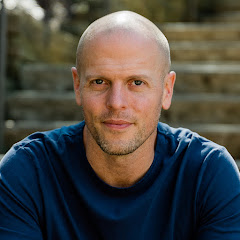 Tim Ferriss
Want to know something specific about what's covered?
We've already dissected every moment. Ask and we will deliver (with timestamps).
Key Moments
Liz Lambert transformed a rundown motel into a boutique hotel empire, emphasizing design, music, and community.
Key Insights
Authenticity and community are core to successful hospitality ventures.
Embrace the 'quality without a name' by focusing on intuitive design and local context.
The journey of entrepreneurship often involves unexpected pivots and learning on the fly.
Past failures, like being kicked out of youth government, can offer profound lessons.
Mindful growth, prioritizing quality and team well-being over rapid expansion, is crucial.
The role of a place as a community hub and a 'storyteller' defines its unique appeal.
FROM LAWYER TO MOTEL OWNER: THE UNEXPECTED PIVOT
Liz Lambert's journey into hospitality began unconventionally. After practicing law in New York and Texas, a personal jolt from a friend's passing prompted her to re-evaluate her life's direction. Drawn to the neglected Hotel San José on Austin's South Congress Avenue, she saw potential where others saw ruin. Despite having no prior experience in hospitality or business, she purchased the motel, embarking on a path that would redefine her career and significantly impact Austin's urban landscape. This leap of faith, fueled by an interest in design and a nascent understanding of community needs, marked the beginning of Bunkhouse Group.
REIMAGINING SOUTH CONGRESS: THE HOTEL SAN JOSÉ STORY
The transformation of Hotel San José from a seedy, $30-a-night motel into an iconic Austin establishment was a complex, iterative process. Initially, Lambert envisioned a simple renovation, but the reality of the property's condition and its clientele—a mix of residents, transient individuals, and low-income guests—presented significant challenges. The lack of infrastructure and the cycle of damage and theft made a room-by-room redo unviable. This led to a deeper dive into business planning, including auditing classes at UT's business school, to secure financing for a more comprehensive renovation, ultimately repositioning the hotel to attract a wider audience.
THE 'QUALITY WITHOUT A NAME': DESIGN PRINCIPLES
Lambert's approach to design is deeply influenced by principles of intuitive building and the concept of 'the quality without a name,' often associated with Christopher Alexander's work. This philosophy emphasizes creating spaces that feel intuitively right, calming, and complete, rather than purely aesthetic. She focuses on integrating indoor and outdoor spaces and respecting the unique context of each location. This is evident in properties like El Cosmico, where vintage trailers and tents created a nomadic living experience under the vast West Texas sky, or Hotel San José, which uses simple, honest materials like concrete and local wood, allowing the landscape and people to provide the primary color.
BUILDING COMMUNITY: HOTELS AS CORNERSTONES
For Lambert, hotels are more than just places to stay; they are intended to be integral parts of their communities. This vision stems from her childhood experiences and observations of how older hotels served as social hubs. Whether it was her grandfather conducting business in a hotel lobby or musicians finding refuge in the original Hotel San José, the idea of a place fostering connection is paramount. The development of Bunkhouse properties, including coffee shops and event spaces, reflects a strategy to serve the neighborhood's needs, creating a richer, more immersive experience for both locals and visitors.
LEGACY AND GROWTH: THE BUSINESS OF HOSPITALITY
Lambert's business philosophy prioritizes thoughtful growth over rapid expansion, emphasizing the importance of maintaining quality, operational rigor, and a strong company culture. She contrasts this with the common industry practice of asset-light growth and eventual sale, advocating instead for building enduring assets that improve over time. The success of Bunkhouse Group, now with multiple properties across Texas and beyond, is attributed to this balanced approach—marrying artistic vision with sound business practices. This philosophy extends to investor relations and employee well-being, fostering a sense of shared purpose and fulfillment.
LESSONS FROM FAILURE AND MENTORSHIP
Lambert shares a formative failure from her youth, being disqualified from a youth governor election for not reporting her friends' rule-breaking. This experience taught her the complexities of systems, values, and loyalty, highlighting the importance of questioning established norms. Mentors like Chip Conley have also played a significant role, emphasizing operational excellence and the emotional intelligence required in hospitality. Her reflections on mortality and the value of the journey over the destination underscore a life philosophy focused on authentic experiences and meaningful relationships rather than solely financial success.
Mentioned in This Episode
●Products
●Software & Apps
●Companies
●Organizations
●Books
●Concepts
●People Referenced
Common Questions
Liz Lambert is the founder of Bunkhouse Group, a hospitality company known for unique hotels like Hotel San Jose and El Cosmico, emphasizing design, music, and community experiences. She transformed a seedy motel into Hotel San Jose, sparking the revitalization of Austin's South Congress district.
Topics
Mentioned in this video
A program through the YMCA that Liz Lambert participated in during high school, learning about government and running for youth governor of Texas.
Where Liz Lambert finished her undergraduate studies and later audited business classes.
The U.S. government agency that partially funded Liz Lambert's renovation of Hotel San Jose with a loan.
The film school attended by Liz Lambert's friends Jen Lane and Tabrez Noorani, who helped her shoot the documentary.
Where Liz Lambert worked after returning to Austin from New York, finding the work less fascinating but still enjoying being a lawyer.
An iconic Austin music club on South Congress Avenue, existing since 1957, that Liz Lambert frequented and which inspired her to buy Hotel San Jose.
Where Liz Lambert started her undergraduate studies, a family tradition, before transferring.
An event space located in East Austin operated by Lambert and Bunkhouse.
Where Liz Lambert had a brief stint in summer school and was accepted as a student, but deferred to return to Texas due to family reasons.
Where Liz Lambert worked as a trial lawyer for three and a half years after law school. She was the first openly gay person hired there in 1991.
A city in Texas mentioned as the destination of a major thoroughfare from Austin, and the location of Hotel Havana.
The city where Liz Lambert built her hospitality empire. It is described as a liberal place in a conservative state, rich in music, rivers, and lakes.
A town in Far West Texas known as an art mecca due to Donald Judd, where El Cosmico is located. It is characterized by dark, clear nights ideal for stargazing.
Where Liz Lambert lived and worked at the DA's office after law school.
An architect from the 1920s working in the LA area, influential for his simplicity, which informed Donald Judd's work and subsequently the design of Hotel San Jose.
A Buddhist monk and author of 'When Things Fall Apart', whose teachings on impermanence and handling adversity deeply influenced Liz Lambert.
A renowned 20th-century sculptor who made his home in Marfa, turning it into an art mecca, and whose minimalist style influenced Liz Lambert's design at San Jose.
A renowned architect who designed furniture for Knoll.
A friend of Liz Lambert from AFI, a cinematographer now a producer for 'Queer Eye,' who helped shoot the documentary.
The current president of Bunkhouse, who previously worked for Chip Conley for 10 years, emphasizing operational rigor.
An American actor, subject of an essay in Joan Didion's 'Slouching Towards Bethlehem'.
A designer associated with Knoll, known for classic furniture designs.
A poet, whose line 'there's nothing no man won't do to another' resonated with Liz Lambert during her time in criminal law.
A friend of Liz Lambert from AFI, a well-known cinematographer who shot the first three seasons of 'The Wire' and helped film the documentary.
An iconic musician mentioned in the context of rock and roll decadence in nice hotels during the 1970s, inspiring the theme for Hotel Saint Cecilia.
A writer whose collection of essays, 'Slouching Towards Bethlehem', is often gifted by Liz Lambert and admired for its insights and personal reflections.
An actor who starred in the movie 'Giant', which depicts the landscape of Far West Texas, similar to Marfa.
A hotelier known for pioneering the boutique hotel concept, mentioned alongside Chip Conley as influencing the change in the hotel industry toward lifestyle brands.
Founder of Bunkhouse Group, known for transforming Hotel San Jose and revitalizing Austin's South Congress district. She is the main guest on the podcast.
A friend of Liz Lambert (misidentified as Tina Gazzara in transcript) who worked in the film business and was hired to edit the 90 hours of footage for 'The Last Days of San Jose' documentary.
A mentor and friend to Liz Lambert, founder of Joie de Vivre Hotels, former head of global hospitality for Airbnb, and author of several business books. He provided crucial advice early in Liz's career and helped her with Hotel San Cristóbal.
Of McGuire Moorman Hospitality Group in Austin, a mutual acquaintance of Liz Lambert and Tim Ferriss, described as understanding both rigor and artistry in business.
A poet whose poem provided the title 'Slouching Towards Bethlehem' for Joan Didion's essay collection.
An architect and writer whose books 'A Pattern Language' and 'The Timeless Way of Building' influenced Liz Lambert's intuitive approach to design and community-focused hospitality.
An author in Austin who writes about stoic philosophy and made the 'memento mori' coin mentioned by Tim Ferriss.
An iconic rock band mentioned in the context of rock and roll decadence in nice hotels during the 1970s, inspiring the theme for Hotel Saint Cecilia.
The drummer of The Who, well-known for trashing hotel rooms, mentioned in the context of musicians' disdain for standardized hotel chains like Holiday Inn.
A writer quoted by Liz Lambert: 'Don't break your tenderness,' which is displayed on the back of Jo's Coffee.
A poet whose book 'A Dream of Common Language' was significant to Liz Lambert, particularly in her younger years.
Author of 'Wild', mentioned as someone who also found Adrienne Rich's 'A Dream of Common Language' important during her Pacific Rim hike.
A documentary filmed by Liz Lambert at the original Hotel San Jose, capturing the lives of its residents before its transformation, which has not yet been publicly released.
A TV series whose first three seasons were shot by Liz Lambert's friend Tabrez Noorani.
A popular TV show for which Jen Lane, Liz Lambert's friend and cinematographer for her documentary, is now a producer.
A restaurant chain, with its first tiny location historically on South Congress Avenue.
A hotel currently in development, slated to open on South Congress in 2020 (or 2019 according to some).
A small motel in Marfa that Liz Lambert previously developed and then walked away from due to a bad partnership.
Larry McGuire's restaurant group in Austin, known for balancing business rigor with artistry.
A renovated motor court hotel in Austin, part of the Bunkhouse portfolio.
Bunkhouse's first non-Texas property domestically, also a motor court hotel, formerly associated with Chip Conley.
Bunkhouse's first international hotel, located in Todos Santos, Mexico.
An architecture firm from San Antonio and Austin that partnered with Liz Lambert on the Hotel San Jose renovation, known for their daily involvement.
A hotel company based in San Francisco, founded by Chip Conley, whose first property was the Phoenix Hotel.
A community lodging concept in Marfa, Texas, part of Bunkhouse's portfolio, known for its unique outdoor accommodations like vintage trailers and teepees on 21 acres.
A historic property on San Antonio's Riverwalk, part of the Bunkhouse portfolio.
A luxury hotel brand mentioned as an example of a management company that doesn't necessarily own its properties.
A company that operated like Knoll, known for iconic mid-century furniture, where Liz Lambert's brother worked and introduced her to the design world.
A global hotel brand mentioned as an example of a chain that stays asset-light and is consistent everywhere.
The first hotel Liz Lambert purchased and transformed, now considered the quintessential Austin hotel. Its success spurred the creation of Bunkhouse Group.
A popular Austin coffee shop that Liz Lambert and Bunkhouse operate, with three locations and an event space.
A social media platform mentioned as a place where Liz Lambert is active and where people market Bunkhouse hotels.
Liz Lambert's hospitality company, founded on pillars of design, music, and community-driven experiences, expanding unique hotel portfolios.
A 14-room secluded estate in Austin and part of the Bunkhouse portfolio, described with a rock and roll elegance theme.
A hotel chain where Liz Lambert and her friends stayed during Youth and Government week, and where she was ultimately kicked out for not reporting friends for drinking.
A furniture company known for mid-century modern design, mentioned in comparison to ICF where Liz Lambert's brother worked.
A coffee company used as an example of a brand that offers consistent product and service levels everywhere.
A local bank (formerly Liberty Bank) that eventually underwrote the renovation loan for Hotel San Jose, taking a "leap of faith" on Liz Lambert.
The online hospitality platform where Chip Conley served as the head of global hospitality.
A global hotel brand mentioned as an example of a chain where guests know what to expect, contrasting with previous independent hotels.
A hotel chain mentioned as an example of a standardized hotel experience, with a quote from Keith Moon about trashing such rooms.
A boutique hotel brand mentioned as an example of a management company, with each property often having different ownership.
A social media platform mentioned as a place where Liz Lambert is active and where people market Bunkhouse hotels.
The name of Chip Conley's camp at Burning Man, referencing Maslow's hierarchy of needs, reflecting his philosophy of applying these principles to hospitality and employee/investor well-being.
A Latin phrase meaning 'remember you must die,' appearing on a coin on Tim Ferriss's counter, reflecting mortality and stoic philosophy.
A philosophy mentioned by Tim Ferriss as being highly compatible with Buddhist thought and contemplative practice.
A book of poetry by Adrienne Rich, written in the late 1970s, which Liz Lambert often gifts to others and found personally impactful, also important to Cheryl Strayed.
A book by Christopher Alexander that outlines his ideas about architecture and building design based on recurring patterns in successful, intuitive communities, shaping Liz Lambert's approach to hotels.
A book by Cheryl Strayed, mentioned as featuring 'A Dream of Common Language' as an important book during her Pacific Rim hike.
An essay by Joan Didion within 'Slouching Towards Bethlehem', which Liz Lambert re-reads frequently.
A fascinating book about the history of money, mentioned by Tim Ferriss.
A book by Christopher Alexander, a foundational text for his ideas about intuitive architecture and the 'quality without a name,' which influenced Liz Lambert's design philosophy.
A book by Pema Chödrön, which Liz Lambert finds impactful for its teachings on responding to loss and impermanence, and living with discomfort.
A book by Jack Kerouac from which the quote 'Don't break your tenderness' is taken.
A collection of essays by Joan Didion, often gifted by Liz Lambert for its insight into writing, self-respect, and morality, and its historical context.
A local wood from East Texas used in the minimalist furniture system for the San Jose, chosen for its simplicity and local origin.
A small pocket camera Liz Lambert used to record footage for her documentary at Hotel San Jose, chosen for its discretion.
A type of varnish used to finish the wooden interiors of vintage trailers, making them feel like ship cabins.
A type of incense chosen for Hotel Saint Cecilia to evoke a 'hippie smell' that contrasts with the hotel's elegance, striking the senses subtly.
More from Tim Ferriss
View all 703 summaries 70 min
Q&A with Tim — The Art of Male Friendship, Reinvention in The Age of AI, & More
 125 min
Dr. Andrew Huberman — Peptides, Performance, and Protocols
 112 min
The Random Show! Mortality, AI, Supplements, Rock Climbing, & More
 88 min
The Legendary Hollywood Power Broker — Guy Oseary on 36 Years of Managing Madonna, 26 IPOs, and More
Ask anything from this episode.
Save it, chat with it, and connect it to Claude or ChatGPT. Get cited answers from the actual content — and build your own knowledge base of every podcast and video you care about.
Get Started Free