Key Moments
Legendary Chef Jacques Pépin — The Pursuit of Mastery, Meeting Julia Child, and More
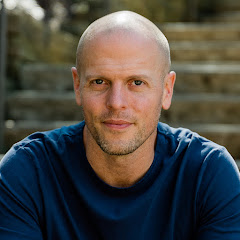 Tim Ferriss
Key Moments
Chef Jacques Pépin emphasizes that cooking techniques are universal and teachable, a philosophy that underpins his prolific career and impactful foundation.
Key Insights
Pépin's YouTube channel saw a growth from 300,000 to 2 million subscribers during the pandemic, producing 10-12 short recipe videos daily.
He believes cooking techniques are universal and transferable across cuisines, focusing on teaching these foundational skills rather than just recipes.
Pépin's early career included cooking for three French heads of state, but he notes chefs were not highly regarded publicly at that time.
He spent 10 years at Howard Johnson's, a period he credits with teaching him recipe writing and American eating habits, significantly shaping his career.
The Jacques Pépin Foundation aims to provide culinary education to marginalized individuals, such as former inmates and ex-addicts, offering them a path to rebuild their lives.
Pépin's daughter, Claudine, married a chef and now manages the Jacques Pépin Foundation, continuing the family's culinary legacy.
The genesis of a YouTube sensation and the philosophy of teaching technique
Jacques Pépin discusses the unexpected success of his YouTube channel, which surged from 300,000 to 2 million subscribers during the pandemic. Producing 10-12 short, 3-5 minute recipe videos daily, Pépin's approach to teaching is rooted in a fundamental belief: cooking techniques are universal and transcend specific cuisines. He emphasizes that mastering core skills like boiling an egg or peeling a tomato is more valuable than memorizing individual recipes. This philosophy, honed over decades, allows individuals to adapt and apply these techniques across French, Italian, Spanish, or any other culinary tradition, making them adaptable and memorable life skills.
From royal kitchens to American kitchens: a career shaped by opportunity
Pépin recounts his early career, which began with training in prestigious Parisian establishments like Maxim's and Fouquet's. His journey took him to cook for three French heads of state, a role he notes was not as esteemed then as it is today. A pivotal moment was his move to the United States, where he initially intended to stay for a year. He found work at the renowned restaurant Le Pavillon before making a career-altering decision: declining a White House offer to cook for John F. Kennedy in favor of a role at Howard Johnson's. This seemingly unconventional choice led to a 10-year tenure, during which he learned invaluable lessons in recipe development and American dietary habits, which he credits for opening doors to future opportunities, including opening his own restaurants and consulting.
The universal language of cooking and the art of tasting
Pépin draws parallels between cooking and visual arts, a passion he developed later in life. He explains that just as a painter tastes and adjusts colors on a canvas, a cook must constantly taste and refine a dish throughout the preparation process. This iterative approach, building flavors and textures, is central to his methodology. While he acknowledges the differences in the mediums, he finds that the creative process of refinement and reaction to the medium is similar. He humbly admits he is likely better at cooking than painting but has practiced both for a significant portion of his life, emphasizing the discipline and constant learning inherent in mastering any craft.
Frugality and resourcefulness: lessons from a childhood kitchen
Growing up in France during wartime profoundly influenced Pépin's culinary philosophy, instilling a deep sense of frugality and resourcefulness. He recalls his mother never wasting any ingredient, a principle he has adopted as his own. The concept of 'fridge soup,' utilizing leftover vegetables, is a prime example of this approach. This mindset, born out of necessity, emphasizes making the most of what is available. His aunts and cousins, who also ran small restaurants, operated with similar principles, driven by the lack of modern refrigeration and the need to use ingredients quickly. This early exposure to making the most of every ingredient has remained a cornerstone of his cooking and teaching.
Bridging culinary worlds: meeting Julia Child and the New York food scene
Pépin's introduction to Julia Child, facilitated by his friend Helen McCully, marked the beginning of a significant friendship and culinary collaboration. He describes Child as a tall woman with a "terrible" voice, a memorable first impression that quickly blossomed into a deep connection. They often conversed in French, and Pépin notes that Child's French was superior to his English at the time. His entry into the New York food scene was also shaped by Craig Claiborne, the influential food critic for The New York Times, who became a friend and introduced him to Helen McCully. This network provided Pépin with mentorship and a sense of belonging in a new country. He observes that the food world in New York was smaller then, with fewer French chefs, and that his interactions with these key figures were instrumental in his career development.
The Jacques Pépin Foundation: empowering lives through culinary education
Pépin highlights the crucial work of the Jacques Pépin Foundation, co-founded with his son-in-law, which focuses on providing culinary education to individuals facing adversity, such as former inmates and those in recovery from addiction. He believes that a short period of intensive training—as little as five to six weeks—can equip individuals with foundational kitchen skills, offering them a viable career path and a chance to rebuild their lives. The foundation's mission is rooted in the belief that the kitchen is a place where everyone is equal, transcending social or political divides, and where the shared goal is to bring happiness to others through food. This initiative reflects Pépin's commitment to giving back and using his expertise to create opportunities for those in need.
The enduring impact of childhood flavors and the essence of a well-dressed salad
Pépin reflects on how childhood food memories, particularly the taste of his mother's simple potato soup made with fresh garden ingredients, remain deeply ingrained. He also emphasizes the often-underestimated art of making a perfect salad. He details the subtle yet crucial steps involved: proper washing and drying of greens to avoid excess water, careful emulsification of dressing, and serving at the right temperature. These seemingly small details, he explains, transform a simple salad into an exceptional dish, illustrating his belief that mastery lies in the meticulous execution of fundamental elements. This focus on simple ingredients prepared with care and technique is a recurring theme in his philosophy.
The chef's relentless pursuit of learning and the art of teaching
Pépin's own journey is characterized by an insatiable curiosity and a drive for continuous learning, which he sees as essential for both teaching and personal growth. He views his own career as a testament to making decisions that maximize learning opportunities, a trait he shares with his daughter, Claudine. This curiosity extends to exploring new culinary landscapes, as evidenced by his enthusiasm for encountering novel food preparations, even if they diverge from traditional French methods. His approach to teaching is a direct reflection of this: breaking down complex skills into fundamental techniques and presenting them logically to build confidence. He believes this method is more effective than simply providing recipes, empowering students to understand the 'why' behind the cooking process, not just the 'how'.
Mentioned in This Episode
●Products
●Companies
●Organizations
●Books
●People Referenced
Jacques Pépin's Culinary Wisdom
Practical takeaways from this episode
Do This
Avoid This
Common Questions
Helen McCully, a food editor and friend, introduced Pépin to Julia Child when Child was visiting New York. Pépin cooked for Child at McCully's apartment, leading to a lasting friendship.
Topics
Mentioned in this video
A famous American chef and author who became a close friend of Jacques Pépin, sharing a passion for French cuisine.
Food editor for McCall's magazine who became a maternal figure to Jacques Pépin and introduced him to Julia Child and James Beard.
One of the French prime ministers under whom Pépin served during the Fourth Republic.
Founder of the Howard Johnson's restaurant chain, who offered Pépin and Pierre Franey significant creative freedom.
A chef Pépin worked with at Le Pavillon and later at Howard Johnson's, with whom he had a close professional relationship.
The French leader under whom Pépin worked, preparing state dinners.
Wife of Charles de Gaulle, with whom Pépin coordinated weekly family meals.
Collaborated with Pépin to run restaurants at the World Trade Center.
A renowned culinary figure in New York's elite circles, with whom Helen McCully spoke daily.
Jacques Pépin's daughter, who is skilled in organization and married to a chef, playing a key role in establishing the Jacques Pépin Foundation.
A French chef whom Pépin considers similar to himself in culinary style and origin.
Food critic for The New York Times who reviewed Le Pavillon favorably and became friends with Pépin.
A highly respected chef known for his meticulous approach and well-organized kitchens, whom Pépin considers a great teacher.
Mentioned as a chef similar to Thomas Keller and Daniel Boulud.
Mentioned as another example of a distinguished chef alongside Keller and Boulud.
Public Broadcasting Service, where Jacques Pépin hosted various cooking series.
Where Pépin's son-in-law has been teaching for 15 years, and where Claudine Pépin also studied.
Institution where Pépin studied English and later pursued doctoral studies in food history.
Institution where Pépin taught and where he and Julia Child helped establish a master's program in liberal arts with a specialization in gastronomy.
A magazine where Helen McCully served as a food editor.
The foundation established by Jacques Pépin to provide culinary education and opportunities.
The location where Pépin was initially supposed to be deployed during his military service.
Pépin's home country, where he began his culinary training and career.
Location of restaurants where Pépin served as executive chef, catering to a large number of people daily.
The French town where Jacques Pépin was born, known for its high-quality Bresse chicken.
A renowned establishment in Paris where Jacques Pépin worked early in his career.
A restaurant where Pépin consulted, highlighting the difference in scale and waste compared to home cooking.
A prestigious Parisian restaurant where Jacques Pépin gained experience.
A small restaurant that sponsored Pépin's move to America.
A high-end New York restaurant where Pépin worked and met Howard Johnson.
A restaurant Pépin opened on Fifth Avenue that served large-scale soups.
A small French restaurant in upstate New York where Thomas Keller worked early in his career.
Thomas Keller's restaurant, noted for its extremely organized and quiet kitchen, resembling a library or operating room.
A Parisian hotel where Pépin learned about large-scale kitchen operations with many specialized cooks.
More from Tim Ferriss
View all 706 summaries 108 min
The Random Show — AI Super Assistants, Dream Engineering, Wizards, Supplements, and More!
 121 min
How to Legalize Medical Psychedelics in Your Country — Tania de Jong on Australia’s Breakthrough
 70 min
Q&A with Tim — The Art of Male Friendship, Reinvention in The Age of AI, & More
 125 min
Dr. Andrew Huberman — Peptides, Performance, and Protocols
Ask anything from this episode.
Save it, chat with it, and connect it to Claude or ChatGPT. Get cited answers from the actual content — and build your own knowledge base of every podcast and video you care about.
Get Started Free