Key Moments
Jim Collins and Ed Zschau
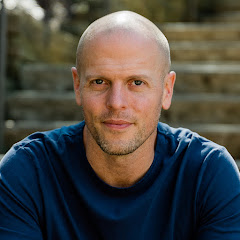 Tim Ferriss
Want to know something specific about what's covered?
We've already dissected every moment. Ask and we will deliver (with timestamps).
Key Moments
Tim Ferriss celebrates 10 years with guest highlights from Jim Collins and Ed Zschau.
Key Insights
Jim Collins uses a disciplined approach including the 'creative hours march' to ensure consistent quality in his work.
The 'bug book' method encourages self-observation to identify passions and innate capabilities, defining one's 'hedgehog concept'.
Ed Zschau emphasizes preparation, resilience, and the case method for teaching entrepreneurship through experiential learning.
Zschau's figure skating background taught him the value of practice, dedication, and persistence.
Both guests highlight the importance of living a life of purpose and making a difference, rather than solely pursuing personal gain.
Zschau successfully advocated for reducing capital gains tax, demonstrating the impact of focused advocacy.
Singer-songwriter Zschau used music and storytelling to make complex concepts like the Simplex algorithm memorable for students.
THE DISCIPLINE OF CREATIVE WORK AND SELF-OBSERVATION
Jim Collins shares his meticulous approach to ensuring high-quality output by tracking 'creative hours' and maintaining a personal 'march' of over 1,000 creative hours annually. This discipline, refined from an academic model, allows for deep work and reflection. He also advocates for the 'bug book' method, inspired by a mentor, which involves objective self-observation to identify what one is truly passionate about and 'encoded for', distinct from mere competence. This process helps in defining one's personal 'hedgehog concept' – the intersection of passion, capability, and economic viability.
FINDING YOUR HEDGEHOG AND NAVIGATING LIFE'S PATH
Collins elaborates on personalizing the 'hedgehog concept', emphasizing that it's not about being the best in the world but about aligning with what you are passionate about, genetically encoded for, and can economically sustain. He contrasts traditional career paths with this approach, suggesting that a 'masterpiece' life is painted on a blank canvas of self-discovery. The 'bug book' and subsequent reflection allow for identifying patterns, sorting subjective daily scores (from +2 to -2) to understand what leads to positive experiences, thereby guiding choices towards more of what works and less of what doesn't.
THE FOUNDATIONS OF PREPARATION AND PERFORMANCE
Ed Zschau, a seasoned educator, highlights the critical role of meticulous preparation, stemming from his figure skating discipline where early morning practices and test-passing required immense dedication. This translated into his teaching philosophy, where he would arrive early to ensure everything was perfect for class, viewing each session as a performance. He emphasizes that learning to perform well, whether in sports, business, or teaching, requires unwavering practice, persistence, and determination to convey essential lessons effectively.
THE POWER OF THE CASE METHOD AND ENTREPRENEURIAL SPIRIT
Zschau championed the case method of teaching, particularly in his 'High-Tech Entrepreneurship' course, which challenged students to step into the shoes of founders and decision-makers. This experiential approach, often ending with a cliffhanger, encouraged self-thinking and assertiveness, proving highly effective as evidenced by a high percentage of his students becoming company founders. He defines entrepreneurship not just as starting companies, but as an approach to life – an innovative and implementable drive to create something new and valuable.
ADAPTABILITY, COMMITMENT, AND PUBLIC SERVICE
Zschau shares his journey, including a pivotal moment when a rugby injury prevented him from entering the Navy, leading him to Stanford Business School. His career reflects a remarkable adaptability, moving from academia to entrepreneurship and politics. He explains that sustained success in any endeavor, particularly in public service, requires deep commitment, which enabled him to set a three-term limit for his congressional service, fostering urgency and freedom to act on principles. This commitment also led him to advocate successfully for a reduction in capital gains tax, stimulating venture capital investment.
PURPOSE-DRIVEN CONTRIBUTIONS AND CREATIVE TEACHING
Both guests underscore the importance of living a life of purpose and contributing to others. Zschau articulates this as 'leaving footprints', aiming to make a lasting positive difference. He found that his greatest impact wasn't necessarily as a politician, but through teaching and fostering entrepreneurship. His unique teaching methods, including songs and stories about complex topics like the Simplex algorithm, made learning memorable and inspiring, fostering an optimistic attitude and encouraging students to 'do it their way'.
THE QUEST FOR CONTINUOUS LEARNING AND MODERN EDUCATION
Zschau expresses excitement about the future of education, focusing on making it more affordable and accessible. He is involved with Sierra Nevada College, promoting entrepreneurial leadership and exploring innovations like income-sharing agreements to reduce student debt. He believes in stepping out of one's comfort zone to learn and contribute more, a philosophy that has guided his diverse career. His approach to parenting also mirrors his teaching style, emphasizing encouragement over direction to help individuals find their own path.
Mentioned in This Episode
●Supplements
●Products
●Companies
●Organizations
●Books
●Concepts
●People Referenced
Common Questions
Jim Collins initially used a triple stopwatch to track time spent in creative work, teaching, and other tasks. He evolved this into a simpler system: a daily spreadsheet entry noting the day's activities, the number of creative hours (aiming for over 1000 per year over any 365-day cycle), and an emotional score (+2 to -2) to track the quality of the day.
Topics
Mentioned in this video
A business book authored by Jim Collins.
A business book co-authored by Jim Collins and Jerry Porras, which was the first big research project after Jim decided to be a self-employed professor.
A business book authored by Jim Collins, which introduces the '20-mile march' concept.
A business book co-authored by Jim Collins and his mentor Bill Lazier.
A concept from Jim Collins' book 'Great by Choice,' referring to consistently achieving a clear performance benchmark over time.
A concept from Jim Collins' book 'Good to Great,' describing the intersection of what one is passionate about, what one can be best in the world at, and what drives their economic engine. Jim applies a personal analogy to this concept.
An algorithm developed by George Dantzig, discussed in the context of operations research for finding optimal solutions through iterative, localized improvements.
A financing model for education where students repay based on their income above certain levels, reducing debt burden and aligning incentives for educational institutions.
An electrical engineering and operations research course taught by Professor Ed Zschau at Princeton, which had a profound impact on Tim Ferriss and many other students, leading many to become founders.
The person who developed the Simplex Method in operations research.
Jim Collins' mentor and co-author of 'Beyond Entrepreneurship 2.0'.
A mentor who inspired Jim Collins to start his 'bug book,' encouraging self-study with dispassionate objectivity.
A young congressman from Wisconsin on the House Ways and Means Committee who championed Ed Zschau's proposal to lower capital gains tax, passing away shortly after its enactment.
A polymath professor, 17-year tech industry veteran, former US House of Representatives member, and Ivy League educator who significantly impacted Tim Ferriss's life. Known for his teaching style and commitment to long-term impact.
An organization where Ed Zschau served on the board of directors and chaired a task force on capital formation, leading to a significant reduction in capital gains tax.
A small college in Incline Village, Nevada, where Ed Zschau volunteered as interim president. It focuses on entrepreneurship, environmental science, and fine arts/creative writing.
A programming school mentioned by Tim Ferriss as successfully implementing an income sharing agreement model.
More from Tim Ferriss
View all 703 summaries 70 min
Q&A with Tim — The Art of Male Friendship, Reinvention in The Age of AI, & More
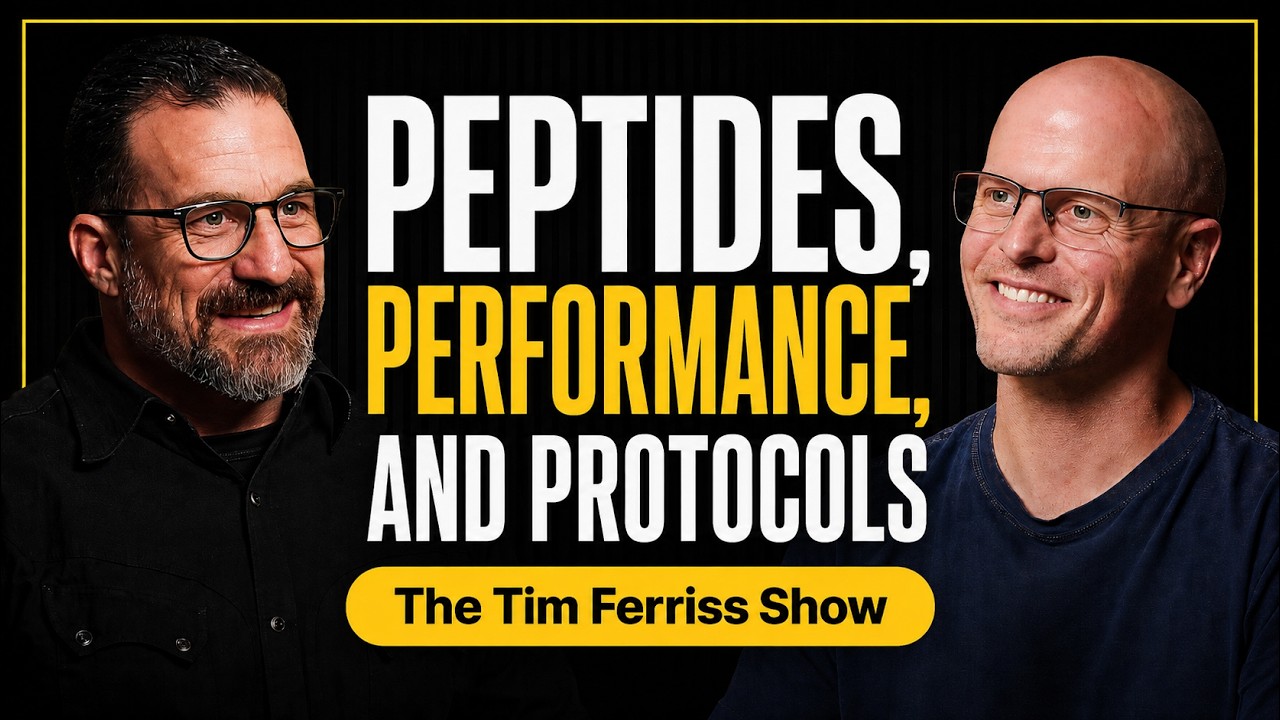 125 min
Dr. Andrew Huberman — Peptides, Performance, and Protocols
 112 min
The Random Show! Mortality, AI, Supplements, Rock Climbing, & More
 88 min
The Legendary Hollywood Power Broker — Guy Oseary on 36 Years of Managing Madonna, 26 IPOs, and More
Ask anything from this episode.
Save it, chat with it, and connect it to Claude or ChatGPT. Get cited answers from the actual content — and build your own knowledge base of every podcast and video you care about.
Get Started Free