Key Moments
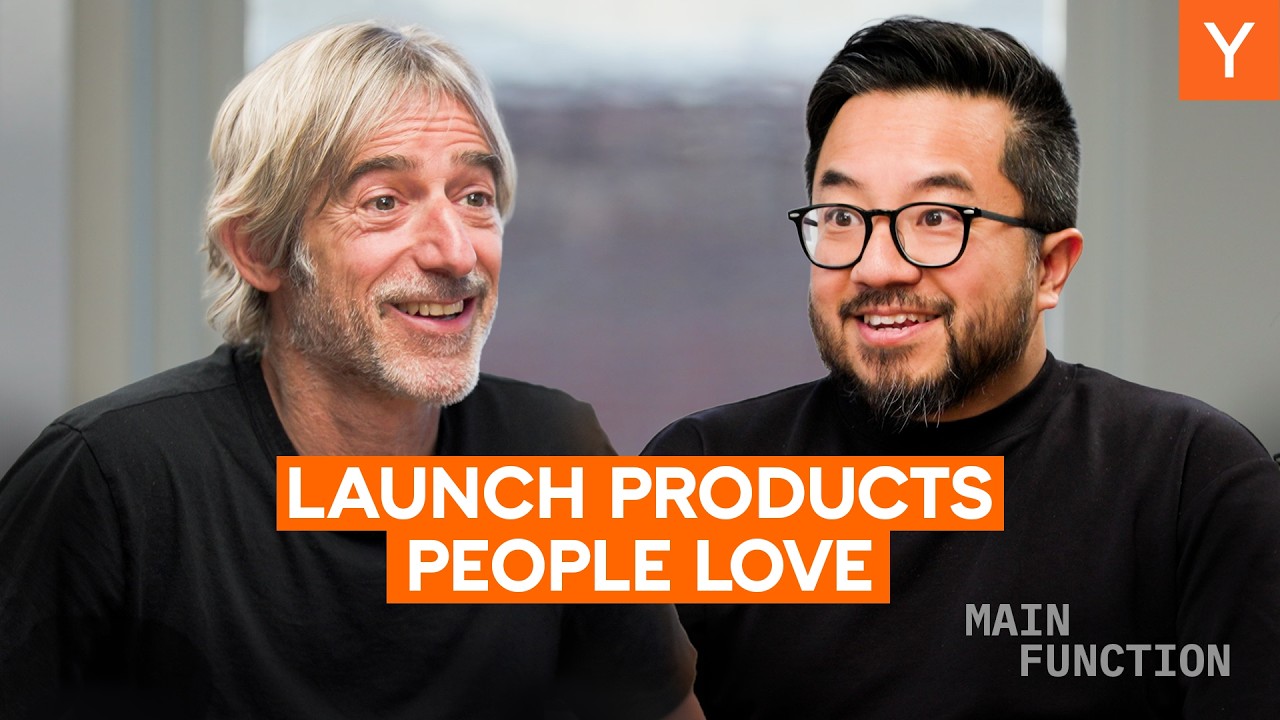
Inside Claude Code With Its Creator Boris Cherny
 Y Combinator
Want to know something specific about what's covered?
We've already dissected every moment. Ask and we will deliver (with timestamps).
Key Moments
Build for future models, harness latent demand, and embrace CLI-inspired agility.
Key Insights
Build for the model six months from now, not today, to stay ahead of rapid AI progress.
Latent demand drives product direction—ship what users are already trying to do and iterate from there.
A terminal/CLI-first approach can enable rapid prototyping and powerful workflows without heavy UI work.
Plan mode evolves; as models improve, the need for explicit planning diminishes and automation increases.
Agents and subagents orchestrate tooling and collaboration, accelerating development and debugging.
Humility, curiosity, and willingness to rewrite or delete scaffolding are essential for long-term success.
BUILDING FOR THE MODEL OF TOMORROW
Claude Code’s approach is to design for a model that doesn’t yet exist. Boris Cherny explains that Enthropic builds for capabilities six months ahead, focusing on frontier tasks where current models underperform but are expected to improve. This mindset fuels rapid iteration: try ideas, release small prototypes to users, observe usage, and learn. The payoff is not merely strong current performance but staying ahead of the curve as models mature, even if the near-term results aren’t perfect.
THE ORIGINS OF QUAD CODE: FROM CLI TO TOOLBOX
Quad Code began as an accidental CLI prototype rather than a polished IDE. The team prioritized a terminal interface because it was fast to deploy and easy to iterate. Initial success came from automating tasks like git and Kubernetes commands, and a single tool—first ported from Python to TypeScript—demonstrated that the model could actually use tools. This origin story highlights how early, simple experimentation can reveal the real value the model seeks to deliver.
LATENT DEMAND AS A PRODUCT ENGINE
Latent demand becomes a guiding product principle: you build around what users already do and want to do, not what you assume they should do. QuadMD emerged as a lightweight framework to codify user-needed workflows and improve model performance with scaffolding. As models improve, some scaffolding becomes unnecessary, so the team prefers minimal, adjustable constraints that can be pared back when the model evolves. This dynamic approach keeps the product relevant across model generations.
PLAN MODE, VERBOSITY, AND THE EVOLVING UX
Plan mode started as a practical way to have the model devise a plan before coding, but the UX continues to evolve as capabilities grow. The team experiments with verbosity, offering both concise and detailed outputs. In practice, most sessions begin with a plan, then execute; but with stronger models, plan mode can be rendered less central. The ongoing lesson: balance safety and speed, letting users tune the level of detail while the model handles planning and execution more autonomously over time.
AGENTS, TOOLS, AND COLLABORATIVE CODING
A swarm-like approach lets plugins and tools be built rapidly, sometimes over a weekend, with agents and subagents handling tasks in parallel. Quad Code orchestrates these agents to read logs, inspect code paths, run tests, and even debug memory leaks faster than humans. This collaborative, multi-agent architecture accelerates development and debugging, showing how AI-driven teams can scale problem-solving beyond single-silo efforts.
HUMILITY, HIRING, AND A NEW DEVTOOL PARADIGM
Cherny underscores beginner mindset and humility as essential in a fast-moving AI landscape. He advocates hiring for curiosity, the ability to acknowledge mistakes, and willingness to iterate. The talk contrasts hyper-specialists with generalists, both of whom benefit from experimentation and feedback loops. The culture centers on latent feedback, rapid iteration, and the readiness to replace scaffolding as models improve—reflecting a broader shift toward tools that adapt with model capability.
Mentioned in This Episode
●Software & Apps
●Tools
●Books
●People Referenced
Common Questions
Claude Code is a terminal/CLI-based coding assistant developed by Boris Cherny and the Enthropic/Anthropic team. It started as a simple terminal prototype and evolved into a wide-range tool used by engineers to automate coding tasks, debugging, and tool usage. The interview discusses its origin, early experiments, and rapid iteration across multiple UI/form factors.
Topics
Mentioned in this video
Engineer on the Quad Code team
Referenced in TypeScript discussion (likely Anders Hejlsberg)
Anthropic founder mentioned in context of team and mission
Creator/engineer of Claude Code; interviewee
Engineer who used Quad Code to diagnose a memory leak
Anthropic engineer who comments on usage and launch decisions
Early Electron contributor who helped with desktop app/plugin development
Engineer on the team known for memory-leak debugging efforts
Early TypeScript designer referenced in the TypeScript discussion
Author of The Bitter Lesson; referenced in discussin on model generalization
Project management board used to organize Quad Code tasks
Terminal/CLI coding assistant product discussed in the interview
Deployment platform mentioned as an early use case
CLI-based coding product developed by Enthropic/Anthropic; evolved over time
Quad Code's internal instruction/document (QuadMD) guiding model behavior
Internal communication channel used for PRs and team updates
EEF style editor mentioned as a preferred tool by some team members
Code editor used by the team; contrasted with Vim
More from Y Combinator
View all 602 summaries 33 min
India Can Create The Largest AI Companies
 41 min
Zynga Founder: Consumer Is Not Investible Right Now - Thats Why You Should Build It
 43 min
The Age Of The 40-Year-Old Solo Founder Is Here
 31 min
Groww: If Your Customers Don't Love It or Hate It, You've Already Lost
Ask anything from this episode.
Save it, chat with it, and connect it to Claude or ChatGPT. Get cited answers from the actual content — and build your own knowledge base of every podcast and video you care about.
Get Started Free