Key Moments
Improve Focus with Behavioral Tools & Medication for ADHD | Dr. John Kruse
 Andrew Huberman
Want to know something specific about what's covered?
We've already dissected every moment. Ask and we will deliver (with timestamps).
Key Moments
ADHD management combines medication, behavioral tools, sleep, exercise, and nutrition. Circadian rhythm is key.
Key Insights
ADHD symptoms are common behaviors amplified to a dysfunctional degree, affecting multiple life areas.
Both genetic predisposition and environmental structure are crucial for managing ADHD.
Consistency in sleep, diet, and exercise is foundational for managing ADHD symptoms.
Stimulant medications, particularly amphetamines, are highly effective but carry risks like psychosis; non-stimulants also exist.
Behavioral strategies like CBT, scheduling, and task management are essential complements to medication.
Circadian rhythm disruption may be a significant factor in ADHD, with light therapy showing promise.
DEFINING ADHD: BEYOND SYMPTOMS
ADHD is characterized by inattentive and hyperactive-impulsive symptoms, but these are common behaviors intensified to a problematic degree, causing dysfunction across various life domains. Unlike conditions with unique 'pathognomonic' signs, ADHD's core behaviors are universally experienced, making diagnosis complex. The condition is often misunderstood due to its subjective nature and the stigma associated with it, leading to its dismissal as mere 'normal behavior' taken to an extreme.
NATURE VS. NURTURE: GENETICS AND ENVIRONMENT
ADHD has a high heritability (around 0.8), indicating a strong genetic component that often runs in families. However, environmental factors, particularly the structure provided by the outside world, play a critical role. The ADHD brain struggles with self-imposed structure and executive functions like working memory and impulse control, making it more reliant on external organization. This external structure can be disrupted by environments like working from home, which often reduces structure while increasing demands.
THE IMPACT OF MODERN LIFE AND TECHNOLOGY
The constant barrage of information and intentional interruptions from social media and digital devices can exacerbate distractibility, training the brain to overreact to stimuli. This immersion can lead to a decline in sustained attention, making individuals more 'ADHD-like' in their cognitive processing. While these technologies may enhance multitasking abilities, they often come at the cost of deep concentration and can contribute to a sense of 'attention deficit world'.
CO-OCCURRING CONDITIONS AND SERIOUS REPERCUSSIONS
ADHD is associated with significant life consequences, including a reduced life expectancy due to increased risks of accidents and suicide, comparable to conditions like diabetes or major depression. While the caricature of ADHD might be about minor forgetfulness, its real impact includes derailed education, disrupted social relationships, and diminished earning potential. Impulsivity, a key ADHD trait, is particularly linked to increased accident risk and can contribute to suicidal ideation.
THE POWER OF HYPERFOCUS AND FLOW STATES
Contrary to the name, ADHD is not a deficit of attention but rather a deficit in controlling it. Individuals with ADHD can experience 'hyperfocus,' a state akin to a flow state, where they become intensely absorbed in highly interesting and challenging tasks. This ability is described as a superpower, allowing for deep immersion in activities like coding or creative work, sometimes to the exclusion of all else, including time and surroundings.
FOUNDATIONAL BEHAVIORS: SLEEP, DIET, AND EXERCISE
Essential behavioral foundations for managing ADHD include regular sleep, balanced nutrition, consistent exercise, and relaxation techniques. Maintaining a regular sleep-wake schedule is paramount, as circadian rhythm disruption is strongly linked to ADHD. Structured meal times and regular physical activity also play crucial roles. Non-medication approaches like mindfulness, meditation, and controlled breathing exercises, such as cyclic sighing, can help dampen physiological arousal and improve sleep quality.
MEDICATION OPTIONS: STIMULANTS AND NON-STIMULANTS
Medications for ADHD primarily fall into two categories: stimulants (like amphetamines and methylphenidate) and non-stimulants (like atomoxetine and guanfacine). Stimulants are generally more potent but carry risks, including potential for psychosis with amphetamines. Non-stimulants are often used when stimulants are not suitable or as adjuncts. Guanfacine, an alpha-2 agonist, is noted for its slower onset of action and potential to strengthen prefrontal cortex circuitry.
AMPHETAMINE-BASED STIMULANTS: EFFICACY AND RISKS
Amphetamine-based stimulants, such as Adderall and Vyvanse, are highly effective in reducing ADHD symptoms by increasing dopamine and norepinephrine availability. However, they carry a rare but serious risk of amphetamine-induced psychosis and mania, especially in vulnerable individuals. While generally safe for the heart at therapeutic doses, thorough medical and family history is crucial, and EKGs may be warranted in certain cases. Long-term data suggests a slightly increased cardiovascular risk over many years.
NON-STIMULANT MEDICATIONS: ALTERNATIVES AND ADJUNCTS
Non-stimulant options like atomoxetine (Strattera) and alpha-2 agonists (clonidine, guanfacine) offer alternatives for individuals who don't tolerate stimulants or are seeking different mechanisms. Guanfacine, in particular, is thought to work by strengthening synaptic connections in the prefrontal cortex, often requiring several weeks to show full effects and commonly causing sedation, leading many to take it at bedtime. Modafinil, while not a traditional stimulant, can enhance wakefulness and some cognitive functions.
BEHAVIORAL THERAPIES AND DIGITAL TOOLS
Cognitive Behavioral Therapy (CBT) adapted for ADHD can be highly effective, focusing on actions, thoughts, and feelings. Key components include structured scheduling, task management (prioritizing urgent and important tasks), and strategies for reducing procrastination and distractions. Some video games have received FDA approval for ADHD treatment, though their real-world efficacy beyond specific training tasks remains debated. Neurofeedback also shows mixed results, with limited robust data supporting widespread clinical benefit.
SUBSTANCE USE, ADDITION, AND NEUROMODULATORS
Individuals with ADHD have a nearly doubled risk of substance abuse compared to the general population, partly due to impulsivity and challenges with executive control. Interestingly, stimulant medication in childhood has been shown to be protective against later substance abuse. Nicotine, caffeine, and even certain cannabis strains are explored for their effects on focus, though risks and inconsistent dosing complicate their use. Supplements like fish oil (EPA/DHA) may offer some benefits, particularly for mood and cognitive function, but require careful interpretation of research.
CIRCADIAN RHYTHMS AND TIME PERCEPTION
Disrupted circadian rhythms are increasingly recognized as a significant factor in ADHD. Re-synchronizing these internal clocks, potentially through morning bright light exposure, can measurably improve ADHD symptoms. Time perception itself is also affected, with individuals with ADHD often showing inconsistent estimations of elapsed time. While medications can influence time perception, the core issue may stem from difficulties in attending to temporal cues and managing life's organizational demands.
Mentioned in This Episode
●Supplements
●Products
●Companies
●Drugs & Medications
●Concepts
●People Referenced
ADHD Management: Behavioral Tools & Considerations
Practical takeaways from this episode
Do This
Avoid This
Common Questions
ADHD is diagnosed based on 18 symptoms, split into hyperactive-impulsive (e.g., fidgeting, interrupting) and inattentive (e.g., forgetting things, easily distracted) categories. To be diagnosed as an adult, at least five symptoms must be present to an excessive, dysfunctional degree across multiple life domains.
Topics
Mentioned in this video
More from Andrew Huberman
View all 405 summaries 33 min
Essentials: How to Access Your Creativity | Rick Rubin
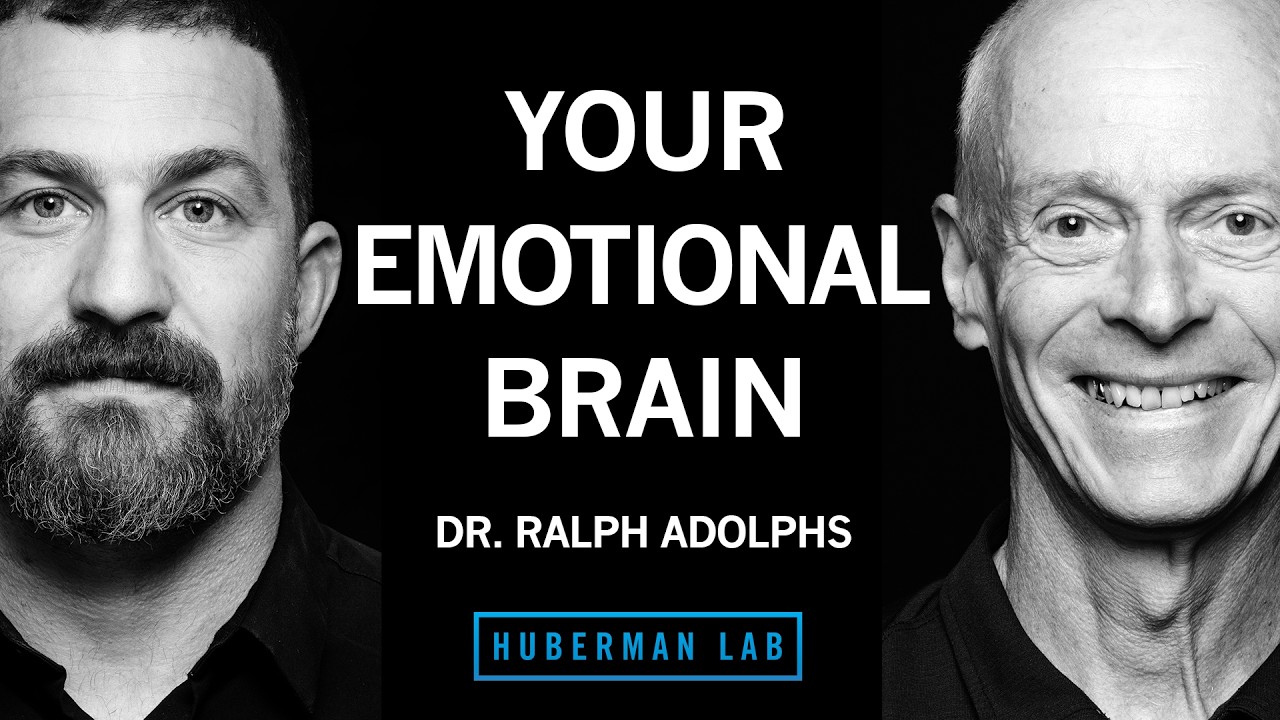 130 min
Episode 294 Ralph Adolphs
 35 min
Essentials: How to Optimize Female Hormone Health for Vitality & Longevity | Dr. Sara Gottfried
 129 min
Using AI to Increase Your Intelligence & Enrich Humanity | Dr. Fei-Fei Li
Ask anything from this episode.
Save it, chat with it, and connect it to Claude or ChatGPT. Get cited answers from the actual content — and build your own knowledge base of every podcast and video you care about.
Get Started Free