Key Moments

Want to know something specific about what's covered?
We've already dissected every moment. Ask and we will deliver (with timestamps).
Key Moments
Startup advice: 3 key engines (gratification, growth, economic), resilience, and understanding consolidated industries.
Key Insights
Building a startup in consolidated industries like entertainment requires partnering with incumbents and understanding their problems.
Startup success hinges on three core engines: gratification (make something people want), growth (user acquisition), and economic (monetization).
The gratification engine is paramount; even with great growth and economic models, a product that doesn't deeply satisfy users will likely fail.
Growth can be driven by word-of-mouth, data, paid acquisition, SEO, or API distribution, and these channels are not mutually exclusive.
A strong economic engine is crucial for long-term sustainability and can enable more powerful growth strategies (e.g., paid user acquisition).
Nurturing resilience through understanding motivations, connecting with users, and building a strong team is vital for navigating startup challenges.
THE CHALLENGES OF ENTERTAINMENT STARTUPS AND CONSOLIDATED INDUSTRIES
Building a startup in entertainment-focused industries like music, film, or TV presents unique hurdles. These sectors often exhibit high levels of consolidation, with a few major players controlling significant rights. Founders must understand that most creators struggle for years and are willing to transfer rights for stability. Consequently, startups in these domains often need industry buy-in and support from rights holders to succeed, rather than attempting to disrupt them entirely. This contrasts with fragmented markets where a full-stack, competitive approach might be more viable.
UNDERSTANDING THE STARTUP GAME BEFORE PLAYING
The startup world, especially in consumer markets, is not always a rational pursuit for financial success due to inherent randomness. Building a startup is often driven by a deep-seated motivation to solve a very specific problem. The satisfaction derived from building a solution can justify years of stress and a high likelihood of failure. Understanding the 'game' involves recognizing that market randomness suggests a diversified approach, like venture capital or involvement in multiple startups, can be more financially prudent than betting on a single venture.
THE THREE ENGINES OF STARTUP SUCCESS
Startup success can be viewed through the lens of three interconnected engines: gratification, growth, and economic. The gratification engine, 'make something people want,' is foundational; without a compelling user experience, growth and monetization efforts will falter. The growth engine focuses on how new users discover the product through channels like word-of-mouth, SEO, or paid acquisition. Finally, the economic engine is about how the company makes money and becomes sustainable, which is essential for long-term viability and can, in turn, fund growth.
THE PRIMACY OF THE GRATIFICATION ENGINE
The gratification engine, the core of user satisfaction, is paramount. For Sonick, this meant evolving from a technically complex initial product to one that delivered truly gratifying personalized concert alerts, enabling life-changing experiences for users. This involved significant, incremental work on data quality and accessibility, even though engineers might initially focus on the '80/20' rule. Refining the user experience, onboarding, and core product features continuously is crucial to maximize the value users derive.
STRATEGIES FOR DRIVING STARTUP GROWTH
Substantial growth in consumer products can be achieved through various channels: word-of-mouth/viral growth, data-driven strategies (like building a communications app), paid acquisition, SEO, and API/widget distribution. These channels often work in concert. For Sonick, becoming the canonical source for concert information on the internet was a key growth driver, enabling social referrals, SEO benefits, and API partnerships. The shift to mobile also significantly boosted growth by rewarding gratifying user experiences through app stores.
BUILDING A SUSTAINABLE ECONOMIC ENGINE
The economic engine is vital for a startup's sustainability. Initially, Sonick bootstrapped revenue through affiliate deals with ticketing companies. However, achieving significant revenue growth, particularly to hundreds of millions, requires a more optimal model, such as enabling users to discover and purchase tickets directly from the platform. This necessitates economic alignment with industry rights holders, a complex process in consolidated markets. This engine supports operations, team growth, and can fuel further expansion through paid user acquisition.
INTERCONNECTEDNESS OF STARTUP ENGINES AND TEAM DYNAMICS
All three engines—gratification, growth, and economic—along with the team, are deeply interconnected and mutually dependent. A strong team is needed to build a world-class product (gratification), generate revenue (economic), and drive growth. Growth can enable a more compelling user experience, especially for network effects. Furthermore, the caliber of the team recruited and retained is influenced by the size of the problem being solved and the company's growth trajectory. Everything must work in concert for exceptional business building.
NURTURING RESILIENCE: THE KEY TO SURVIVAL AND GROWTH
Enduring the startup journey requires significant resilience. It's crucial to remember that things often improve if founders persevere, looking to past challenges as preambles to eventual success. Articulating the core mission and 'why' behind the work, perhaps through a '5 Whys' analysis, provides a powerful anchor during difficult times. Spending time with users, both happy and unhappy, offers practical insights and reinforces the purpose of the endeavor. Building a company with trusted co-founders and a strong, supportive team is fundamental to navigating inevitable hardships.
Mentioned in This Episode
●Software & Apps
●Companies
●People Referenced
Startup Strategy Cheat Sheet
Practical takeaways from this episode
Do This
Avoid This
Common Questions
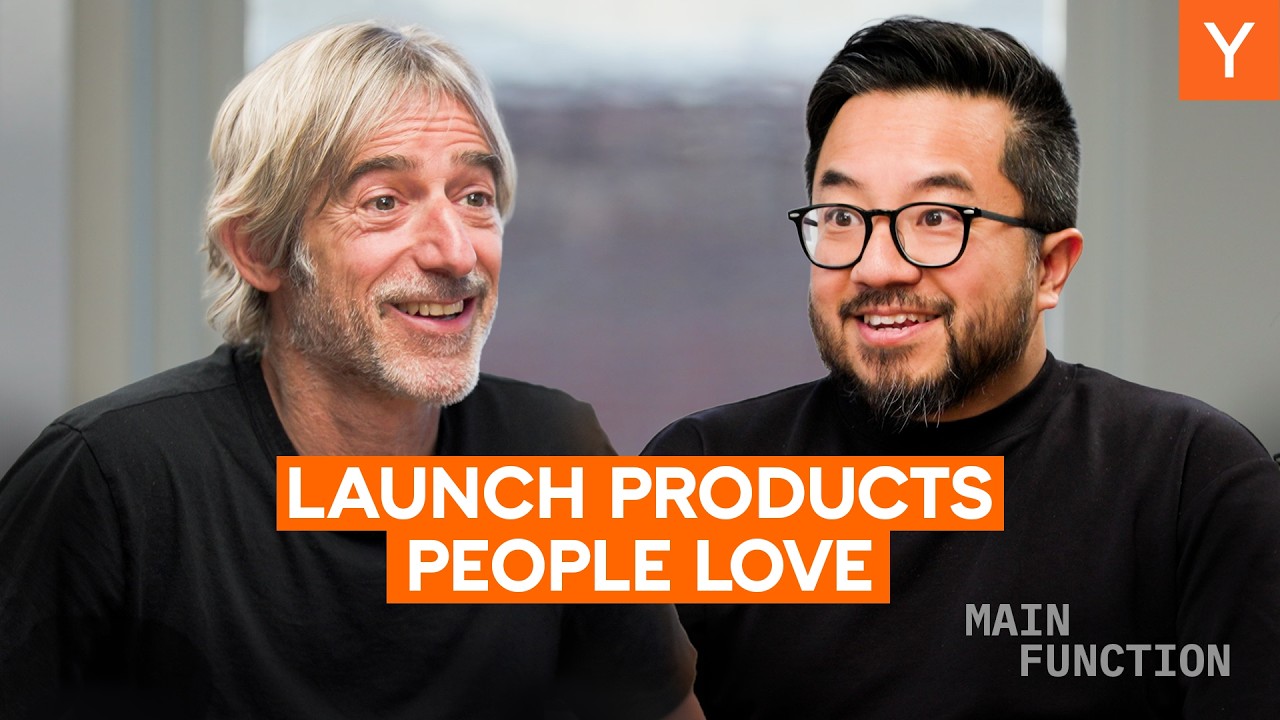
Sonick is a concert discovery service designed to solve the frustration of finding out about shows after they've happened. It simplifies the process for fans to discover concerts in their area, encouraging them to attend more live music events.
Topics
Mentioned in this video
An exceptional founder mentioned as someone who has faced challenges in the music startup industry.
An exceptional founder mentioned as someone who has faced challenges in the music startup industry.
A venture capitalist described as a perfect 'Bayesian agent' for his early investments in successful companies like LinkedIn and Facebook.
Co-founder of Stripe, admired for working with banks rather than competing directly.
Co-founder and CEO of Sonick, discusses startup experiences and advice.
An exceptional founder mentioned as someone who has faced challenges in the music startup industry.
Co-founder of Dropbox, known for being a humble and down-to-earth founder.
An exceptional founder mentioned as someone who has faced challenges in the music startup industry.
A brilliant individual credited with the insight on the three engines of startup success (gratification, growth, economic).
Co-founder of Dropbox, known for being a humble and down-to-earth founder.
An amazing founder mentioned as someone who has faced challenges in the music startup industry.
Mentioned as an example of a radio music app.
Former CEO of SurveyMonkey, mentioned as an exceptional founder who has faced challenges in the music startup industry.
The world's largest record label, which acquired EMI and now represents 40% of the rights in the recorded music market.
A company where Matt Cohler worked early on.
A company focused on helping fans find out when their favorite artists are coming to town, and the second most trafficked concert service globally.
A company that conducted a study on homeowner perceptions during the subprime crisis, used as an analogy for self-perception in creative industries.
Highlighted as a highly successful startup from the same YC batch as Sonick, serving as an example of exponential value creation and impact.
An example of a consumer product that achieved substantial growth through word-of-mouth/viral growth.
Record label acquired by Universal Music Group.
A company where Matt Cohler worked early on, and whose early employees reportedly made more than successful startup founders.
Mentioned as an example of a successful streaming service that gained traction by waiting for industry buy-in.
The world's largest concert promoter, which merged with the largest ticket vendor.
Mentioned as a company that emerged on the back of mobile platform shifts.
Used as an example of a business that bootstrapped revenue through affiliate deals.
Praised for its strategy of partnering with banks.
An example of a consumer product that achieved substantial growth through word-of-mouth/viral growth.
Mentioned as a platform for API/widget distribution.
A venture capital firm that backs Sonick.
Saved by Google and now hosts the largest free streaming music service. Also mentioned as a distribution channel.
An example of a company that grew through paid acquisition.
Credited with creating the digital download market.
Cited as an example of a unicorn company and discussed in relation to growth strategies like paid acquisition, referrals, PR, and creative tactics.
An example of a company that grew through SEO.
An example of a company that grew through paid acquisition.
Mentioned for saving YouTube from label annihilation and for its role in the digital download market.
An example of a company that grew through SEO, and also utilizes word-of-mouth growth.
Mentioned as a platform for API/widget distribution and partnerships.
A company that experienced significant growth post-iPhone launch.
The most successful business to come out of Europe, whose founders previously built two music startups.
Used as an example of a business that bootstrapped revenue through affiliate deals.
More from Y Combinator
View all 603 summaries 75 min
The Key Thing Human Brains Have That AI Is Trying To Learn
 33 min
India Can Create The Largest AI Companies
 41 min
Zynga Founder: Consumer Is Not Investible Right Now - Thats Why You Should Build It
 43 min
The Age Of The 40-Year-Old Solo Founder Is Here
Ask anything from this episode.
Save it, chat with it, and connect it to Claude or ChatGPT. Get cited answers from the actual content — and build your own knowledge base of every podcast and video you care about.
Get Started Free