Key Moments
Howard Marks — How to Invest with Clear Thinking | The Tim Ferriss Show (Podcast)
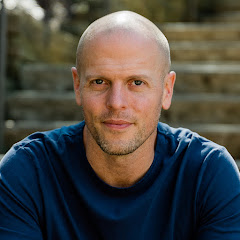 Tim Ferriss
Want to know something specific about what's covered?
We've already dissected every moment. Ask and we will deliver (with timestamps).
Key Moments
Howard Marks on investing: focus on cycles, risk, not predicting, and managing emotions.
Key Insights
Investing success relies on understanding market cycles and managing risk, not on predicting the future.
Periods of high optimism and high valuations are dangerous; periods of pessimism and low valuations offer opportunities.
Emotional control is crucial; resist the urge to buy high and sell low, especially during market downturns.
Partnerships thrive on shared values, complementary skills, and mutual respect, enabling effective collaboration through difficult times.
Recognizing and accepting the inherent unpredictability and randomness of markets is key to better decision-making.
The value of an investment lies in its price relative to its intrinsic value, which is determined by cash flow, not just perceived quality.
THE IMPORTANCE OF CYCLICAL THINKING AND IMPERMANENCE
Howard Marks emphasizes that life and investing are governed by cycles, drawing from the Japanese concept of 'Mujo' – impermanence. He stresses that understanding where we are in a cycle is more critical than predicting the future. This realization helps investors prepare for inevitable changes in the economy, corporate profits, credit availability, and market sentiment, allowing them to position themselves to 'get the odds on their side.'
NAVIGATING CRISES: PREPARATION OVER PREDICTION
Marks recounts Oak tree Capital's strategy during the 2008 financial crisis, where they aggressively deployed capital while others retreated. This wasn't based on predicting the exact trigger (like subprime mortgage-backed securities), but on recognizing the dangerous environment driven by poor market behavior. Their preparation involved reducing risk and raising funds, enabling them to capitalize on opportunities when the crisis unfolded.
GETTING THE ODDS IN YOUR FAVOR: RISK AND VALUATION
The core principle Marks advocates is 'getting the odds on your side,' which involves understanding the cycle and its impact on risk. When markets and valuations are high due to rampant optimism, the odds are against investors. Conversely, during periods of pessimism and low valuations, opportunities arise. This means being aggressive when others are fearful and cautious when others are overly confident.
EMOTIONAL RESILIENCE AND INVESTOR PSYCHOLOGY
A significant theme is the necessity of emotional resilience. Falling 'knives' (assets plummeting in value) present the best bargains, but also the most fear. Waiting for the 'dust to settle' means missing these opportunities. Great investors remain unemotional, a trait that is difficult to cultivate but essential for acting rationally when fear grips the market.
THE POWER OF PARTNERSHIP AND COMPLEMENTARY SKILLS
Marks highlights the indispensable role of his long-standing partnership with Bruce Karsh. Their success stems from shared values and complementary skills – Marks's intuitive, quick thinking paired with Karsh's analytical, deep-diving approach. This dynamic, characterized by respectful intellectual debate and mutual support, is crucial for making sound decisions, particularly during high-stress periods.
ASSESSING UNCERTAINTY AND 'SECOND-LEVEL THINKING'
Marks advises against absolute conviction, emphasizing the need to acknowledge differing opinions and the possibility of being wrong. He advocates for 'second-level thinking' – understanding things differently and better than others. This involves recognizing that predictions exist on a probability distribution, not as certainties, and that 'dumb money' can become smart by accepting its limitations.
THE PRIMACY OF PRICE OVER QUALITY
A fundamental tenet of value investing, which Marks strongly supports, is that price is more important than the quality of the asset. Even the best companies can become poor investments if overvalued. Conversely, less desirable assets can be great bargains if priced low enough. Investors should focus on buying assets below their intrinsic value, where favorable surprises are more likely.
MEASURING MARKET SENTIMENT AND OPTIMISM LEVELS
Instead of relying solely on quantitative indicators, Marks suggests 'taking the temperature of the market' by observing sentiment. He uses anecdotal evidence, like how quickly new funds sell out or the general conversation at social gatherings, to gauge excess optimism or pessimism. High levels of optimism, where everyone believes things will 'only get better forever,' signal a dangerous market top.
UNDERSTANDING THE STAGES OF A BULL MARKET
Marks outlines three stages of a bull market: the initial phase where only a few insightful investors recognize potential improvements; the second stage where most see the improvement happening; and the third stage where universal optimism leads to dangerously high valuations. Recognizing these stages helps investors adjust their behavior accordingly, becoming more aggressive in early stages and more cautious in later ones.
BALANCING KNOWN STRENGTHS WITH HUMILITY
A key challenge is balancing confidence in one's strengths with humility about one's limitations. While it's necessary to have conviction to take action, an excessive belief in one's own infallibility leads to errors. Marks stresses the importance of acknowledging the unknown and the possibility of being wrong, which prevents rigid adherence to flawed decisions and fosters a more adaptable approach.
THE ROLE OF JUDGMENT OVER RULES IN INVESTING
Marks believes that superior investment performance hinges on superior judgment, not on rigid rules or processes like stop-loss orders. While rules can be comforting, they often fail in complex, unpredictable markets. Judgment involves analyzing information, understanding its validity, reaching conclusions, and knowing when to persevere or change course based on evolving circumstances.
ACCEPTING REALITY: 'IT IS WHAT IT IS'
Drawing on concepts like 'Mujo,' Marks emphasizes accepting reality, famously stated as 'it is what it is.' This means acknowledging the current state of markets and the economy without wishing it were different, especially in a low-return environment. Instead of chasing unrealistic returns through excessive risk, investors should accept conditions and adapt their strategies accordingly.
THE INEVITABILITY OF BEING WRONG
Referencing financial historian Peter Bernstein, Marks highlights that being wrong is an inevitable and normal part of activities dependent on an unknown future. This perspective, rather than seeing being wrong as a tragedy, encourages a healthier approach to risk and uncertainty. It allows investors to proceed with boldness while understanding that setbacks are part of the process, not failures.
CRYPTOCURRENCIES AND THE CHALLENGE OF VALUATION
As a value investor, Marks struggles with valuing assets like Bitcoin because they don't produce cash flow. He acknowledges their potential attractions, such as resistance to government inflation or being non-counterfeitable, but finds it impossible to determine their intrinsic value. He points to Bitcoin's extreme price volatility as evidence of speculation rather than sound value investing.
ASSESSING EXTREMES: EXCESSES AND THEIR CORRECTION
Marks identifies excesses and their subsequent corrections as the driving force behind economic and market cycles. When people become too excited and overextend, often with debt, corrections occur. Conversely, during periods of extreme pessimism and overselling, opportunities for aggressive investment arise. Recognizing these pendulum swings is key to making contrarian, successful investment decisions.
Mentioned in This Episode
●Companies
●Organizations
●Books
●Concepts
●People Referenced
Common Questions
Howard Marks' study of Japanese philosophy, especially Mujo (impermanence and unpredictability), was formative. It taught him that life and markets are always changing, and control is impossible. This led him to the philosophy that one cannot predict the future but can prepare for it by understanding likely scenarios, which became a core tenet of his investment approach.
Topics
Mentioned in this video
Mentioned as part of the 'FANG stocks' that can become overpriced despite being good companies.
A leading investment manager co-founded by Howard Marks, with over $120 billion in assets, specializing in distressed debt and other risky asset classes with a controlled risk approach.
The company from which Howard Marks 'stole' the tagline 'you can't predict, you can prepare' for one of his investment memos.
Its bankruptcy in 2008 marked a critical turning point in the financial crisis, creating massive fear and investment opportunities for firms like Oaktree.
Mentioned as part of the 'FANG stocks' that can become overpriced despite being good companies.
An investment bank where Henry Kaufman served as chief economist during periods of high inflation in the 1970s.
Mentioned by Tim Ferriss as sometimes being included when people talk about 'Google' in the 'FANG' acronym.
A venture capital firm mentioned for its success in the venture field, noted for its consistent achievements.
A quantitative investing firm, mentioned for its success, representing a different but effective investment approach.
Mentioned as part of the 'FANG stocks' that can become overpriced despite being good companies.
Mentioned as an example of a company whose long-term leadership in online retailing is uncertain, highlighting the difficulty of long-term predictions.
A venture capitalist at Benchmark, whose record and conversation greatly impressed Howard Marks.
Renowned investor and CEO of Berkshire Hathaway, who highly respects Howard Marks' investment memos, stating they are the first thing he opens and reads.
English classical scholar and poet, whose poem 'A Shropshire Lad' was cited by a friend of Tim Ferriss as capturing the spirit of Howard Marks' writing.
Howard Marks' partner at Oaktree Capital Management, described as highly competitive, analytical, and a 'grinder,' whose complementary skills and supportive devil's advocacy were crucial during difficult times like the 2008 crisis.
Warren Buffett's business partner, known for his brilliant and broadly-read mind, and for emphasizing that investing 'is not meant to be easy.'
A financial historian and investment sage whom Howard Marks considered one of the smartest people he met, known for his insights on risk and embracing unpredictability.
Author of 'Fooled by Randomness,' whose concepts on randomness and epistemological arrogance are recommended by Howard Marks for cultivating awareness of limited knowledge.
An investor praised by Tim Ferriss, mentioned by Howard Marks in the book's introduction.
Author of 'Principles' and founder of Bridgewater Associates, whose emphasis on leveraging historical analysis to recognize recurring patterns is noted by Howard Marks.
A macro investor cited by Howard Marks as one of the 'greatest investors in history' despite his firm not being a macro fund.
Author whose quote, 'It’s not what you don’t know that gets you into trouble, it’s what you know for certain that just ain’t true,' is highly regarded by Howard Marks for its wisdom in investing.
An investor mentioned by Howard Marks as one of the 'great investors' who behaves in an unemotional fashion, similar to Warren Buffett.
A macro investor cited by Howard Marks as one of the 'greatest investors in history' despite his firm not being a macro fund.
Howard Marks' inspirational professor for Japanese philosophy at Wharton, who introduced him to the concept of 'Mujo'.
Economist and author, whose book 'The Short History of Financial Euphoria' and quote about forecasters are cited by Howard Marks as inspirational.
Chief economist of Salomon Brothers in the 1970s, known as 'Dr. Doom', who stated that 'two kinds of people lose a lot of money: the people who know nothing and the people who know everything.'
Referenced implicitly by Tim as a thinker on 'thinking fast and slow,' contrasting Howard Marks' intuitive style with Bruce Karsh's analytical approach.
A collection of poems by A. E. Housman, from which a poem was read to encapsulate Howard Marks' spirit of writing, particularly regarding preparation for trouble.
A book by Ray Dalio, mentioned by Howard Marks for its discussion of analyzing historical patterns and recognizing recurring cycles.
Howard Marks' critically acclaimed previous book on investing, which inspired his new book by highlighting the importance of knowing where one stands in the cycle and understanding risk.
A book by John Kenneth Galbraith, cited by Howard Marks for its insights into market excesses and forecaster types.
Howard Marks' new book discussing understanding market cycles for better decision-making and getting the odds on your side in investing.
A book by Nassim Nicholas Taleb, highly recommended by Howard Marks for its insights into the role of randomness in investing and the world.
A newsletter highly recommended by Howard Marks for credit investors, known for exposing 'stupidity' and misperceptions in the market, although with a negative bias towards identifying overvalued assets.
A book Howard Marks was reading, which unmasks misperceptions about the state of the world by substituting facts for qualitatively held beliefs.
A venture capital firm with an impressive record of achievement, where Bill Gurley is a partner, earning respect from Howard Marks.
Where Howard Marks studied as an undergraduate, pursuing a non-business minor in Japanese studies alongside finance.
A venture capital firm with a great record in the venture field, acknowledged by Howard Marks as repeatedly successful.
Tim Ferriss asks about its use as an index fund for new investors; Howard Marks discusses its earnings being 'supercharged by the tax bill' in 2018.
Howard Marks views it as an asset that cannot be valued intrinsically because it does not produce cash flow, classifying it as speculative buying rather than a value investment.
More from Tim Ferriss
View all 703 summaries 70 min
Q&A with Tim — The Art of Male Friendship, Reinvention in The Age of AI, & More
 125 min
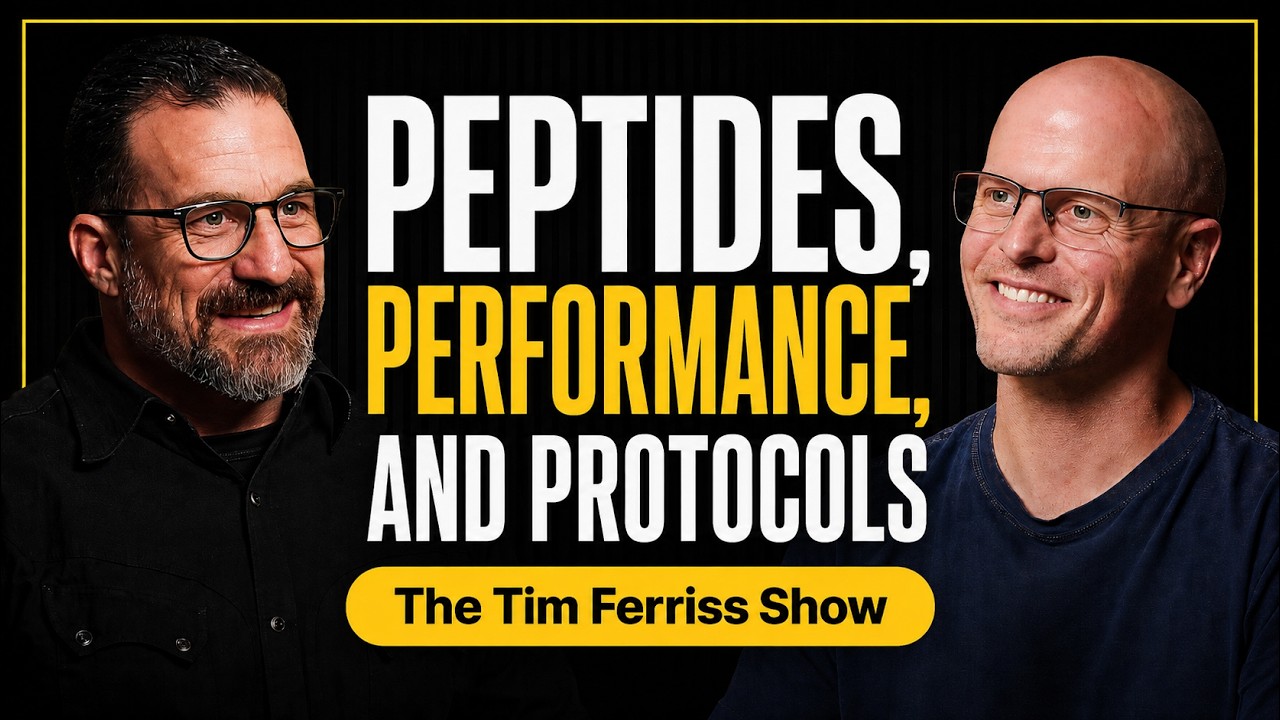
Dr. Andrew Huberman — Peptides, Performance, and Protocols
 112 min
The Random Show! Mortality, AI, Supplements, Rock Climbing, & More
 88 min
The Legendary Hollywood Power Broker — Guy Oseary on 36 Years of Managing Madonna, 26 IPOs, and More
Ask anything from this episode.
Save it, chat with it, and connect it to Claude or ChatGPT. Get cited answers from the actual content — and build your own knowledge base of every podcast and video you care about.
Get Started Free